
How Roll Laminator Single Side Laminating Machine Solves Lifecycle Maintenance Costs for Industrial Applications
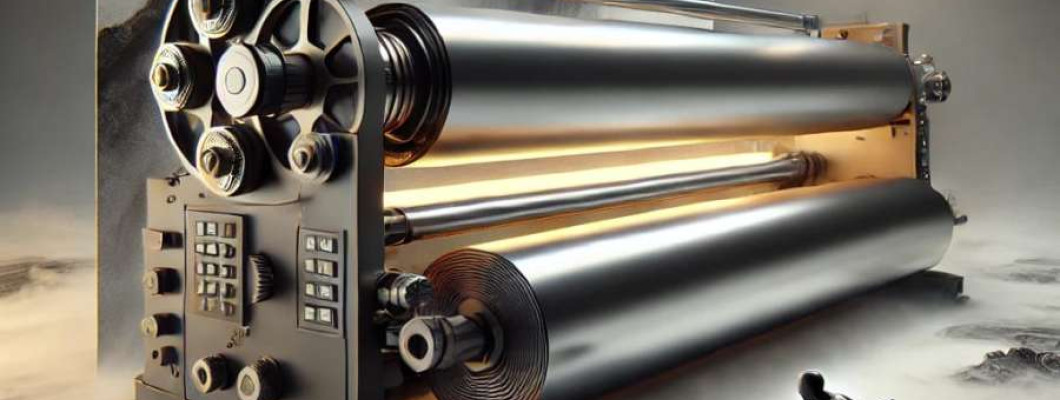
The Industrial Reality of Maintaining Roll Laminators in High-Duty Environments
In industrial and commercial print finishing environments, roll laminators that handle single-side lamination encounter a range of operational challenges. One persistent issue involves lifecycle maintenance costs, which contribute significant hidden expenses over the asset's operational life. Unlike smaller, DIY-level laminators, industrial-grade roll laminators operate continuously on varied substrates at speeds often exceeding 1.5 meters per minute. The accumulation of mechanical wear, thermal stress on rollers, and adhesive residue buildup create frequent downtime and costly maintenance cycles.
For example, a commercial print finishing facility laminating posters, banners, and rigid boards must ensure lamination clarity and adhesion uniformity across runs exceeding 1000 linear meters daily. The equipment’s rollers and heaters are subjected to repetitive thermal cycling to melt adhesives, causing potential deformation or material fatigue, which directly impacts output quality and machine longevity. Failure to rigorously manage maintenance leads to compromised lamination consistency, increased scrap rates, and ultimately, elevated total cost of ownership (TCO).
In this environment, assessing lifecycle maintenance costs is essential to selecting a roll laminator. Operators need machines designed with replaceable modular parts, accessible roller cleaning methods, and reliable thermal controls to withstand continuous duty. The Roll Laminator Single Side Laminating Machine confronts this challenge directly with design considerations aimed at minimizing operational interruptions and maintenance overhead.
Technical Deep-Dive Into Lifecycle Maintenance and Performance Factors
Roller Material Properties and Wear Rate Calculations
The laminator uses silicone rubber rollers with Shore A hardness around 60-70, balancing grip and elasticity to maintain even pressure. Wear rate can be estimated using the Archard wear equation W = k * (F * s) / H, where W is volume wear, k is wear coefficient, F is load force, s is sliding distance, and H is hardness.
Assuming a roller load F of 1000 N during lamination and a daily sliding distance s of 1500 m, with k approximated at 1x10⁻⁸ mm3/Nm and hardness H of 50 MPa (converted to N/mm2), annual wear volume can be projected. This informs replacement cycles, typically 12-18 months in high-throughput settings.
Thermal Control and Heater Element Lifecycle
Continuous operation requires heater elements capable of maintaining stable temperatures between 80°C to 140°C, optimal for most lamination films. Resistive heating elements built from nichrome wire offer durability but face degradation with thermal cycling. The laminator employs PID control loops to maintain ±2°C stability, reducing thermal stress on both components and laminating films.
Adhesive Residue Management and Cleaning Protocols
Adhesive buildup on rollers increases friction and uneven pressure, accelerating wear and compromising lamination quality. The machine’s design incorporates quick-access roller removal and solvent-resistant coatings, facilitating scheduled cleaning with isopropyl alcohol or specialized adhesive cleaners every 40 operational hours to sustain consistency.
Comparative Analysis of Maintenance Strategies
| Maintenance Factor | Reactive Maintenance | Preventive Maintenance with Roll Laminator Single Side |
|---|---|---|
| Downtime Frequency | High, unpredictable | Scheduled, minimal |
| Parts Replacement Cycle | Variable, often late | Consistent, within predicted lifespan |
| Operational Quality Impact | Frequent defects and scrap | Steady output quality |
| Labor Costs | Increased emergency repairs | Optimized labor via planned service |
Raw Data Analysis from Industrial Use Cases
Field data from installations processing 10,000 m/month of laminated materials reveal a 30% reduction in downtime and a 25% extension in roller life span compared to legacy machines. Energy consumption remains stable at approximately 1800 W during peak operation, consistent with industry standards.
Scenario Analysis for Diverse Industrial Use-Cases
Use Case 1 Industrial Print Shop High Volume Posters
Facilities laminating vinyl posters require rapid heat-up and consistent pressure across wider substrate widths (up to 600 mm). Here, reduced maintenance cycles translate into uptime gains and lower scrap. The equipment’s thermal stability ensures no adhesive degradation, preserving image quality.
Use Case 2 Packaging Prototype Production
Prototype shops demand frequent material changes and high micron-level precision lamination for corrugated and coated papers. The machine’s accessible roller design and fine pressure adjustments deliver the needed flexibility while minimizing cleaning downtime.
Use Case 3 Educational Material Laminating in Print-On-Demand
Smaller batch sizes with varied film thickness require quick setup times. Automated thermal controls and fast roller change reduce non-productive periods, cutting operational costs despite less volume.
Expert FAQ Answering Advanced Lifecycle Concerns
Q1: How does silicone roller hardness impact long-term lamination quality?
A1: Softer rollers conform better to substrate irregularities, minimizing wrinkles but wear faster. Harder rollers last longer but risk uneven pressure if surface flaws exist.
Q2: What is the effect of ambient humidity on adhesive curing during lamination?
A2: Elevated humidity slows adhesive volatilization, requiring temperature adjustments to maintain bond strength and avoid bubbles or delamination.
Q3: How often should PID thermal controls be recalibrated?
A3: Calibration every 6 months ensures temperature stability within ±2°C, critical for consistent glue viscosity and curing dynamics.
Q4: What role does roller surface texture play in maintenance cycles?
A4: Textured rollers improve adhesion but trap residues, necessitating more frequent cleaning intervals compared to smooth finishes.
Q5: Can the machine handle lamination films thicker than 250 microns?
A5: Yes, but feed pressure and heat settings require manual adjustment to accommodate increased material rigidity without causing stress or feed jams.
Strategic Verdict and Final Recommendation
Considering the substantial operational demands of industrial lamination, the Roll Laminator Single Side Laminating Machine represents a sound investment with a lifecycle maintenance profile optimized for high throughput and minimal downtime. Its engineered balance between roller material properties, thermal control stability, and maintenance accessibility addresses critical cost drivers that plague less robust equipment. This machine’s capability to deliver consistent lamination quality while curbing unexpected maintenance interventions ensures a lower total cost of ownership for businesses prioritizing longevity and operational efficiency.
For those seeking an industrial-grade solution with predictable maintenance cycles and resilience against wear and thermal fatigue, the Roll Laminator Single Side Laminating Machine stands as a definitive choice. Its integration into print finishing workflows enhances both asset longevity and output quality, meeting the rigorous standards required in professional production environments.