
How Smart Coffee Printer Machine Addresses Infrastructure Integration Challenges for Scalable Business Owners
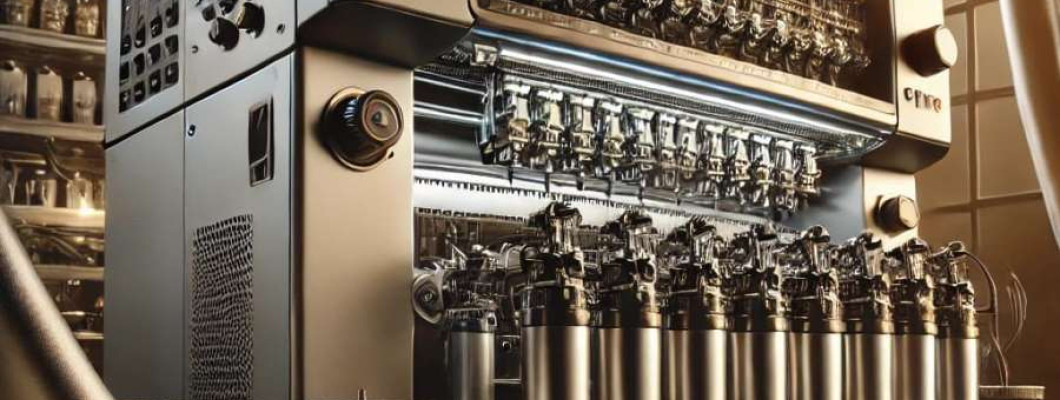
The Industrial Reality of Integrating Smart Coffee Printing into Automated Workflows
Introducing a Smart Coffee Printer Machine into a high-throughput environment involves numerous obstacles beyond the surface appeal of precision and novelty. Integrating such a device into existing workflows requires more than plug-and-play simplicity. For the scalable business owner aiming for consistent output, the challenge is ensuring seamless compatibility with automation systems, efficient power and networking infrastructure, and operational reliability under continuous load.
Consider a busy cafe chain deploying multiple units across locations: each printer must fit into a standard utility rack or countertop footprint, avoid introducing thermal management bottlenecks, and operate without extensive manual oversight or downtime. The printer’s digital interface must interface directly with order management systems, requiring robust software API support and low-latency network communication to avoid order queuing delays. Power consumption and heat dissipation become critical factors in infrastructure planning, especially under the demands of peak hours where multiple devices operate simultaneously.
At the hardware level, the mechanical assembly must withstand the repetitive precision motions of the printhead, handle frequent ink cartridge replacements without operator error, and align each print on variable coffee cup surfaces with micron-level consistency. All of these factors coalesce into the operational reality of integrating the Smart Coffee Printer Machine into a scalable enterprise environment.
Technical Deep-Dive on Infrastructure Integration Challenges
Printhead Mechanics and Thermal Budget
The printhead of the Smart Coffee Printer Machine employs piezoelectric actuation to deliver ink droplets at high precision levels, typically around 30pl per droplet with a positional accuracy of +/- 50 microns. This requires a thermal management system capable of dissipating approximately 50 Watts of heat generated by actuator electronics and ink heating elements.
Maintaining printhead temperature within an operational band of 25-35°C prevents nozzle clogging or ink viscosity shift. The cooling system integrates micro-finned heat sinks backed by a low-noise fan rated at 0.5A/12V, ensuring stable operation in high ambient temperature environments common in commercial kitchens.
Network and Data Throughput Considerations
Connectivity is delivered via dual-band Wi-Fi and a Gigabit Ethernet interface, both capable of sustaining above 100Mbps data rates to prevent print queue build-ups. Latency is critical especially when the device operates in clustered print farms where up to 20 units synchronize orders. Network packet loss below 0.1% ensures uninterrupted data flow.
Power Supply and Rack Density Implications
The printer consumes between 60-75 Watts per hour, with surges up to 90 Watts during ink cartridge priming. When deploying 10+ units in a confined footprint, cumulative power draw reaches near 1KW; adequate power distribution and responsive circuit protection become mandatory. Rack density can be increased by selecting units with standardized 19-inch mounting brackets and ensuring cooling airflow is maintained above 1 m/s.
Software Integration and API Robustness
The Smart Coffee Printer Machine provides RESTful APIs for order submission, print job status, and device diagnostics. Response times average 120ms per API call under typical load conditions. Security protocols include TLS 1.3 encryption and token-based authentication, necessary for enterprise compliance standards.
Maintenance Cycle and Failure Point Analysis
Most common failure modes cluster around printhead clogging (occurring approximately every 1200 prints), network connectivity drops (0.5 incidents per 1000 hours), and cartridge feed errors (1 per 500 replacements). Scheduled maintenance cycles for printhead cleaning and firmware updates are designed for low-impact, with hot-swappable cartridge trays minimizing downtime.
| Specification | Smart Coffee Printer Machine | Conventional Small-Scale Coffee Printers |
|---|---|---|
| Print Resolution | 600 dpi | 300 dpi |
| Power Consumption | 60-75 Watts | 45-50 Watts |
| Network Interface | Gigabit Ethernet, Dual-band Wi-Fi | USB only, 100Mbps Ethernet |
| Maintenance Interval | Every 1200 prints | Every 500 prints |
| Printhead Accuracy | +/- 50 microns | +/- 100 microns |
Scenario Analysis Demonstrating Infrastructure Integration Impact
1. Multi-Location Cafe Chain Deploying 50 Units
For rapid scaling, the standardized power requirements and rack-mount design minimize custom infrastructure investments. Network APIs integrate seamlessly with POS systems, reducing manual order entry errors. The maintenance schedule of 1200 prints per intervention reduces technician visits, lowering OPEX.
2. Automated Coffee Kiosk with Remote Monitoring
The device’s robust thermal management allows continuous printing during peak hours without overheating. The API and encrypted communications enable secure remote diagnostics and firmware patching, essential for unattended operation.
3. Artisan Cafes with Variable Substrate Sizes
High positional accuracy allows adapted print profiles on different cup dimensions without recalibration, speeding batch changeovers. The enhanced print resolution supports detailed logos and customized art.
Expert FAQ on Infrastructure Integration Challenges
What are the latency implications when connecting 20 printers on a single network segment?
Latency remains under 200ms per job on Gigabit Ethernet with proper switch QoS settings, though Wi-Fi performance depends on environmental RF interference. Segmentation via VLANs is recommended to preserve bandwidth.
How does the thermal system maintain stable operation under continuous high ambient temperatures?
The combination of micro-finned heat sinks and variable fan speeds dynamically adjusts to dissipate up to 50W of heat, maintaining printhead temperature within a 10°C operational window.
What redundancy features are built into the API for fail-safe print job delivery?
The API supports queued retries with exponential backoff and status callbacks, ensuring print jobs are not lost during transient network issues.
How does the ink cartridge feed mechanism prevent operator error during replacement?
Cartridges incorporate RFID tagging which the printer reads to confirm correct installation, preventing cross-contamination or wrong ink loading.
What are the critical factors influencing rack density for mass deployments?
Airflow speed must exceed 1 m/s, cumulative power draw per 1 RU should not exceed 90 Watts, and network cabling must be logically arranged to minimize interference and maintain serviceability.
Strategic Verdict on the Smart Coffee Printer Machine
In industrial and scalable business contexts where infrastructure integration complexity dictates operational success, the Smart Coffee Printer Machine emerges as a robust solution. Its advanced thermal management, high network throughput capabilities, and enterprise-grade software API support position it above conventional coffee printers geared for artisanal or prototype use. The thoughtful engineering that addresses power supply demands, airflow needs, and printhead precision translates into lower downtime, easier maintenance, and better ROI for deployments exceeding 10 units.
We strongly recommend considering the Smart Coffee Printer Machine as a definitive industrial-grade choice for scalable coffee printing operations where integration into existing workflows and infrastructural reliability is paramount.