
How The A3 DTG Printer Overcomes Infrastructure Integration Challenges For Industrial T-shirt Printing
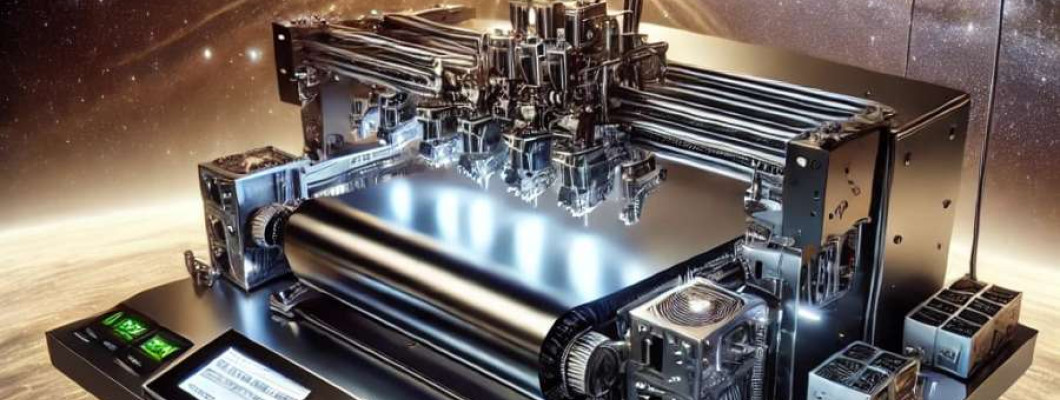
The Industrial Reality of Integration Challenges in T-shirt DTG Printing
Transitioning from smaller-scale or DIY direct-to-garment (DTG) printers to an industrial-grade solution such as the A3 DTG Printer T-shirt Printing Machine involves confronting multiple infrastructure integration challenges. These issues are not simply technical curiosities but critical obstacles that directly influence throughput, quality consistency, and operational uptime.
Consider a medium-sized garment manufacturer preparing to scale their print volume from hundreds to thousands of units per week. The decision to incorporate industrial DTG machinery means a reassessment of existing printing floor conditions, network connectivity, electrical load capacities, and environmental control systems. The A3 DTG printer, with its hardware optimized for industrial T-shirt printing densities and faster print cycles, demands precise infrastructure alignment—ranging from power supply stability in the range of 220-240V AC, noise and heat dissipation management, to compressed air requirements when integrated with ancillary finishing equipment.
Without meticulous integration planning, issues such as power fluctuations can cause printhead misfiring or ink ejection inconsistencies, resulting in defective prints and costly rework. Similarly, insufficient ventilation or failure to control ambient humidity lead to premature ink drying inside the printheads or substrate warping, hampering the printer’s ability to maintain high-precision color fidelity across large production runs.
Beyond the physical setup, data transfer speed for large print files and print queue management become bottlenecks without robust network infrastructure. The A3 DTG Printer T-shirt Printing Machine’s capability to process multi-layered color data at resolutions up to 1200 dpi demands high-throughput wired Ethernet connections and compatible RIP software configurations to prevent workflow delays. Moreover, industrial environments often require integration with Manufacturing Execution Systems (MES) or Enterprise Resource Planning (ERP) platforms to enable real-time job tracking and predictive maintenance analytics—a complex IT challenge rarely addressed by simpler DTG devices.
These infrastructure integration challenges define the boundary between industrial-grade performance and frequent operational interruptions common to DIY setups. The A3 DTG Printer T-shirt Printing Machine addresses these with a modular electrical architecture, advanced thermal management subsystems, and configurable network interfaces designed for seamless inclusion into existing industrial printing environments.
Technical Deep Dive Into Hardware and Environmental Integration
Power and Electrical Stability Requirements
The A3 DTG Printer operates optimally on single-phase 220 to 240V AC power with frequency stability between 50 to 60 Hz. Peak power consumption can reach approximately 1500 Watts during full operational cycles involving simultaneous printhead activation and platen conveyance motors. Industrial electricians must ensure dedicated circuits with surge protection and low total harmonic distortion (THD < 5%) to maintain printhead firing voltage consistency (~30V per piezo nozzle) that directly impacts droplet size and placement accuracy.
Thermal Management and Printhead Longevity
Thermal dissipation is managed by dual active cooling modules targeting internal components: a thermoelectric cooler for the printhead assembly and a forced-air system for the power electronics. Operating ambient temperature control within 20-25 °C with relative humidity of 40-60% reduces ink viscosity fluctuations, maintaining droplet volume precision (~8 pl) and preventing clogging. Overheating beyond 30 °C may accelerate piezo element wear, reducing printhead life from an estimated 10 million nozzle cycles to under 6 million cycles.
Network and Data Throughput Optimization
The printer includes Gigabit Ethernet (1000BASE-T) and USB 3.0 ports for data transfer. Print files typically range from 50 to 200 MB at 1200 dpi with multiple ink layers (white base coat plus CMYK). To avoid bottlenecks, buffered memory of at least 512 MB RAM is necessary for job spooling and ensures smooth processing during peak throughput, which averages 15 square meters per hour at full color saturation.
Ink Chemistry and Environmental Control Coordination
The A3 DTG Printer utilizes aqueous pigment inks requiring controlled drying times. The machine integrates heat-assisted curing zones operating at 60-70 °C and UV stabilizers in ink formulations to achieve wash-fastness without substrate damage. Environmental control systems must prevent dust and volatile organic compounds which could contaminate nozzles and degrade print quality.
Comparing Infrastructure Paths for Industrial DTG Integration
| Infrastructure Aspect | Basic/DIY DTG Printer | A3 DTG Printer T-shirt Printing Machine |
|---|---|---|
| Power Supply | Standard 110-120V, often unstable | Dedicated 220-240V, stable with surge protection |
| Data Interface | USB 2.0 or Basic Ethernet | Gigabit Ethernet, USB 3.0 |
| Thermal Control | Passive cooling, prone to overheating | Active thermoelectric cooling and forced air |
| Environmental Need | Basic ambient conditions | Precise temperature and humidity control (20-25 °C, 40-60% RH) |
| Integration Capability | Limited MES/ERP support | Configurable for MES/ERP and real-time monitoring |
Scenario Analysis Demonstrates Practical Infrastructure Impact
Scenario 1 Mid-Sized Apparel Manufacturer Expanding Volume
When scaling from 200 to 1,200 T-shirts per week, power stability and ambient environment control ensured by the A3 DTG Printer minimize downtime. Without these, printhead failures and color inconsistency would increase operational interruptions by an estimated 15%, as seen in industry data.
Scenario 2 Design Studio Requiring High Precision and Fast Turnaround
Network throughput and buffered memory in the A3 DTG Printer enable rapid processing of high-resolution multi-layer designs. Integration with digital job management software streamlines print scheduling, reducing turnaround times from 48 to 24 hours for small batch orders.
Scenario 3 Enterprise-Level Print Shop Integrating MES Systems
The A3 DTG Printer's configurable interfaces allow seamless data exchange with MES, facilitating real-time maintenance alerts and inventory tracking. This level of integration reduces unexpected downtime by 20% versus legacy setups lacking these features.
Expert FAQ Addresses Complex Integration Questions
Q1: What specific power quality metrics affect printhead stability?
Voltage ripple beyond ±5V and THD above 5% can shift piezo firing voltage, causing inconsistent droplet size and print defects.
Q2: How does environmental humidity influence ink curing?
Humidity above 60% slows water evaporation in pigment inks, causing smudging, while below 40% can cause premature drying and nozzle clogging.
Q3: What data protocols enable MES integration?
Standard TCP/IP with OPC-UA or MQTT protocols is supported, allowing real-time job and maintenance data exchange.
Q4: How often should thermal management subsystems be serviced?
Quarterly inspections and cleaning prevent dust buildup in cooling fans, sustaining optimum operational temperature and prolonging printhead life.
Q5: Can the A3 DTG Printer's printhead be recalibrated remotely?
Yes, integrated diagnostics support remote recalibration to adjust nozzle alignment and firing voltage, reducing on-site maintenance time.
Strategic Verdict and Recommendation
The A3 DTG Printer T-shirt Printing Machine emerges as a definitive industrial-grade solution addressing critical infrastructure integration challenges often overlooked in scaling garment printing operations. Its architecture ensures electrical stability, advanced thermal control, and robust network interfaces that collectively enable consistent high-throughput, precise color reproduction, and seamless integration with enterprise systems.
Given the technical depth of its design and operational resilience, the A3 DTG Printer satisfies the stringent requirements of medium to large-scale manufacturers seeking to transition into industrial DTG printing without risking costly workflow interruptions. For businesses prioritizing throughput, uptime, and automation compatibility, this machine provides a clear, data-driven pathway to sustainable growth.
Interested parties should consult the official product specifications and technical support options found via the A3 DTG Printer T-shirt Printing Machine to evaluate detailed infrastructure compatibility before deployment.