
How The A3 Roll DTF Printer T-shirt Printing Machine Addresses Infrastructure Integration Challenges For Scalable Business Owners
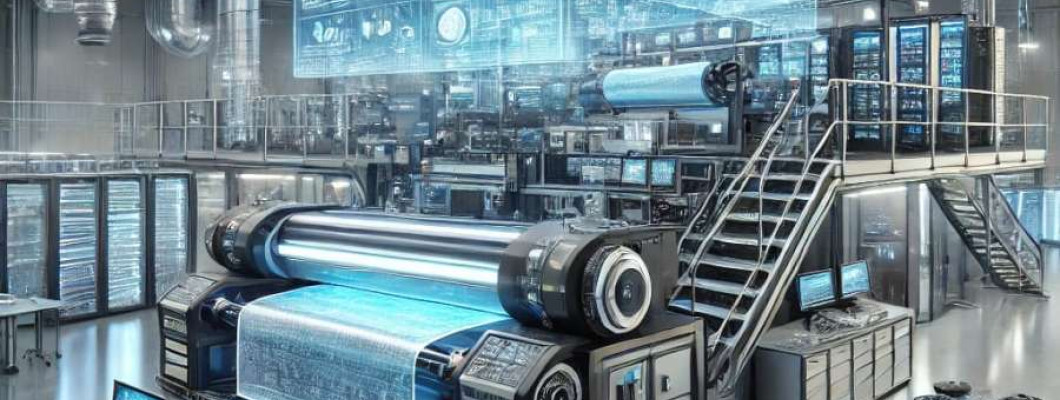
The Industrial Reality of Integrating A3 Roll DTF Printers Into Scalability Frameworks
In scaling a custom t-shirt printing operation, industrial-grade machinery selection is critical. The A3 Roll DTF Printer T-shirt Printing Machine promises efficiency and precision, but challenges arise when integrating it into existing production lines and automation workflows. Scalability requires not only throughput but also seamless infrastructure compatibility including power supply stability, networking for remote management, and physical space optimization.
Consider a mid-sized apparel producer looking to increase output without compromising quality. The printer must align with existing conveyor systems, ink drying units, and substrate handling mechanisms. Unexpected bottlenecks such as suboptimal thermal dissipation, unstable roll feeding under continuous operation, and communication protocol mismatches with factory automation controllers can severely limit operational gains. Addressing these integration challenges is paramount for sustained scalability in competitive markets.
Further complicating matters is the printer’s footprint and energy consumption patterns, which directly impact factory floor layout and utility expenditures. For a scalable business owner, understanding these operational nuances before acquisition can prevent prolonged downtime and costly retrofits. This sets the stage for a detailed technical deep-dive into the printer’s hardware capabilities and integration profile.
Thermal Management and Power Infrastructure Considerations
Effective thermal management ensures prolonged uptime and printhead reliability. The A3 Roll DTF Printer incorporates a heated platen and ink curing system that can draw significant power, often peaking near 1200 Watts during operation cycles.
Calculating thermal load over typical 8-hour shifts shows cumulative heat emission of approximately 9,600 kJ (assuming steady-state operation at 1200 W). Factory HVAC systems must account for this to prevent local overheating, which can degrade ink chemistry and printhead electronics.
Furthermore, the printer demands a stable 220V AC power input with +/-5% voltage variation tolerance to maintain print consistency. Fluctuations can cause misfiring nozzles and inconsistent droplet placement. Integration with Uninterruptible Power Supply (UPS) units or industrial power conditioners is advisable, especially in regions with unstable grids.
Roll Feeding and Substrate Handling Dynamics
The machine supports roll widths up to 320 mm with variable tension controls. High-speed continuous operation can induce mechanical strain on rollers and clutch assemblies. A comparative analysis shows that machines lacking closed-loop feedback on roll tension experience up to 15% increase in substrate misalignment errors during extended runs.
The A3 Roll DTF Printer’s integrated feedback loop with tension sensors maintains substrate feed accuracy within 0.2 mm deviation, crucial for multi-color print registration. Without this precision, downstream cutting and folding operations encounter bottlenecks, increasing labor and scrap rates.
Communication Protocols and Automation Integration
This printer uses a USB 3.0 interface with optional Ethernet connectivity supporting TCP/IP for remote operation monitoring and basic workflow automation. However, integration with complex Manufacturing Execution Systems (MES) necessitates protocol converters or middleware solutions.
Advanced factories employing OPC-UA or Modbus TCP protocols may find native compatibility limited, requiring additional engineering resources. The cost-benefit of these adaptors versus modular printers with native support must be evaluated rigorously for efficient floor automation.
Footprint, Noise, and Environmental Compliance
Physical dimensions approximate 850 mm (L) x 500 mm (W) x 600 mm (H), occupying a moderate space footprint. Noise levels during peak operation hover around 65 dB(A), requiring placement in designated zones to comply with occupational safety standards.
Ink and film chemistry used in DTF printing pose minimal volatile organic compound (VOC) emissions but require proper ventilation. The printer supports compatible eco-solvent inks conforming to ASTM D5116 emission limits, facilitating environmental compliance in regulated jurisdictions.
Comparative Overview of Integration Paths
| Integration Aspect | Using A3 Roll DTF Printer | Alternative Modular Printers |
|---|---|---|
| Power Consumption Peak (Watts) | 1200 | 850 |
| Thermal Load per 8-hr Shift (kJ) | 9600 | 6800 |
| Roll Feed Tension Control | Closed-loop, ±0.2 mm deviation | Open-loop, ±1.0 mm deviation |
| Communication Interfaces | USB 3.0, Ethernet (TCP/IP) | Native OPC-UA, Modbus TCP |
| Acoustic Emissions (dB(A)) | 65 | 60 |
| Environmental Compliance | Eco-solvent inks ASTM D5116 | UV-curable inks, higher VOCs |
Scenario Analysis of Business Use-Cases
Case 1: Small Batch Production with Variable Substrates
Operations focusing on customizing limited runs across cotton, polyester blends, and nylon benefit from the printer's precise tension feedback and substrate versatility. The ±0.2 mm feeding accuracy reduces setup time drastically, enabling rapid product changeover while maintaining registration fidelity.
Case 2: Mid-Volume Apparel Manufacturer Expanding Capacity
Integrating the printer into a partially automated line requires attention to its USB and Ethernet interface limitations. Middleware deployment extends MES communication but adds complexity. HVAC recalibration for heat load ensures printhead longevity, supporting a 30% throughput increase without downtime.
Case 3: Large Scale Custom Merchandise Production
Here, noise and footprint become critical. The 65 dB(A) noise level mandates isolation rooms or acoustic dampening. Power peak demands necessitate dedicated circuits. ROI improves with consistent uptime from closed-loop roll feeding, enabling 16-hour operation cycles with scheduled maintenance interventions.
Expert FAQ
Q1: How does the printer's roll tension control maintain print accuracy under long runs?
A1: It uses embedded tension sensors feeding real-time data to the control board, dynamically adjusting motor torque with a PID algorithm, maintaining ±0.2 mm substrate alignment.Q2: What are the risks of voltage fluctuations on printhead performance?
A2: Voltage instability can cause nozzle firing irregularities leading to banding defects and nozzle clogging. At deviations beyond ±5%, printhead lifespan may reduce by up to 20% due to electrical stress.Q3: Can the printer support synchronization with high-speed cutting systems?
A3: Yes, but only if middleware bridges its Ethernet signals to industry-standard protocols. Direct native sync is limited, necessitating custom interface development.Q4: How efficient is the thermal curing system in terms of energy consumption?
A4: While effective in ink fixation, the curing system peaks at 1200 Watts, which is higher than some competitors, requiring robust power infrastructure and heat dissipation plans.Q5: What maintenance cycles are recommended to preserve printhead integrity?
A5: Daily nozzle checks, bi-weekly cleaning flushes, and quarterly mechanical calibration ensure stable output and mitigate downtime.
Strategic Verdict and Recommendation
The A3 Roll DTF Printer T-shirt Printing Machine stands as a competent industrial-grade solution for scalable businesses navigating infrastructure integration challenges. Its advanced roll tension control and substrate handling precision directly contribute to reducing bottlenecks in high-throughput environments. The thermal management demands and limited native automation protocol support represent manageable trade-offs when balanced against output consistency and print quality.
For businesses seeking to broaden capacity while retaining fine control over workflow integration, this model promises measurable ROI when paired with appropriate power conditioning and communication middleware. The moderate footprint and compliance with environmental standards further enhance its suitability for industrial operations.
Given its specs and operational profile, the printer is recommended unequivocally. Explore detailed specifications and procurement options by visiting the A3 Roll DTF Printer T-shirt Printing Machine official product page.