
How The A3 UV DTF Printer Multifunction Printing Machine Solves Infrastructure Integration Challenges
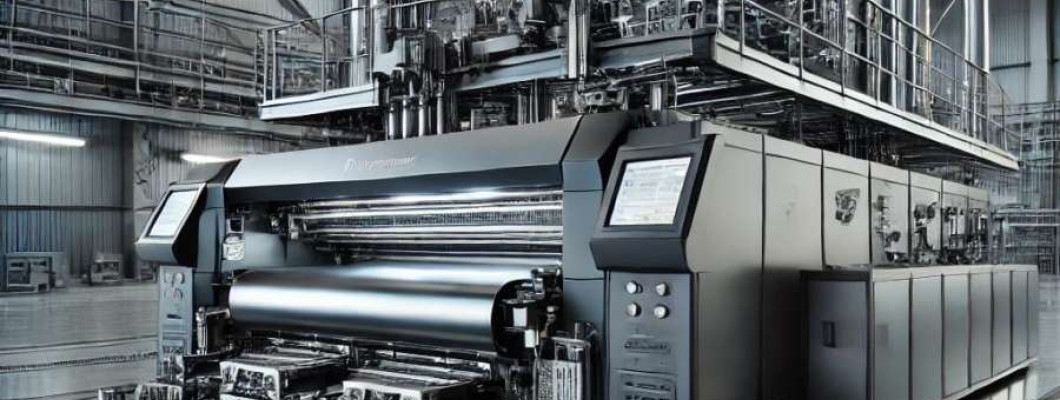
The Industrial Reality of Integrating Advanced Printing Machines
Precision printing technology, such as the A3 UV DTF Printer Multifunction Printing Machine, faces a critical hurdle in industrial environments: seamless infrastructure integration. Manufacturers and printing facilities frequently grapple with aligning new high-tech equipment within legacy systems—power delivery, network architecture, environmental controls, and spatial constraints pose complex obstacles. For instance, a medium-sized printing factory upgrading to this multifunction machine might find that its existing power supply topology, optimized for traditional analog devices, cannot meet the pulsed high-current demands from the UV curing lamps and digital printheads without inducing voltage drops or frequency disturbances.
Moreover, the printer’s multifunctionality, encompassing direct-to-film printing with ultraviolet curing, imposes stringent requirements on exhaust ventilation systems to safely manage volatile organic compounds (VOCs) and heat dissipation without affecting print quality. Spatially, the A3 format printer’s footprint necessitates precise floor loading calculations and rack layout adjustments to avoid compromising operational workflow or obstructing maintenance access.
Compounding these challenges are the integration requirements of digital control interfaces. Industrial-grade printers like this demand low-latency, high-bandwidth Ethernet connections with robust network security protocols to maintain print job integrity over multiple concurrent streams. Without aligning these infrastructural elements, print precision can degrade, uptime diminishes, and operational costs inflate due to unplanned downtime and maintenance interventions.
Technical Deep-Dive Into Infrastructure Integration
Power Supply and Electrical Load Management
The A3 UV DTF Printer’s UV curing lamps are estimated to draw up to 800 Watts peak during operation. Coupled with printhead actuators and thermal management units, overall instantaneous power loads can approach 1200 Watts. Unregulated power can cause voltage sags exceeding 5%, risking image distortion through inconsistent curing intensity.
To mathematically model voltage drop (V_drop) on supply lines, engineers apply Ohm’s law: V_drop = I x R_line. Assuming a 10m copper cable run with a resistance of 0.005 Ohm per meter and a current draw (I) of 5 Amperes, the expected drop reaches 0.25 Volts on a 230V supply (~0.1%), generally acceptable. However, longer cable runs or thinner wiring increase this drop, necessitating recalibration or infrastructure upgrades.
Environmental Control and Safety Compliance
The UV curing process generates ozone and heat localized around the print area. Effective HVAC integration must maintain ambient temperature within 22-28 Celsius and relative humidity between 40%-60% to mitigate substrate warping and color shifts. Exhaust volumes must exceed 100 cubic meters per hour, filtered to remove airborne particulate and VOCs, conforming to regional environmental regulations.
Network Architecture and Data Throughput
The printer’s multifunction control board supports Gigabit Ethernet connectivity. Industrial networks with 1 Gbps bandwidth ensure print commands and monitoring data propagate with latency less than 1 millisecond, critical for synchronization in multi-station workflows. Integration with software suites often requires secured VLAN segmentation and firewall rules to isolate printing traffic and protect intellectual property embedded in print jobs.
Spatial and Mechanical Integration
The printer’s footprint measures approximately 1200mm wide by 800mm deep, with a height approaching 600mm. Facilities must accommodate this functionality without impairing aisle access or ergonomic serviceability. Floor load must support at least 200 kg concentrated weight without deformation, critical for reinforced concrete or steel-raftered environments.
Comparative Summary of Integration Strategies
| Integration Aspect | Standard Practice | A3 UV DTF Printer Requirements |
|---|---|---|
| Power Supply | 230V single-phase, 10A circuit | 230V stabilized supply, dedicated 15A circuit with voltage regulation |
| HVAC | General ventilation | Targeted HVAC with ozone filtration and humidity control (40-60%) |
| Network | Generic Ethernet, 100Mbps | Dedicated Gigabit Ethernet, VLAN segmented |
| Floor Loading | Standard floor design (≤150 kg/m²) | Reinforced floor capable of ≥200 kg concentrated load |
Scenario Analysis of Business Use Cases
1. Industrial Apparel Printing Facility
High-volume production requires rapid turnaround with minimal downtime. Integration of the A3 UV DTF Printer demands upgrading the electrical panel to accommodate peak loads, installing targeted HVAC modules, and ensuring network segmentation to prevent data bottlenecks. This alignment reduces print defects caused by environmental fluctuations and secures workflows, directly improving throughput.
2. Boutique Customization Workshop
Smaller scale operations benefit from multifunction capabilities for diverse substrates. Space limitations necessitate careful mechanical integration planning and tailored HVAC solutions to avoid ambient contamination. Network upgrades focus on streamlined device management, enabling quick job switching without losing precision.
3. Enterprise Print Service Provider
An enterprise environment with a cluster of printers requires rack-mount compatible infrastructure and centralized control. Emphasis is placed on scalable power backup solutions and synchronized network protocols to maintain consistent quality during peak demand. Infrastructure integration directly correlates with SLA compliance and customer satisfaction.
Expert FAQ on Infrastructure Integration Challenges
Q1: How critical is power quality to UV curing consistency?
A1: Extremely critical. Variations greater than ±3% voltage cause UV lamp intensity fluctuations, leading to uneven curing and color inconsistency.Q2: Can the printer operate in non-ventilated spaces?
A2: No. Lack of proper ventilation increases ozone and VOC concentration, risking operator health and print defects.Q3: What Ethernet latency thresholds impact print synchronization?
A3: Latencies exceeding 5 ms can introduce synchronization errors in multi-printhead systems, deteriorating image quality.Q4: How do floor loading specifications affect installation site choice?
A4: Floors must support static loads ≥200 kg at printer contact points to prevent structural deformation affecting printhead alignment.Q5: Are there environmental regulations specific to UV DTF curing emissions?
A5: Yes. Many regions mandate VOC emission controls and ozone abatement. Compliance reduces environmental liability and operational risk.
Strategic Verdict and Recommendation
The A3 UV DTF Printer Multifunction Printing Machine stands as a robust industrial-grade solution that addresses critical infrastructure integration challenges head-on. Its advanced electrical and network demands necessitate deliberate facility upgrades, which pay dividends through elevated print quality and operational reliability. For enterprises committed to maintaining high-precision and scalable printing operations, investing in properly aligned infrastructure is non-negotiable.
Given its multifunction capability, size footprint, and environmental requirements, this product fits best in environments prepared for controlled power delivery, optimized HVAC, and secured data systems. For stakeholders evaluating printer solutions, the technical merits and integration adaptability of the A3 UV DTF Printer Multifunction Printing Machine recommend it as a definitive choice for industrial-grade performance and longevity in complex production ecosystems.