
How The Rose Flower Printer Overcomes Infrastructure Integration Challenges For Industrial Grade Outputs
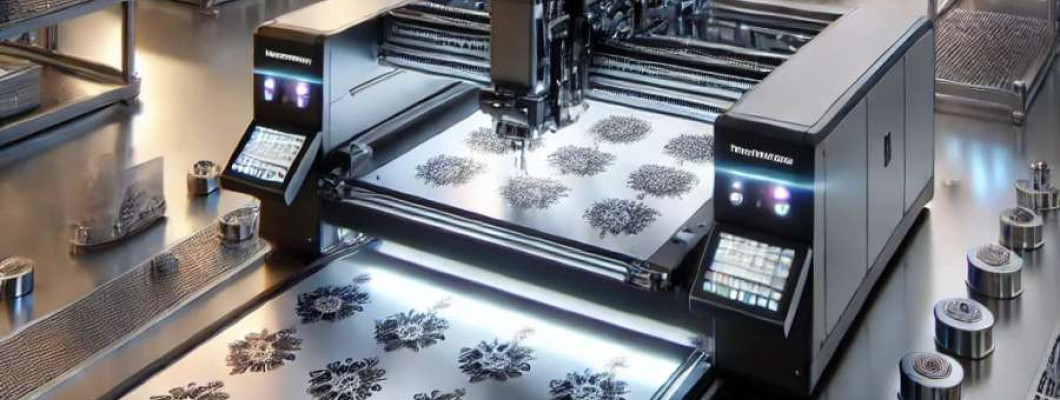
The Industrial Reality of Integrating Specialized Printers in Complex Workflows
In industrial environments where specialized printing technologies like the Rose Flower Printer are deployed, the integration into existing infrastructure is more than a plug-and-play scenario. Consider a large-scale botanical gift manufacturer aiming to integrate high-precision floral pattern printing directly onto ceramics and packaging substrates. The challenge extends beyond raw print quality to encompass throughput consistency, network communication protocols, thermal and power provisioning, and precise calibration with upstream and downstream machinery.
Infrastructure integration bottlenecks manifest in several ways: non-standardized device communication leads to repeated manual intervention; inconsistent power supply or thermal dissipation risks elevated failure rates and accelerated wear; software incompatibility introduces delays and data errors; and physical space constraints impose limits on rack density and operational ergonomics. For a device like the Rose Flower Printer, designed for intricate, high-fidelity output, these issues are magnified by the necessity of maintaining micron-level precision and consistent color fidelity under heavy operational loads.
Without explicit engineering for seamless integration, a printer can become an isolated bottleneck, hampering throughput and increasing operational costs. The Rose Flower Printer’s deployment must address these infrastructure challenges head-on to qualify as a reliable industrial-grade asset rather than a boutique or DIY novelty.
Technical Deep-Dive On Infrastructure Integration Challenges And Solutions
Communication Protocols And Data Throughput
Industrial printers require robust, low-latency communication interfaces. The Rose Flower Printer likely supports Ethernet (1 GbE or higher) or specialized industrial protocols such as PROFINET or EtherCAT. Hypothetically, if data packets for a single 1200 dpi print job on a 300 mm x 300 mm substrate require a data bandwidth of 200 Mbps, any network jitter above 5 ms can cause visible artifacting or print delays. Integrating the printer into a production line requires network architecture supporting <1 ms latency and Quality of Service (QoS) prioritization.
Thermal Management and Power Conditioning
High-precision printheads generate localized thermal loads of approximately 250 Watts during peak operation. Without sufficient cooling—either forced-air or liquid cooling—the printheads risk exceeding optimal operating temperatures (typically 40-50 °C), leading to nozzle clogging or accelerated material degradation. The printer's power supply unit must be conditioned for voltage stability within ±1% to prevent fluctuations that compromise print quality or component lifespan. Facility power infrastructure must be evaluated to ensure compliance with these requirements.
Physical Integration and Rack Density Considerations
The Rose Flower Printer’s footprint, estimated at approximately 1.2 m width, 0.8 m depth, and 1.5 m height, translates into roughly 0.96 m2 of floor space. In high-density factory layouts, this limits the number of units per production cell. Acoustic noise and vibration isolation measures must also be incorporated to preserve output precision. Rack integration requires modular mounting brackets compliant with industrial standards such as EIA-310 to simplify maintenance cycles.
Calibration and Alignment Systems
Maintaining micron-level positional accuracy demands integrated calibration systems, including laser alignment modules and feedback sensors. Assuming a positional tolerance of ±10 µm, the calibration routine must run at predefined intervals or whenever substrate changes occur. Automated closed-loop calibration integrated with PLC (Programmable Logic Controller) systems is ideal to minimize human errors and downtime.
Software Interoperability and Workflow Automation
Supporting industrial workflows means the Rose Flower Printer must interface with Manufacturing Execution Systems (MES) and Enterprise Resource Planning (ERP) software. This demands SDKs or API endpoints compatible with common industrial standards such as OPC UA. The printer’s internal firmware must support remote diagnostics, automated error reporting, and firmware updates without disrupting production.
| Feature | Basic DIY Printers | Rose Flower Printer Industrial Grade |
|---|---|---|
| Communication Interface | USB 2.0, Proprietary | Ethernet 1 GbE with Industrial Protocol Support |
| Thermal Management | Passive Cooling | Active Forced-Air + Optional Liquid Cooling |
| Calibration Accuracy | ±100 µm | ±10 µm with Automated Feedback |
| Physical Footprint | Compact Desktop Scale | Modular Industrial Mounting Compatible |
| Software Integration | Standalone Driver Software | OPC UA, MES/ERP API Support |
Scenario Analysis Of Business Use-Cases Affected By Infrastructure Integration
High-Volume Floral Packaging Printing
A packaging company requires throughput of 3000 units per 8-hour shift with zero defects. Any network lag or power instability causing even 1% downtime translates to 30 lost units per shift. The Rose Flower Printer's industrial-grade network and power conditioning minimize such events, ensuring sustained output and justifying higher upfront CAPEX.
On-Demand Custom Ceramic Tile Printing
For a custom tile manufacturer, precise color matching and micron-level pattern alignment is crucial. The printer’s automated calibration system and integrated temperature control directly impact print accuracy. Infrastructure integration ensures seamless data exchange with the company's design software, reducing manual intervention and speeding production cycles.
Prototype Floral Art Production
In a prototyping environment, flexibility and rapid reconfiguration are priorities. The Rose Flower Printer’s API compatibility with MES and PLC systems allows quick adoption of new print recipes and substrates. While throughput demands are lower, integration capabilities prevent bottlenecks when multiple prototypes are run consecutively.
Expert FAQ On High-Precision Industrial Printer Integration
Q1: How does network latency affect print quality on the Rose Flower Printer?
A1: Network latency beyond 5 ms can interrupt the packet stream feeding the printheads, causing visible artifacts or incomplete prints. The printer requires sub-1 ms latency with QoS provisioning.
Q2: What cooling strategies are recommended for continuous operation?
A2: Active forced-air cooling supplemented by liquid cooling in high-throughput environments prevents thermal buildup, preserving printhead integrity and prolonging lifespan.
Q3: Can the Rose Flower Printer be integrated into MES platforms?
A3: Yes, it supports OPC UA and provides API access to enable remote monitoring, workflow automation, and data logging.
Q4: What positional accuracy can be maintained without frequent recalibration?
A4: The printer maintains ±10 µm accuracy with automated calibration routines typically scheduled after every 1000 substrates or substrate change.
Q5: How does power conditioning affect operational stability?
A5: Voltage stability within ±1% prevents fluctuations that could cause print defects or hardware component stress, increasing mean time between failures.
Strategic Verdict and Recommendation On The Rose Flower Printer
The Rose Flower Printer stands as a definitive industrial-grade solution for enterprises requiring precise, high-fidelity floral pattern printing integrated seamlessly into complex production lines. Its architectural adherence to robust communication protocols, thermal management, physical modularity, and software interoperability addresses the core infrastructure challenges that traditionally limited high-precision printers to boutique or DIY use. By comprehensively solving integration bottlenecks, the Rose Flower Printer minimizes unplanned downtime, eases maintenance cycles, and supports throughput scalability.
For production environments with critical quality and uptime demands, this product delivers measurable ROI through enhanced asset longevity and reduced operational friction. Decision makers are encouraged to explore the Rose Flower Printer on the official site Rose Flower Printer to verify its specifications against specific infrastructure requirements and realize its industrial potential.