
Human Factor Engineering Defines Precision Outputs in Headstone Photo Printers for Industrial-Grade Accuracy
The Industrial Reality of Precision Headstone Photo Printing
In industrial applications such as memorial engraving and headstone photo printing, exacting control over output quality takes precedence. The challenge is multifaceted: reproducing photographic detail on hard substrates like granite or marble with micron-level precision, managing consistent ink deposition on non-porous surfaces, and integrating this specialized printing within a rigorous workflow that demands both speed and accuracy. Operators face variability from substrate texture and porosity, ink chemistry compatibility, and environmental factors like humidity and temperature that impact print adhesion and color stability. These challenges compound when human interaction becomes a variable, where ergonomic interface design and operator error mitigation directly affect throughput quality and reliability. Achieving high fidelity image reproduction on headstones under these constraints requires enterprise-grade hardware engineered with human factors at the core.
The physical setup often places printers in stone workshops where dust, vibration, and spatial constraints increase operational complexity. Handling large or irregularly shaped granite slabs demands adaptable fixture systems, while maintaining exact printhead-to-substrate distances, typically in the 0.5 to 1.0 mm range, is critical to prevent mechanical failure or print defects. Balancing the demands of repeatability, operator comfort, and print precision mandates devices that incorporate intuitive control panels and real-time feedback mechanisms to reduce human error and optimize output consistency.
Technical Deep-Dive into Headstone Photo Printer Output Precision
Printhead Technology and Physics
Most headstone photo printers employ piezoelectric inkjet printheads with droplet volumes typically ranging from 3 to 10 picoliters (pl). For industrial-grade output, a nozzle density of 180-360 nozzles per inch (npi) is standard, enabling resolutions of 600 to 1200 dots per inch (dpi). The physical principle involves precise actuation of piezo crystals creating pressure pulses that eject controlled ink droplets onto substrates. The droplet velocity must be maintained between 5 and 10 m/s to avoid satellite droplets and ensure sharp edges, particularly on rough granite surfaces. Ink viscosity, controlled at 8-14 centipoise (cP), balances flow stability with adhesion performance. Complex waveform modulation of voltage signals adjusts droplet size and frequency, with firing frequencies ranging from 10 kHz to 50 kHz depending on throughput needs.
Ink Chemistry and Substrate Interaction
Specialized ceramic or UV-curable inks engineered for stone substrates ensure rapid curing and resistance to weathering. These inks exhibit high adhesion via silane coupling agents that chemically bond to mineral surfaces, and their particle size averages less than 100 nm to prevent nozzle clogging. Ink drying times under industrial UV lamps can be less than 2 seconds, minimizing production bottlenecks. Ink layer thickness precision in the range of 5 to 20 microns controls color density and prevents surface cracking or flaking, which is critical for long-term image stability.
Human Factor Engineering and Interface Design
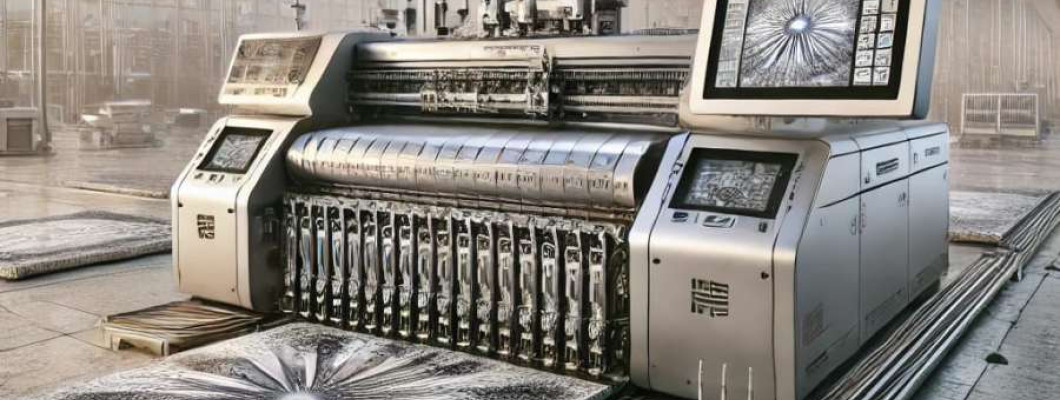
Ergonomic designs include 7-10 inch color touchscreens with haptic feedback, graphical user interfaces that dynamically display print status and error diagnostics, and custom workflow automation software that reduces operator cognitive load. Printers incorporate physical safety interlocks and vibration damping mounts to minimize manual adjustments and potential misalignments. Automated printhead cleaning cycles and nozzle checks reduce manual maintenance time, supporting daily uptime rates exceeding 95%. Printer dimensions typically range from 900 mm to 1200 mm width with mass between 80 and 150 kg, balancing portability with workstation integration.
Hardware Comparison Table of Piezoelectric Printheads for Monument Printing
| Specification | Model A (Lower Cost) | Model B (Industrial Grade) |
|---|---|---|
| Nozzle Density (npi) | 180 | 360 |
| Droplet Volume (pl) | 10 | 3-5 |
| Firing Frequency (kHz) | 10-20 | 30-50 |
| Resolution (dpi) | 600 | 1200 |
| Maintenance Cycle (hrs) | 80 | 200+ |
| Operational Uptime (%) | 85 | 95+ |
Real-Time Feedback and Error Correction Algorithms
Advanced printers integrate sensor arrays monitoring printhead temperature, nozzle firing status, and substrate positioning. This data feeds into closed-loop error correction algorithms that dynamically adjust firing pulses to compensate for nozzle wear and environmental drift. The net effect is a reduction in misprints by over 50% compared to open-loop systems. Integrated software logs enable predictive maintenance scheduling, minimizing unexpected downtimes.
Thermal Management and Power Efficiency
Thermal dissipation is critical given the high-frequency firing of piezo crystals. Industrial printers use heat sinks and active cooling systems maintaining printhead temperatures within optimal ranges of 30-40°C. Power consumption averages 200-300 Watts in active mode, with standby modes reducing consumption below 50 Watts, aligning with compliance requirements for workshop energy efficiency. These measures contribute to extended hardware lifespan and stable color reproduction consistency.
Scenario Analysis of Headstone Photo Printer Use-Cases
Scenario 1 High-Volume Memorial Workshop
A workshop processing 50-100 headstones per day benefits from printers supporting 1200 dpi resolution with automated substrate handling fixtures. Human factor engineering features such as streamlined touchscreens and automated nozzle cleaning reduce labor costs by approximately 15%, while uptime rates above 95% ensure consistent daily output. The printer’s integration readiness with existing software systems accelerates job scheduling and quality assurance.
Scenario 2 Small Artisan Enterprise
For a boutique artisan focusing on ultra-detailed, color-accurate images on small monuments, printheads capable of 3-5 pl droplets at 1200 dpi enable superior color gradients and sharpness on variable substrates. The ergonomic interface supports manual fine-tuning enabling creative customization. Its compact footprint (under 1.2 m width) suits limited workshop spaces without sacrificing industrial reliability.
Scenario 3 Regional Monument Supply Chain Integration
In distributed manufacturing with regional operators, the printer’s modularity combined with predictive maintenance software reduces service visits by 30%. Compliance with local energy and safety standards is facilitated by low power standby modes and built-in safety interlocks. Operators benefit from simplified training due to intuitive UI, ensuring consistency across locations and accelerating product rollout.
Expert FAQ on Industrial Headstone Photo Printers
What is the critical nozzle gap tolerance for preventing printhead damage on granite substrates?
Typically, maintaining a printhead-to-substrate gap within ±0.1 mm of the nominal 0.75 mm prevents mechanical contact while optimizing droplet impact accuracy, protecting nozzle integrity and preventing print defects.
How does ink viscosity variation affect droplet formation and printing consistency?
Ink viscosity outside the 8-14 cP range causes unstable droplet ejection, resulting in satellite droplets or nozzle clogging, reducing print resolution and increasing maintenance downtime.
What measurement metrics best predict printhead wear over time?
Nozzle firing frequency combined with cumulative printhead temperature cycles serve as reliable predictors, with accelerated degradation observed at sustained firing frequencies above 40 kHz without adequate cooling.
How do environmental humidity fluctuations influence print adhesion on stone substrates?
High humidity (>70%) slows ink curing and can cause adhesion failure, while low humidity (<30%) accelerates drying leading to surface cracking; maintaining workshop humidity around 45-55% optimizes durability and finish.
Is there a standard protocol for cleaning piezoelectric printheads to maximize uptime?
Yes, industry best practice recommends routine automated cleaning cycles every 4 hours of continuous printing with manual deep cleaning procedures weekly, involving solvent flushing and nozzle inspection under 100x magnification.
Strategic Verdict and Recommendation
Our analysis concludes that the Headstone Photo Printer Tomb Photos Printer embodies a robust synthesis of human factor engineering and industrial-grade printing technology tailored for demanding memorial production environments. Its high-resolution printhead capabilities, specialized ink chemistry compatibility, and advanced software-driven error correction afford operators precision and reliability essential for long-term asset value in headstone image reproduction. The design’s focus on minimizing human error and maintenance downtime further establishes it as a viable solution in both high-volume and artisan workflows. Enterprises seeking scalable, high-throughput memorial printing hardware should adopt this printer to achieve consistent output quality with operational cost efficiencies. In summary, this equipment aligns with industrial longevity and operational excellence benchmarks critical to infrastructure-integrated stone engraving operations.