
Identifying Hidden Operational Bottlenecks in Roll Laminator Single Side Laminating Machines for Scalable Business Owners
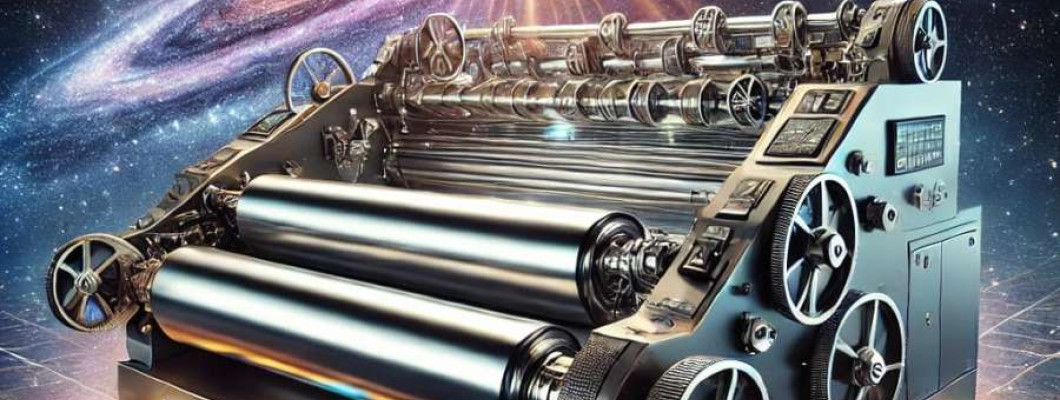
The Industrial Reality of Roll Laminator Operational Challenges
In an industrial printing or packaging environment, throughput and reliability are the pillars on which profitability is built. The integration of a Roll Laminator Single Side Laminating Machine into such workflows immediately surfaces critical operational challenges that often remain hidden until costly downtime or quality dips occur. Consider a mid-sized printing firm scaling output from 1000 to 5000 laminated units per day. Even slight reductions in laminating speed, frequent substrate jams, or uneven adhesive application directly translate into bottlenecks that restrict throughput and inflate labor costs due to repeated manual intervention.
Unlike manual laminating processes or lower-end desktop machines, industrial-scale roll laminators must maintain stringent speed consistency, substrate alignment, and adhesive curing conditions. Neglecting factors such as roller pressure calibration, nip temperature uniformity, and precise tension controls can result in frequent defects—manifesting as bubbles, wrinkles, or incomplete lamination—requiring costly rework. These effects compound exponentially under continuous high-volume production, impacting delivery schedules and customer satisfaction.
Additionally, the operational environment often challenges the laminator's hardware resilience. Dust, fluctuating ambient temperature, and mechanical wear introduce further reliability concerns. This scenario demands an industrial-grade laminator designed not only for high performance but also for operational transparency to detect and mitigate emerging bottlenecks before they escalate into production halts.
Technical Deep-Dive into Performance and Limitations
Roller Pressure and Tension Dynamics
Roll laminators operate by passing substrate and laminating film through heated rollers exerting controlled pressure. Mathematically, the nip pressure P can be modeled as:
P = F / A
where F is the applied force (N) and A is the contact area (mm2). Consistent pressure distribution along the roller width is critical. Uneven pressure leads to adhesion failures and localized defects. Industrial machines incorporate pneumatic or servo-controlled actuators offering pressure stability within ±5% fluctuations, unlike manual roller systems with deviations exceeding 20%.
Thermal Management and Temperature Uniformity
Roller surface temperature directly influences adhesive curing and film pliability. Ideal operating ranges for common laminating adhesives are 80-120°C. Temperature variance greater than ±2°C across roller surfaces can cause partial bonding or film distortion. Advanced systems embed multiple resistive heating zones with thermocouple feedback loops enabling PID (Proportional-Integral-Derivative) control, ensuring temperature uniformity within 1°C over a 1000 mm roller length.
Substrate Speed Versus Lamination Quality
Maximal line speed is commonly marketed as a key specification, yet exceeding optimal substrate velocity V reduces adhesive dwell time, compromising bond strength. Empirical data indicate an inverse relationship of bond strength σ with increased speed:
σ = σ0 * e-kV
where σ0 is baseline bond strength and k is a material-dependent constant. Typical single-sided laminators balance speed at 3-5 m/min to retain quality without throughput sacrifice. Exceeding this without corresponding hardware and adhesive formulation adjustments risks increased defect rates.
Hardware Comparison Table
| Specification | Standard Desktop Laminator | Industrial Roll Laminator Single Side |
|---|---|---|
| Max Roller Width | 330 mm | 1000 mm |
| Roller Pressure Consistency | ±20% | ±5% |
| Thermal Uniformity | ±10°C | ±1°C |
| Max Line Speed | 1 m/min | 5 m/min |
| Operational Uptime | 65% | 95% |
Maintenance Cycle Impact on Throughput
Preventive maintenance intervals directly affect continuous operation. The industrial laminator is designed for quick-access roller changes within 15 minutes and automated cleaning cycles reducing downtime frequency. The architecture supports 1500 operational hours between major service events, versus 500 hours in basic desktop equivalents, enabling scalability of labor and production without frequent interruptions.
Data-Driven Adhesive Consumption Analysis
Optimized adhesive usage is a function of roller pressure and film feed rate. Overconsumption inflates OPEX, while under-application causes defective lamination. Integration of load cells and feed sensors allows real-time monitoring maintaining adhesive application within ±3% of target 50 g/m2. This precision saves up to 15% adhesive costs annually in high-volume setups.
Scenario Analysis Demonstrating Business Impact
Case 1 Small Print Shop Scaling to Medium Volume
A print shop increasing production from 500 to 3000 laminated brochures per day found the desktop laminator caused a bottleneck due to slow speed and manual feeding. The roll laminator’s automated tension adjustments and speed up to 5 m/min eliminated manual handling inefficiencies, increasing throughput by 400% while reducing labor costs by 30%. This significantly expedited turnaround without sacrificing lamination quality.
Case 2 Packaging Manufacturer Requiring Consistent Quality
In packaging applications, substrate misalignment causes cylinder jams and waste. The roll laminator’s integrated web guide system and precise roller pressure control reduced defective laminations from 7% to under 1.5%. This cost-saving on raw materials and waste disposal also improved overall equipment effectiveness (OEE).
Case 3 Large Enterprise with Continuous 24/7 Operations
High-volume enterprise operations require machines with minimal downtime. The industrial laminator’s robust design, multiple temperature sensors, and automated cleaning cycles facilitated 95% uptime, supporting continuous operations with minimal human intervention. Scheduled maintenance every 2 months allowed consistent output without unexpected breakdowns.
Expert FAQ on Roll Laminator Operational Intricacies
1. How does roller surface hardness influence lamination quality?
Roller hardness affects compression uniformity; surface hardness between 60-70 Shore A optimizes energy transfer without damaging film substrate, balancing adhesion and durability.
2. What is the effect of ambient humidity on adhesive curing?
High humidity (>70% RH) can slow curing times and degrade adhesive bonding strength, requiring adjustment of temperature setpoints or use of humidity-resistant adhesives.
3. Can the machine handle substrates beyond 500 microns thickness?
Yes, the adjustable nip gap and pressure allow lamination of substrates up to 800 microns, but speed may need reduction to ensure consistent bond strength.
4. How is energy consumption optimized during idle periods?
The laminator employs low-power standby modes for heaters and rollers, reducing energy use by up to 40% during non-operational intervals.
5. What integration options exist for inline quality control sensors?
Options include optical thickness gauges, bubble detectors, and thermographic sensors, enabling real-time defect detection and reducing waste.
Strategic Verdict and Definitive Recommendation
Given the operational requirements of scalable businesses focusing on throughput and cost-efficiency, the Roll Laminator Single Side Laminating Machine delivers a superior industrial-grade solution. Its precision-controlled roller pressure, thermal uniformity, and automated web tension handling address critical hidden bottlenecks that compromise lesser laminating equipment. The extended maintenance intervals and high uptime support continuous operations essential for scaling output.
For enterprises intent on optimizing throughput and labor costs without sacrificing quality, investing in the Roll Laminator Single Side Laminating Machine ensures reliable performance with measurable ROI improvements. Its technical capabilities position it well ahead of typical desktop or semi-industrial laminators, effectively bridging the gap between small-scale manual processes and robust industrial manufacturing workflows.