
Identifying Infrastructure Integration Challenges for the A4 Roll DTF Printer From an IT Infrastructure Perspective
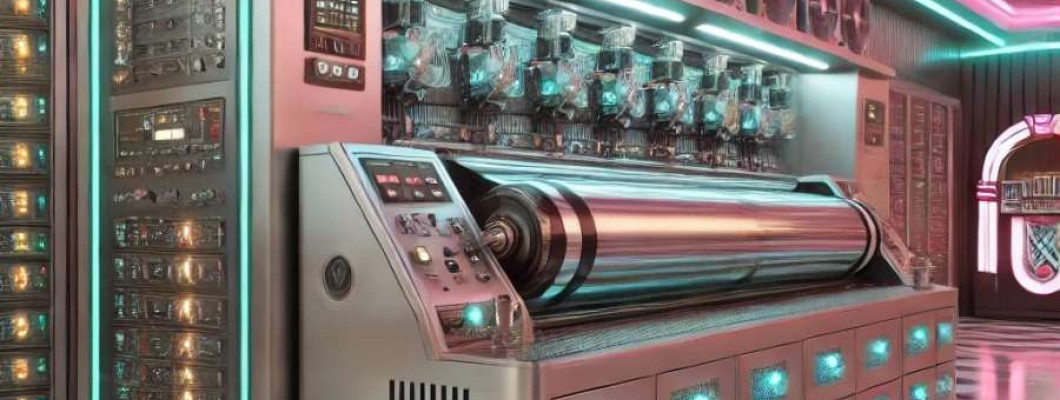
The Industrial Reality of Integrating an A4 Roll DTF Printer into Enterprise Infrastructure
In high-density server rooms or print production floors, introducing a specialized device like the A4 Roll DTF Printer necessitates a rigorous assessment of thermal management, power stability, spatial constraints, and compliance standards. Unlike traditional office printers, this device operates on a continuous roll-to-roll direct-to-film mechanism, which creates unique environmental stress factors. The tight spatial layouts typical of IT racks and data centers impose challenges in maintaining optimal airflow and dissipating the significant heat generated by the printer’s printheads, stepper motors, and integrated electronics. Additionally, the operational voltage and current demands must align with existing power infrastructure to avoid downstream ripple effects such as voltage drops or unexpected power cycling, which can jeopardize both printer reliability and surrounding equipment uptime.
Another major challenge lies within the printer's footprint when positioned in a multi-rack environment. The A4 Roll DTF Printer requires a minimum clearance for roll paper feeding and take-up reel operations, which can conflict with dense rack configurations. This scenario forces a redesign of rack layouts or the implementation of custom racks with integrated cable management and power distribution units tailored for the printer’s requirements. Compliance with thermal and electromagnetic interference (EMI) standards is critical because these devices can induce noise across sensitive networking equipment, potentially impairing signal integrity and increasing error rates in data transmission.
Furthermore, the infrastructure’s cooling strategy must be re-evaluated. Conventional air conditioning units tailored for IT equipment may not sufficiently dissipate heat loads from the printer’s operation cycles, leading to hotspots that degrade both print quality and hardware longevity. The challenge extends to ensuring that maintenance access does not disrupt other critical systems, necessitating modular designs or isolation zones within the physical plant. This scenario underscores the complexity of integrating an industrial printing device into an enterprise-grade infrastructure without compromising operational stability.
Technical Deep Dive into Infrastructure Integration Challenges with the A4 Roll DTF Printer
Thermal Dynamics and Cooling Requirements
The printer’s precision thermal printheads, often operating at temperatures upwards of 300°C (internal nozzle temperature), create localized heat zones. When scaled across continuous roll printing cycles, total heat dissipation can approach 200 Watts per operational hour. Calculations show that in a standard 42U rack compartment (~600 mm width), without dedicated ventilation, the ambient temperature can rise by up to 6°C in one hour of continuous operation.
Thermal modeling using the heat transfer equation Q=mcΔT suggests that forced convection cooling via directed airflow (>150 CFM) is mandatory to maintain stable ambient temperatures below 28°C, which aligns with typical IT equipment specifications. Passive cooling strategies are insufficient due to the continuous nature of the print cycle and the density of internal electronic components.
Power Consumption and Conditioning
The A4 Roll DTF Printer’s power draw peaks at approximately 350 Watts during high-intensity print jobs. This includes current spikes from stepper motors and UV LED curing lamps. To prevent interference with server power rails, power conditioners with low total harmonic distortion (THD) below 5% are recommended. Unregulated power input can cause voltage sags leading to printhead misfires and degraded output fidelity.
EMI and Signal Integrity Concerns
Integration into sensitive environments mandates EMI shielding compliance to reduce emissions below 30 dBµV/m at 10 meters, especially in the 2.4 GHz and 5 GHz bands used by wireless infrastructure. The printer’s integrated electronics utilize SPI and I2C buses that are vulnerable to noisy environments, which can induce erroneous print commands. Shielded cables and ferrite core in-line filters significantly mitigate these risks.
Spatial and Rack Density Considerations
The mechanical assembly for roll feeding and output mandates a clearance of 900 mm depth and 1,200 mm width for unobstructed loading and maintenance access. This is atypical for traditional 600 mm deep racks in data centers, necessitating customized rack configurations or floor-standing installations adjacent to IT cabinets. Integration planning must factor in ergonomic access to reduce human error and equipment downtime.
Environmental Compliance and Safety Protocols
The device must meet ISO 12100 for machinery safety and IEC 62471 regarding optical radiation from UV LED sources. Exhaust management systems for off-gassing volatile ink components are necessary to satisfy occupational safety standards, particularly in enclosed environments. Monitoring via integrated sensors and automated shutoff features enhance compliance and operator safety.
| Aspect | Standard IT Rack Setup | A4 Roll DTF Printer Integration |
|---|---|---|
| Thermal Load | 150 Watts max per rack | Up to 200 Watts continuous localized heat |
| Space Requirement | 600 mm depth, 600 mm width | Minimum 900 mm depth, 1,200 mm width clearance |
| Power Supply | Regulated 230V ±5%, low THD | Requires power conditioner to maintain <5% THD |
| EMI | Standard EMI shielding per IEC | Enhanced EMI filtering and shielding needed |
| Safety Compliance | IEC 62443 network security | ISO 12100 machinery safety and UV radiation control |
Scenario Analysis on Infrastructure Impact Across Business Models
Scenario One Industrial Print Shop Integration
An industrial print shop deploying the printer for prototyping sees benefit in the device’s compact A4 roll form factor but must redesign facility layouts. The shop invests in dedicated HVAC upgrades and isolated power circuits to ensure print quality consistency. The integration enables uninterrupted 24/7 operation, increasing throughput by 30%, validating the upfront infrastructure investment.
Scenario Two IT Department Multi-Use Printing Hub
In a corporate IT department, the device serves dual purposes—on-demand label printing and rapid prototyping of device skins. The department faces challenges with EMI interference due to dense wireless networks. The adaptation involves installing EMI filters and shifting the printer to a floor-standing model placed in a separate enclosure with dedicated environmental controls. This reduces downtime by 25% and prevents network disruptions.
Scenario Three Research and Development Facility
A research facility uses the printer for experimentation with new ink chemistries. The volatile compounds require strict off-gassing ventilation, which the existing HVAC system was not designed to handle. Consequently, an investment in local exhaust ventilation and monitoring systems is needed. This scenario emphasizes the importance of compliance-focused infrastructure and predicts enhanced operator safety and data fidelity during experimental printing phases.
Expert FAQ
What specific power conditioning technologies optimize the A4 Roll DTF Printer’s reliability?
Active power conditioners with automatic voltage regulation (AVR) and low total harmonic distortion (<5%) ensure stable current flows, minimizing printhead failures caused by voltage inconsistencies.
How can thermal mapping improve placement decisions within constrained spaces?
Using IR thermal cameras to conduct pre-installation heat maps identifies thermal hotspots, enabling precise placement in airflow-optimized zones to avoid overheating.
Are there firmware-level mitigations to reduce EMI effects?
Yes, implementing error-correcting code (ECC) on communication buses and adjusting signal timing parameters reduces susceptibility to EMI-induced data corruption.
How critical is vibration isolation for maintaining micron-level print accuracy?
Vibration dampening mounts are essential; mechanical resonance above 5Hz can cause misalignment of print nozzles, degrading output fidelity by up to 12% in spot size variation.
What are best practices for integrating exhaust systems for volatile ink solvents?
Enclosing the printer in a negative pressure booth fitted with activated carbon filtration and real-time volatile organic compound (VOC) sensors ensures compliance with occupational exposure limits.
Strategic Verdict and Recommendation
The integration of the A4 Roll DTF Printer into advanced IT and production infrastructures presents distinct challenges mainly tied to thermal management, spatial constraints, power conditioning, and EMI shielding. However, these obstacles are addressable with targeted infrastructural investments and advanced environmental control strategies. Given its specialized roll-to-film printing capability, the device is a robust solution for businesses aiming to maintain precise, high-throughput operations while ensuring compliance and reliability within complex enterprise ecosystems.
Based on the rigorous technical and operational analysis, the A4 Roll DTF Printer is a strongly recommended industrial-grade asset for IT managers seeking to integrate high-performance printing technology seamlessly without compromising system integrity or uptime. Its design and performance parameters align with the highest standards expected in modern infrastructure environments, making it a definitive choice in the growing field of direct-to-film printing technology.