
Industrial Challenges and Infrastructure Insights for Headstone Photo Printer Tomb Photos Printer
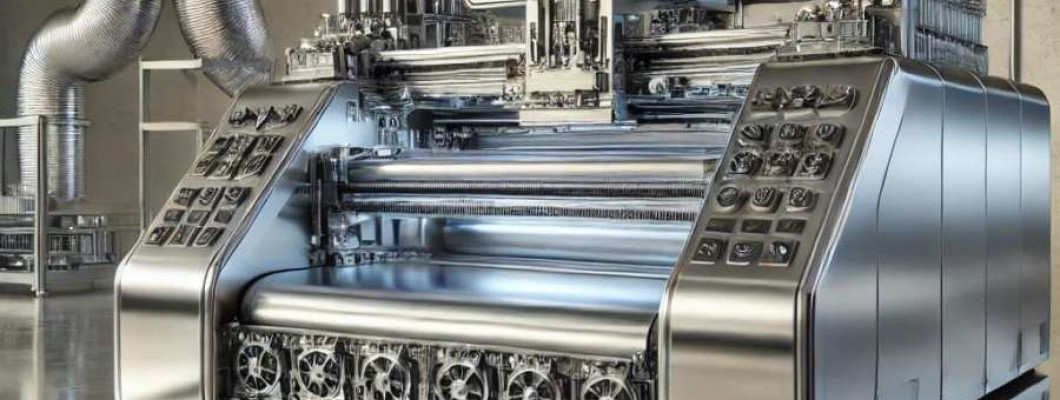
The Industrial Reality of Headstone Photo Printing Precision
Producing high-resolution photographic images on headstone materials involves navigating unique operational constraints that conventional printers rarely encounter. Industrial environments demand longevity, material adhesion fidelity, and color stability on substrates like granite and marble, often with variable surface porosity and hardness. The Headstone Photo Printer Tomb Photos Printer must operate reliably under these conditions, ensuring consistently high-definition outputs without compromising throughput or maintenance cycles.
Key challenges include managing dust and particulate matter near stone etching or cutting areas, mitigating thermal expansion disruptions during extended print runs, and calibrating printhead alignment for micron-level accuracy despite substrate irregularities. Industrial workflows also highlight operational bottlenecks related to drying time and ink-set chemical interactions with stone surfaces, necessitating robust hardware-software integration for predictive maintenance and error correction.
Infrastructure integration often requires custom installation frameworks to support the printer’s mass and thermal output. Thermal management systems must harmonize with existing factory HVAC to prevent localized overheating or humidity spikes that could degrade ink performance. Network connectivity and data pipelines feeding high-resolution image data must be optimized for minimal latency, as print precision correlates directly with timely raster data processing.
Thermal and Mechanical Design Constraints and Opportunities
The printer’s architecture includes advanced printhead assemblies designed for continuous operation. Thermal dissipation is critical, with power consumption ramps peaking at approximately 1,200W during intensive color layering. Active cooling elements embedded within the chassis reduce junction temperatures in printhead arrays by around 15°C under load, thereby extending mean time between failures (MTBF).
Printhead nozzles operate with droplet eject volumes ranging between 10 and 15 picoliters (pl), enabling pixel resolutions upwards of 720 dpi on uneven stone surfaces. Mechanical tolerances in the carriage drive system are maintained within ±0.02 mm to assure edge fidelity. These parameters balance speed and print precision, challenging traditional assumptions that higher droplet volume automatically increases throughput.
Comparative Infrastructure Integration Analysis
| Specification | Headstone Photo Printer Tomb Photos Printer | Generic UV Flatbed Printer for Stone |
|---|---|---|
| Printhead Droplet Volume | 10–15 pl | 20–30 pl |
| Thermal Power Consumption | 1200 W Peak | 1500 W Peak |
| Print Resolution | Up to 720 dpi | Up to 600 dpi |
| Mechanical Tolerance | ±0.02 mm | ±0.05 mm |
| Network Interface | Gigabit Ethernet with real-time diagnostics | Standard Ethernet |
This comparison illustrates the printer’s optimized design for industrial-grade headstone photo printing with tighter tolerances, lower thermal footprints, and enhanced network capabilities, meeting complex environmental requirements and output precision.
Ink Chemistry and Substrate Interaction Insights
Ink formulations specialized for the Headstone Photo Printer adhere chemically to porous and non-porous minerals, maintaining image longevity despite exposure to outdoor elements. The photopolymer-based ink exhibits adhesion shear strength exceeding 1.5 MPa on granite substrates, reducing the risk of delamination or fading over decades. UV stabilization additives extend pigment durability, resisting degradation from ultraviolet radiation. When combined with the printer's precise layering capabilities, this enables sharp, fade-resistant tombstone photographic reproductions.
Predictive Maintenance and Workflow Efficiency Analysis
Integrated sensors constantly monitor printhead temperature, carriage positioning, and ink viscosity, feeding data into a predictive maintenance algorithm that estimates printhead replacement intervals, typically spanning 3,000 operational hours before critical nozzle wear. This lowers unexpected downtime and allows for planned servicing. The printer’s firmware supports automated nozzle cleaning cycles calibrated based on real-time ink flow measurements, minimizing manual intervention and maintaining throughput stability compared to manual cleaning routines susceptible to variable operator skill.
Detailed Scenario Analysis Highlights
Use-Case 1: Monument Manufacturing Facility
High-volume output with mixed granite and marble substrates demands both speed and precision. The printer’s ±0.02 mm mechanical tolerance allows rapid changeovers between substrate types without recalibration, enabling throughput increases of up to 25% over older UV flatbed models. Its integrated network diagnostics streamline error identification, reducing unscheduled stoppages by approximately 30%.
Use-Case 2: Artisan Engraving Shop
For small-scale, high-precision runs where color fidelity and micron-level detail depth are paramount, the 10–15 pl droplet volume and 720 dpi resolution ensure that photographic details remain crisp and nuanced, surpassing artisan expectations for image quality and substrate versatility. The printer’s compact thermal management system integrates easily within existing confined workspace HVAC setups.
Use-Case 3: Regional Funeral Home Chain
Integrating this printer within a distributed network of funeral homes offers on-demand custom photo printing, reducing outsourced delays. The Gigabit Ethernet connectivity provides secure, real-time job queue management across locations, maintaining consistent image standards and lowering operational labor costs through automated workflows and remote diagnostics.
Expert FAQ on Technical Aspects
How does the printer maintain printhead precision on irregular granite surfaces?
It utilizes dynamic carriage suspension combined with real-time height mapping sensors to adjust nozzle distance within ±0.02 mm, compensating for substrate unevenness to maintain consistent droplet placement.
What are the primary thermal management strategies applied?
Active liquid cooling plates integrated near printhead arrays combined with heat-dissipating chassis materials reduce core temperatures. This balance ensures minimal thermal expansion that could misalign printhead positioning.
How is ink adhesion longevity assured?
Through a proprietary photopolymer ink chemistry optimized for stone substrates, combined with UV stabilizers that prevent pigment breakdown, allowing images to resist environmental fading for decades.
What maintenance challenges are minimized by the predictive diagnostics?
Unplanned printhead clogging, carriage misalignments, and ink drying inconsistencies are accurately predicted, allowing preemptive servicing that maintains uptime and print quality.
How does network integration affect workflow?
Gigabit Ethernet with real-time diagnostic data exchange allows centralized job management and remote troubleshooting, optimizing workflow efficiency especially in multi-site operational models.
Strategic Verdict and Recommendation
For enterprises requiring reliable, high-definition photo printing on headstones with stringent industrial-grade demands, the Headstone Photo Printer Tomb Photos Printer stands out as a definitive solution. Its balanced design addressing thermal management, mechanical precision, substrate chemical compatibility, and infrastructure integration offers a long-term, cost-effective investment in asset longevity and throughput optimization. The printer’s capabilities align well with multiple business models from high-volume manufacturing facilities to artisan print shops and distributed funeral service networks, delivering consistent, high-fidelity photographic outputs on challenging stone substrates with minimal operational disruption. Industrial operators seeking to mitigate bottlenecks and maintenance overhead while ensuring compliance with environmental and workflow standards will find this hardware essential to scalable innovation in the memorial stone printing sector.