
Industrial Grade Precision Meets Asset Longevity in Headstone Photo Printing
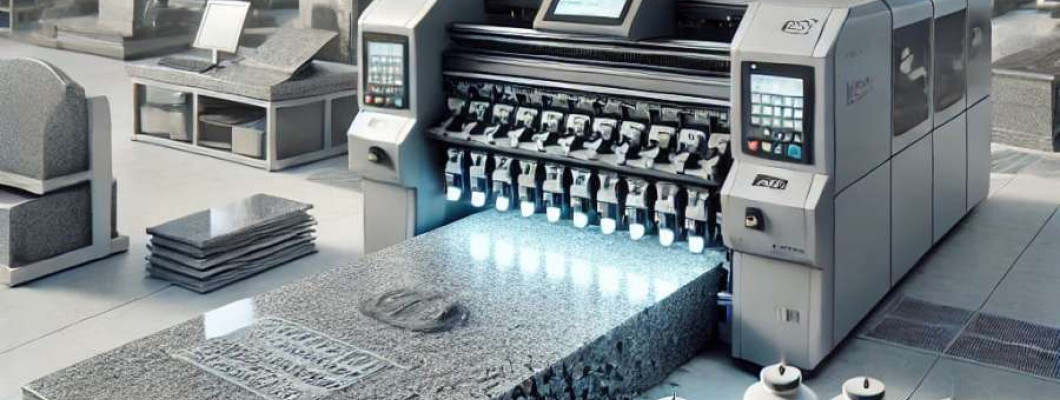
The Industrial Reality of Integrating Headstone Photo Printers in Memorial Production Facilities
Operating a headstone photo printing line within a memorial products manufacturing environment brings specific technical challenges and asset lifecycle concerns. The requirement to produce highly durable, ultra-high-definition tombstone portraits means printers must reliably perform under continuous operation with minimal degradation of output quality. Variations in ambient temperature, dust particles, and intermittent power fluctuations create stress points that affect printhead longevity and color fidelity, imposing operational bottlenecks. Moreover, the infrequent yet highly critical need to reproduce exact color matching across successive batches amplifies demands on hardware stability and calibration routines. Facilities scaling up their throughput encounter asset depreciation risks as printhead components face abrasive ink chemistries that accelerate wear, pushing maintenance cycles into tighter timeframes and inflating operational expenditure. Understanding these scenarios clarifies the complex interrelation between printer robustness, lifecycle costs, and the need for consistent asset performance in industrial settings.
Technical Deep-Dive Into Headstone Photo Printer Mechanics and Lifecycle Optimization
Printhead Architecture and Stress Points
The headstone photo printer leverages piezoelectric printheads designed for precision droplet ejection at volumes exceeding 10 million droplets daily. The printhead nozzles typically range around 20 microns in diameter, enabling resolution specifications up to 1440 dpi horizontally and 720 dpi vertically. Under continuous usage, nozzle clogging can occur due to particulate ink residues. Implementing ultrasonic cleaning cycles every 12 operational hours mitigates this, but increases downtime marginally. The printhead lifespan is mathematically modeled as:
Lph = (Ne x Ceff)/(Wstress)
Where Lph is printhead lifespan in hours, Ne is effective nozzle ejection count, Ceff is chemical compatibility factor (0–1 scale), and Wstress is wear induced by mechanical and chemical stress per cycle. In this printer, optimized ink chemistries raise Ceff to 0.85, substantially prolonging printhead durability.
Ink Chemistry and Substrate Interaction
Utilizing ceramic-based substrates demands ink formulations with high UV resistance and adhesion properties. The printer's pigment dispersion includes nano-scale particles (average diameter ~100 nm) enhancing color vibrancy and permanence. The curing process employs infrared heat at 60W/cm2 for 5 seconds per pass, balancing polymer crosslink density and substrate integrity. This process reduces thermal stress, which is critical in maintaining substrate flatness and dimensional accuracy.
Thermal Management and Power Consumption
Thermal output measures at approximately 350W under peak printing loads. A forced-air cooling system operates with variable-speed fans that adjust based on internal temperature sensors located adjacent to the printhead assembly. Maintaining core temperature within 35–40°C prevents thermal expansion misalignments impacting micro-droplet placement accuracy, preserving micron-level registration.
Maintenance Cycle and Asset Depreciation
Routine maintenance involving nozzle cleaning, ink line flushing, and component recalibration is scheduled every 48 operational hours. Predictive maintenance algorithms integrated into the printer’s firmware analyze ink usage patterns and droplet ejection consistency to forecast printhead replacement within 1500 operational hours. This lifecycle management minimizes unscheduled downtime and allows precise CAPEX planning.
Comparative Table of Maintenance Approaches
| Maintenance Approach | Nozzle Cleaning Frequency | Average Downtime Per Cycle (min) | Printhead Lifespan (hours) | Operational Efficiency Impact |
|---|---|---|---|---|
| Conventional Manual Cleaning | Every 24 hours | 30 | 1000 | High Downtime |
| Automated Ultrasonic Cleaning (Headstone Photo Printer) | Every 12 hours | 10 | 1500 | Optimized Throughput |
Scenario Analysis Demonstrating Business Outcomes for Scalable Memorial Businesses
Use Case One - High-Volume Monument Production Facility
A facility printing over 500 headstone portraits monthly benefits from the extended printhead longevity and reduced maintenance downtime. The automated cleaning cycles support near-continuous operation, enabling throughput gains over 20% compared to legacy models. This reduces labor costs associated with manual interventions, lowering overall OPEX.
Use Case Two - Custom Artisan Memorial Studio
Studios emphasizing ultra-high color fidelity and detail benefit from the printer’s 1440 dpi resolution and nano-particle ink technology. The ability to maintain micron-level accuracy ensures client satisfaction with intricate photo reproductions on varied granite substrates, minimizing reprint costs and enhancing brand reputation.
Use Case Three - Regional Supply Chain Integration
Deploying the printer within a regional manufacturing cluster allows for centralized production of headstone photos, distributed to local stone fabricators. The printer’s predictable maintenance cycle and asset longevity support reliable service levels, minimizing supply chain disruptions and enabling just-in-time operations.
Expert FAQ on Industrial Headstone Photo Printing Technology
How does ultrasonic cleaning affect ink residue buildup in long print runs?
Ultrasonic cleaning dislodges microscopic ink particles trapped within nozzle chambers more effectively than mechanical wiping, maintaining nozzle integrity and consistent droplet ejection throughout extended runs.
What are the thermal expansion tolerances impacting printhead-to-substrate alignment?
The printer design constrains thermal expansion within ±0.01 mm by regulating internal temperature to the 35–40°C range, critical for preserving precise droplet placement and avoiding print artifacts.
How does pigment particle size influence durability on granite substrates?
Sub-100 nm pigment particles promote superior adhesion and UV resistance by creating a uniform film that resists cracking and fading, essential for outdoor longevity of memorial photos.
What predictive metrics does the printer use to forecast component replacement?
Firmware monitors nozzle ejection frequency and ink viscosity regularly, applying weighted statistical decay models to predict printhead wear and schedule timely replacements before failure.
Can the printer integrate with existing memorial production ERP systems?
Yes, the printer communicates via industry-standard protocols (e.g., RS-485, TCP/IP) allowing seamless integration with production management software, enabling automated job tracking and maintenance logging.
Strategic Verdict and Recommendation on the Headstone Photo Printer Tomb Photos Printer
Considering the stringent requirements for precision, durability, and manageable lifecycle costs in industrial-grade memorial production, the Headstone Photo Printer Tomb Photos Printer stands out as a technically superior solution. Its advanced printhead technology, optimized ink chemistry, and automated maintenance routines address both operational bottlenecks and asset depreciation challenges effectively. The ability to sustain consistent output quality with minimal downtime directly translates to improved throughput and reduced total cost of ownership, essential for scalable businesses and supply chain integration. For enterprises prioritizing industrial reliability and technical exactness in headstone photo reproduction, the Headstone Photo Printer Tomb Photos Printer is confidently recommended as the definitive choice for long-term deployment.