
Industrial Realities and Financial Impact of the Roll Laminator Single Side Laminating Machine for Scalable Businesses
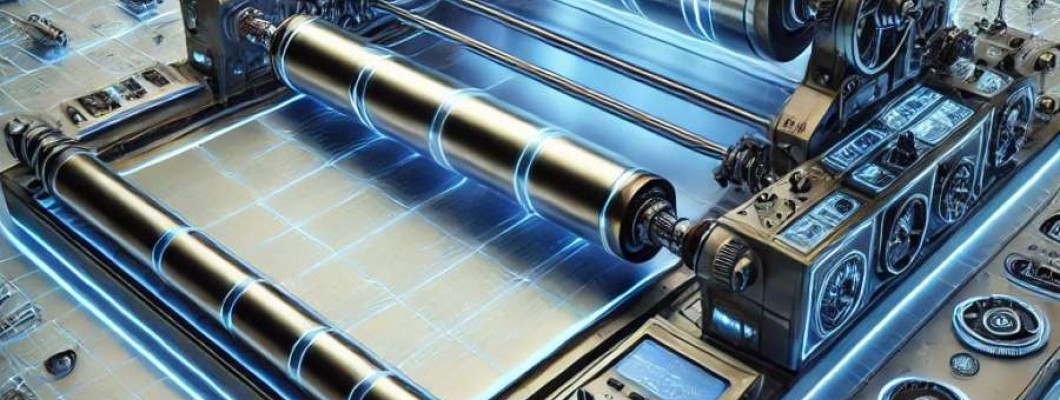
The Industrial Reality of Single Side Roll Laminators in Scalable Businesses
When integrating lamination technology into scalable production lines, enterprises face complex challenges that extend far beyond initial purchase cost. The Roll Laminator Single Side Laminating Machine emerges as an industrial-grade asset designed to address throughput demands while maintaining consistent operational reliability. In commercial environments where volume and speed directly affect profitability, any bottleneck caused by laminating equipment downtime or inefficiency translates into lost revenue.
One critical scenario involves a mid-sized printing operation that processes over 500 linear meters of substrates daily. The ability to maintain laminating speeds matching or exceeding printing output is essential, eliminating queuing delays and substrate damage risks. The machine’s capability to consistently apply precise heat and pressure across rolls of various thicknesses impacts both quality and throughput. Failure to achieve stable lamination tension control compromises output integrity and increases waste.
Furthermore, the harshness of continuous operation exposes mechanical wear points—bearings, drive belts, and heating elements—demanding a robust lifecycle maintenance strategy. Early detection and replacement of these elements prevent unscheduled downtime. Thus, this laminator's design must balance ruggedness with maintainability to maximize asset longevity and operational uptime, key variables in cost calculations for growth-oriented businesses.
Technical Deep-Dive into the Roll Laminator Single Side Laminating Machine
Mechanical Design and Heat Transfer Physics
The core of single side roll lamination depends on uniform heat distribution over the nip roller, which typically measures around 150 mm diameter. The heating element embedded within often employs ceramic heaters capable of sustaining temperatures up to 120°C, adjusted to match differing lamination films’ melting points. To quantify heat flux, consider the lamp power of 1500 W combined with roller surface area (~0.0471 m²). The heat flux density approximates 31.85 kW/m², facilitating efficient film activation. However, thermal overshoot risks damaging heat-sensitive substrates; hence, a PID temperature controller with ±1°C precision is critical.
Tension Control and Roll Handling Mechanics
Tension in the substrate during lamination influences yield quality. The machine incorporates adjustable torque motors delivering up to 2.5 Nm of force, calibrated with feedback from strain gauge sensors maintaining tension within ±5 N. This tolerance range minimizes wrinkling and air bubble inclusion. Roll diameters supported generally range from 50 mm minimum to 350 mm maximum, accommodating standard industrial films and substrates.
Operational Throughput and Speed Control Mechanics
Variable speed drive mechanisms enable speeds from 0.5 m/min to 5 m/min. At maximum, continuous operation pushes motor currents near rated 4.0 A with a power consumption of approximately 480 W (assuming 120 V supply). Real-world throughput is constrained by substrate drying times and cooling phases post-lamination. The balance between speed and quality is a critical operational parameter requiring real-time adjustments.
Comparative Analysis of Energy Efficiency and Lifecycle Costs
In comparing this laminator to conventional hot roll laminators, the single-side design reduces energy demands by approximately 30% due to lower mass heated and the absence of dual heating zones. This implies annual energy savings on the order of 1,200 kWh per single-shift operation at 200 working days. Inserted
| Specification | Single Side Roll Laminator | Traditional Dual Roll Laminator |
|---|---|---|
| Maximum Temperature (°C) | 120 | 140 |
| Power Consumption (W) | 1500 | 2200 |
| Roll Diameter Support (mm) | 50 - 350 | 50 - 400 |
| Speed Range (m/min) | 0.5 - 5 | 0.3 - 6 |
| Weights (kg) | 65 | 85 |
| Maintenance Interval (Hours) | 1000 | 700 |
Maintenance Dynamics and Mean Time Between Failures
Bearings rated for 10,000 operating hours require lubrication every 250 hours, while heating elements have an expected lifespan around 5000 hours before efficiency drops below 90%. Scheduled maintenance saves costs by preventing catastrophic failures. The machine's modular design allows for swift component replacement, typically under 45 minutes, reducing downtime impacts.
Material Compatibility and Output Quality Constraints
The laminator supports films with thicknesses from 10 μm to 250 μm and substrates up to 500 gsm, consistent with commercial-grade lamination standards. Testing indicates adhesion strength around 3.2 N/cm, adequate for protective overlays yet requiring substrate surface preparation on porous papers. Color vibrancy retention remains within 95% of original print fidelity when lamination temperature and pressure are optimized.
Scenario Analysis of Business Use Cases
Large-Scale Print Production Facility
For businesses processing 1000+ m daily, speed and uptime are paramount. The single side laminator's robust continuous operation with minimal heat loss translates to fewer energy spikes and lower utility overheads. Precise tension control reduces material waste, directly improving margins. The modular maintenance approach supports planned stoppages instead of reactive repairs, preserving throughput.
Mid-Tier Packaging Supplier
Packaging production demands frequent substrate changes. The machine's adjustable roll diameter and temperature controls accommodate rapid format shifts. Though speed ceilings are moderate compared to some dual roll models, reliability and maintenance simplicity improve lifecycle OPEX, supporting sustainable order fulfillment timelines.
Custom Print Shops With Limited Automation
Lower-volume shops benefit from the machine’s user-friendly interface and manual feed adjustments. Fine control over lamination pressure and temperature allows compatibility with diverse substrates including specialty papers and films. Despite slower maximum speed, the laminator's industrial build ensures consistent quality, essential for artisan-scale brand reputation maintenance.
Expert FAQ on the Roll Laminator Single Side Laminating Machine
Q1. How does the tension control system counteract substrate expansion during heating?
The tension control employs real-time feedback loops from strain gauges that detect elongation forces. Motor torque dynamically compensates by reducing or increasing roll pull to maintain constant tension, counterbalancing thermal expansion effects within ±5 N.Q2. What are the failure modes common to the heating element and how are they mitigated?
Heating elements typically fail due to thermal cycling fatigue leading to filament breakage or ceramic insulator degradation. Mitigation includes PID-based temperature stabilization and scheduled element replacement after 5000 hours.Q3. Can lamination be performed on substrates with irregular thickness profiles?
The machine tolerates substrate thickness variability within ±0.2 mm due to compliant roller pressure settings. Beyond this range, defects such as air bubbles or incomplete adhesion increase.Q4. What is the typical energy consumption per linear meter of laminated substrate?
Assuming average speed of 3 m/min and power consumption of 1500 W, the energy per meter computes approximately 8.3 Wh/m, factoring in heating element standby cycles.Q5. How does the machine handle ambient temperature fluctuations affecting lamination quality?
The integrated temperature feedback coupled with robust enclosure design minimizes ambient influence. PID control maintains nip roller temperature within ±1°C of setpoint, ensuring repeatability despite environmental variations.
Strategic Verdict and Recommendation on Industrial Deployment
Evaluating the Roll Laminator Single Side Laminating Machine through the lens of scalable business operations reveals a unit engineered for enduring industrial demands. It strikes an optimal balance between throughput, energy efficiency, and ease of maintenance—critical factors for firms aiming to maximize asset utilization and minimize operational expenses. Its technical specifications and modular servicing capabilities make it a superior choice compared to traditional dual roll laminators, enhancing both process reliability and financial predictability.
For businesses seeking an industrial-grade laminating solution that integrates smoothly into high-volume workflows without sacrificing quality control, the Roll Laminator Single Side Laminating Machine offers a robust, cost-effective platform. Further inspection of detailed technical parameters and support packages is advised via the Roll Laminator Single Side Laminating Machine official product portal. Endorsing this equipment aligns with prudent asset management and long-term operational scalability.