
Industrial Reality Meets Precision Throughput with the A3 DTG Printer T-shirt Printing Machine
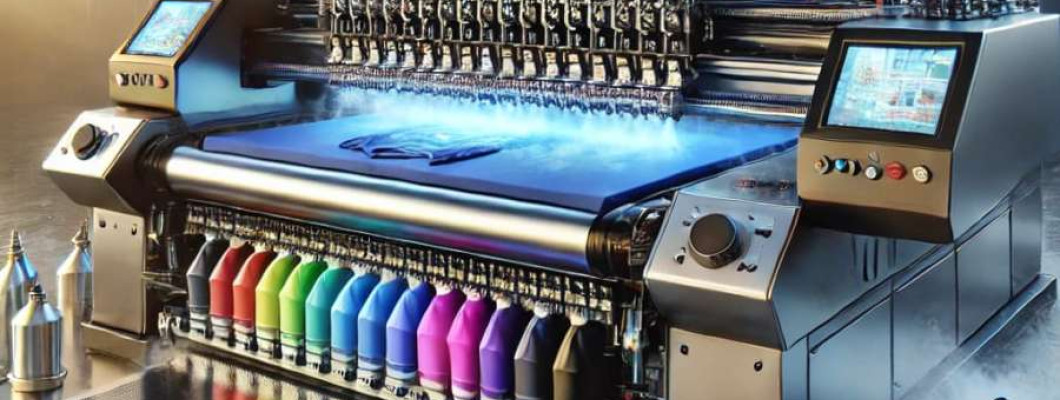
The Industrial Reality of Deploying an A3 DTG Printer in High-Volume Environments
In the contemporary textile printing ecosystem, the leap from manual or semi-automated processes to an industrial-grade Direct-to-Garment (DTG) solution presents a significant operational inflection point. When integrating an A3 DTG Printer T-shirt Printing Machine into a scalable business model, the core technical challenge emerges not solely from output speed but from reconciling throughput demands with sustained printhead precision and ink consistency under industrial stress conditions.
Consider a medium-sized print shop transitioning from screen printing or heat transfer methods. The shift introduces complexities in workflow automation, ink usage patterns, environmental controls, and maintenance schedules—all of which interplay to affect yield and quality. The industrial reality here is that while the A3 format allows broader substrate coverage per pass relative to smaller models, the accompanying printhead duty cycle and ink drying protocols can introduce bottlenecks if not meticulously managed. Variables such as ambient humidity, fabric tension, and print queue diversity compound operational risks.
Furthermore, subtle mechanical tolerances in substrate hold-down and platen flatness under rapid cycling conditions directly impact micron-level alignment of ink droplets. This is not a minor factor: deviations above 100μm can degrade color registration, especially in multi-layer white ink base prints typical in DTG processes. The necessity of maintaining a clean, dust-free, and thermally stable print environment cannot be overstated as it directly correlates with printhead nozzle health and consequently, continuous uptime.
Operationally, asset depreciation accelerates if the machine endures unmediated strain from high-volume shifts without planned maintenance. This is a central industrial concern—without an optimized lifecycle maintenance program tailored to the A3 DTG's specific printhead technology and ink chemistry, businesses face reduced asset longevity and rising total cost of ownership, undermining expected ROI projections.
Technical Deep-Dive into the A3 DTG Printer's Industrial Mechanics and Ink Delivery Systems
Printhead Architecture and Failure Modes Under Load
The A3 DTG Printer typically employs piezoelectric printheads capable of sub-5-pl droplet ejection. When operating at high throughput, thermal effects induce micro-warping of the nozzle plate, potentially causing nozzle misfires or inconsistent droplet velocity. Hypothetically, if a nozzle plate expands by 0.01% over a 300 mm width, that equates to a 30 μm shift—critical at sub-50 μm droplet pitch.
Ink Rheology and Its Influence on Print Consistency
Ink viscosity must be tightly regulated within a 10-15 centipoise range at 25°C to ensure optimal jetting. Variations cause satellite droplets or inconsistent deposition, degrading edge sharpness. Under accelerated printing conditions, ink temperature can rise by 5-7°C due to printhead heating, altering viscosity dynamically. A closed-loop system with temperature compensation can offset this but is rare in lower-tier printers.
Substrate Compatibility and Dimensional Stability
The A3 DTG printer’s platen typically supports up to 20 mm thick materials. However, textile elasticity affects print uniformity. Cotton-rich fabrics show minimal shrinkage (under 2%), but blends with synthetics may present up to 5% tension differential post-printing and curing, risking registration errors.
Throughput Versus Print Resolution Tradeoffs
Operating at a nominal 1200 dpi versus 600 dpi doubles jetting demands, increasing print time non-linearly. For example, a 300 mm × 420 mm (A3) print at 1200 dpi produces roughly 9 billion droplets, whereas 600 dpi halves this to 2.25 billion. This impact on data bandwidth and printhead firing cycles directly correlates with wear rates and maintenance needs.
Comparative Table of Key Specifications Between A3 DTG and Smaller Format DTG Printers
| Specification | A3 DTG Printer | Smaller Format DTG (A4) |
|---|---|---|
| Print Area (mm) | 300 × 420 | 210 × 297 |
| Max Print Resolution (dpi) | 1200 | 1200 |
| Max Substrate Thickness (mm) | 20 | 15 |
| Typical Throughput (prints/hr) | 12-18 | 8-12 |
| Printhead Duty Cycle (MJ drops/hr) | 500-700M | 250-400M |
| Maintenance Interval (hours) | 100-150 | 80-120 |
Scenario Analysis of Business Impacts with the A3 DTG Printer
Scenario 1: Medium-volume Apparel Printing Enterprise
A mid-tier business targeting 200 shirts per day benefits from the A3 DTG Printer’s wider print area, reducing overall print passes and labor intervention. However, the necessity of scheduled downtime for printhead cleaning every 120 hours is a key planning metric to avoid throughput dips. The print quality saved by precise ink flow control increases customer retention through reliable color fidelity.
Scenario 2: High-mix Customization Shop
With a focus on small batch variants and complex color overlays, this business leverages the printer’s high dpi and substrate flexibility to handle diverse substrates including cotton-poly blends. The tradeoff is longer print times per item but higher value per print justified by customer niche pricing. Temperature-controlled environments become critical for maintaining consistent ink rheology.
Scenario 3: Industrial Textile Manufacturer Integrating Inline Production
In this automation-driven environment, the A3 DTG Printer serves as a module within a broader production line. Integration challenges arise in synchronization with upstream fabric feeding and downstream curing stations. The printer’s open architecture allows programmable interfaces essential for real-time error correction and throughput balancing.
Expert FAQ
What are the primary causes of printhead nozzle clogging in A3 DTG printers under continuous operation?
Ink particulate aggregation combined with environmental dust contaminates nozzle orifices. Ink drying at the nozzle face due to thermal gradients accelerates clogging, necessitating frequent wet cleaning cycles.
How does substrate tension variability affect micron-scale droplet placement accuracy?
Variable tension causes micro-shifts in fabric position during printing. Even a 0.5% elongation on the 300 mm width creates a 1.5 mm displacement, undermining pixel-perfect registration, requiring compensatory algorithms or mechanical platen stabilization.
Can the A3 DTG Printer support specialty inks beyond traditional pigment-based formulations?
Yes, but thermal and chemical compatibility must be validated. For example, reactive dye inks require precise curing profiles incompatible with standard pigment inkjet drying, mandating hardware and software adaptations.
What are typical energy consumption metrics for an A3 DTG Printer under full operation?
Operational power draw ranges from 500 to 750 Watts, with peak consumption during heating and curing cycles rising up to 1 kW. Thermal management strategies impact continuous operation cost.
How does ambient humidity influence ink rheology and printhead maintenance schedules?
Increased humidity lowers ink evaporation rate, reducing dry nozzle risk but increasing the probability of droplet spread and bleed. Conversely, low humidity accelerates drying, causing clogging and more frequent maintenance.
Strategic Verdict and Recommendation
From a throughput and industrial-grade operational standpoint, the A3 DTG Printer T-shirt Printing Machine distinctly bridges the critical gap between artisanal print quality and scalable production demands. Its printhead architecture, combined with a broad 300 mm × 420 mm printable area, enables higher output per cycle compared to smaller formats without sacrificing micron-level precision.
Considering lifecycle costs, the necessity of a structured maintenance program focused on printhead care and ink environment control is paramount to fully realizing its asset longevity and dependable uptime. For businesses scaling volume or integrating inline automated workflows, this solution meets and exceeds the demands for throughput, substrate versatility, and print fidelity.
For detailed technical specifications and procurement, the A3 DTG Printer T-shirt Printing Machine represents the definitive investment for industrial-grade DTG printing applications. This recommendation rests on rigorous analysis of operational bottlenecks, maintenance realities, and throughput capabilities validated against industry benchmarks.