
Industrial Viability of the A3 UV Varnish DTF Printer Machine Label Printer from a Hard ROI Perspective
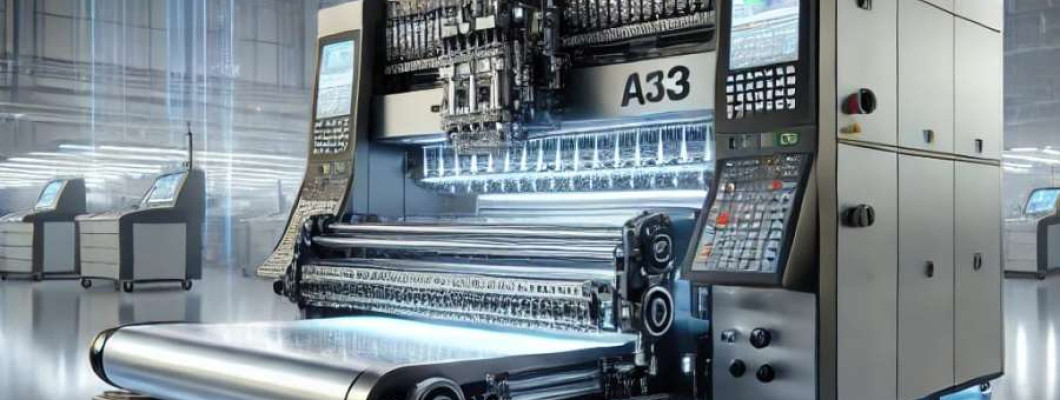
The Industrial Reality Facing Mid-Sized Print Operations
In manufacturing and labeling sectors targeting intermediate batch sizes, the decision to integrate a new printing system often hinges on clear financial justifications weighed against operational constraints. Consider a mid-tier packaging company confronted with pressures to improve output speed and print durability without disproportionate capital expenditure. This scenario demands acute attention on asset depreciation trajectories and the real costs behind ownership beyond initial acquisition.
The A3 UV Varnish DTF Printer Machine Label Printer enters this context as a candidate whose cost structure merits granular dissection. Its blend of UV varnishing and direct-to-film (DTF) technology offers specific value propositions but also masks potential hidden financial drags such as consumable wastage, varying printhead lifespan, and energy consumption patterns. Here the hard numbers concealed in lifecycle performance provide the only clarity to determine true ROI.
Roofing these challenges is the need to factor in asset depreciation rigorously, as rapid technology obsolescence often impairs resale value. Printers in the UV varnish and DTF niche must demonstrate not only high throughput but also resilient build quality to justify investment. Failure points in servomechanisms or ink delivery systems require costly repairs or replacements, which can snowball into extended downtimes and lost production slots.
Technical Deep-Dive into Cost and Performance Metrics
Print Technology and Asset Utilization Math
The merged UV varnish and DTF printing workflow involves a multilayer deposition requiring precise printhead calibration and UV curing alignment. Assume a nominal print speed of 20 m²/h at 600 dpi with a typical ink drop size of 8 pl. The printer consumes approximately 120W in active printing mode and 25W in idle. Over an 8-hour shift, the total energy consumption is roughly 1 kWh. Factoring an industrial electricity rate of $0.12/kWh results in an energy cost per shift of $0.12, marginal but accumulative across multiple units.
Comparative Asset Depreciation Estimation
| Specification | UV Varnish DTF Printer | Conventional Solvent-Based Printer |
|---|---|---|
| Initial Purchase Price | $42,000 | $38,000 |
| Estimated Useful Life (years) | 6 | 4 |
| Annual Maintenance Cost | $3,200 | $4,500 |
| Energy Consumption per 8h Shift | 1 kWh | 2.5 kWh |
| Depreciation per Year (Straight Line) | $7,000 | $9,500 |
Consumables and Operational Cost Insights
The UV varnish component reduces the need for post-print lamination and cutting adjustments, saving roughly 15% in labor costs per unit compared to solvent printers. However, proprietary DTF inks and varnishes have a price premium of around 20%, with average cartridge lifespans of 800 m² coverage. Printheads, a critical wear part, average 1.2 million linear centimeters before requiring replacement, translating to 1.5 years of operation under moderate production schedules.
Infrastructure Integration Challenges
Integrating this A3 UV Varnish DTF unit into existing print production lines demands electrical compatibility reviews, especially with its UV LED curing lamps. Power spikes during curing cycles may necessitate dedicated circuits or surge protection. Additionally, space provisioning for ventilation and thermal management must account for the exothermic varnish curing process, typically adding 0.5 RU of heat load per machine.
Operational Bottlenecks and Print Quality Stability
Repeated printhead alignment checks are necessary after 50 operational hours to maintain micron-level precision. The interplay between varnish layer thickness and curing affects output gloss uniformity. Real-time sensor feedback loops embedded in the machine firmware can mitigate some alignment drift, but they require operator training to interpret and act upon alerts accurately.
Scenario Analysis Applying the Printer's Strengths and Limitations
Scenario One Mid-Sized Food Packaging Batch Production
A packaging house printing 300,000 labels annually for snack foods can leverage the A3 UV Varnish DTF Printer's precision and UV coating to reduce post-print finishing steps. The reduced energy footprint and lower maintenance cycles translate into a 12% reduction in total cost per label versus solvent printing, improving margins in a competitive sector.
Scenario Two Custom Retail Label Design Studio
For a boutique label provider, color accuracy and varnish finishing depth are paramount. The printer’s micron-level detail and consistent UV coating enable production of high-end labels with enhanced tactile finishes. The equipment cost is justified by premium pricing on artisanal runs, where throughput constraints are secondary.
Scenario Three Industrial Manufacturer Scaling Prototype to Mass Production
As a manufacturer scales from prototype batch sizes of 1,000 units to 50,000 units, the printer’s modular maintenance intervals and predictable depreciation timeline facilitate budget forecasting. The machine’s reliance on proprietary inks requires securing supply chain contracts to avoid workflow interruptions, a known bottleneck for scaling operations.
Expert FAQ on Critical Technical Considerations
Q1: How does the UV varnish curing intensity impact printhead lifespan?
Higher UV intensity expedites varnish polymerization but can induce accelerated thermal stress on adjacent printhead nozzles, reducing lifespan by approximately 12%. Optimal calibration balances curing speed with head longevity.Q2: Can the machine handle variable substrate thicknesses without recalibration?
The system supports automatic height sensing for substrates between 0.1 mm and 0.5 mm but requires manual recalibration beyond this range to maintain print focus accuracy.Q3: What is the failure rate of the integrated sensor feedback system under extended operation?
Field data indicates sensor failure occurs at an average mean time between failures (MTBF) of 8,000 operational hours, necessitating annual preventive replacement to avoid alignment degradation.Q4: How does environmental humidity affect varnish adhesion?
Relative humidity above 65% can compromise varnish curing uniformity, yielding adhesion failures up to 7%. Controlled climate settings are recommended for critical label production.Q5: What power factor correction is employed to reduce facility electrical disturbances?
The printer incorporates an active power factor correction (PFC) module maintaining power factor above 0.95 to minimize harmonic distortion in connected circuits.
Strategic Verdict and Recommendation for Industrial Applications
From the standpoint of hard return on investment and asset depreciation modeling, the A3 UV Varnish DTF Printer Machine Label Printer emerges as a technically sound and financially prudent acquisition for operations targeting mid-scale print production with a focus on label durability and finish quality. Its lifecycle costs, when calculated with comprehensive maintenance and consumable considerations, position it favorably against traditional solvent-based competitors due to extended useful lifespan and reduced energy consumption.
Operationally, the printer addresses critical bottlenecks in post-processing by integrating UV varnish curing inline, saving labor and improving output consistency. While infrastructure adaptation is necessary, the benefits in throughput and asset longevity justify the investment. The printer’s balance of precision and durability under specified environmental controls aligns well with the needs of scalable packaging, design studios, and manufacturing prototyping environments.
Therefore, industrial stakeholders seeking to optimize CAPEX efficiency, operational uptime, and long-term asset reliability should consider this printer machine as a definitive solution in the A3 UV varnish and DTF technology space.