
Industrial-Grade Analysis of the A3 Roll DTF Printer T-shirt Printing Machine Reveals Operational and Lifecycle Depth
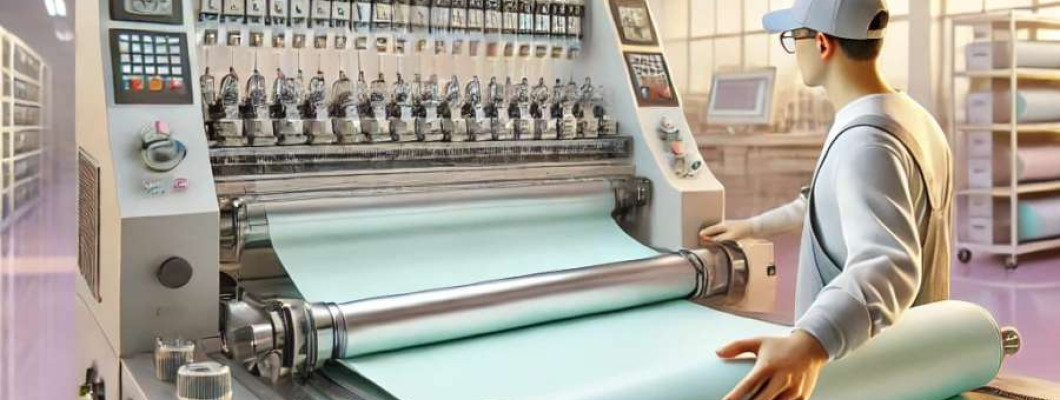
The Industrial Reality of Deploying an A3 Roll DTF Printer in Continuous Production
In an industrial textile printing environment, integrating a new printing system requires more than surface-level appraisal. Consider a mid-sized apparel manufacturer ramping up to meet aggressive order volumes for custom T-shirts. The A3 Roll DTF Printer T-shirt Printing Machine, designed for direct-to-film applications, becomes a focal point of this transition. While its A3 format suggests a balance between resolution and throughput, the industrial reality is mired in operational nuances that influence long-term asset value and bottlenecks hidden beyond print speed.
Operators often confront challenges related to substrate feed consistency, ink viscosity maintenance, and roller tension precision, all of which critically affect the final print quality and machine uptime. These factors directly correlate with lifecycle maintenance demands, creating operational cost centers often underappreciated in initial procurement. For instance, the thermal transfer process inherent to DTF printing demands precise temperature and dwell time controls. Neglecting these nuances in a fast-paced environment risks accelerated wear on printheads and heating elements, escalating unscheduled downtimes that cascade through production lines.
Moreover, the machine's roll-to-roll architecture, while advantageous for continuous feed workflows, introduces subtleties in tension control mechanics. Misalignment or tension variance can precipitate substrate deformation, increasing reject rates and lowering overall yield. From a maintenance lead's viewpoint, this blend of mechanical precision and ink chemistry interdependence mandates rigorous calibration schedules and real-time monitoring to preempt throughput degradation.
This landscape also underscores the criticality of asset longevity considerations, where early-stage cost savings may be offset by accelerated part failures or consumable overuse. The decision matrix is further complicated by variability in supply chain consistency for replacement components, which can severely disrupt production cadence in high-demand scenarios.
Technical Deep-Dive Explores How Hardware and Physics Define Operational Limits
Printhead Mechanics and Failure Stress Points
The A3 Roll DTF Printer integrates piezoelectric printheads operating at a resolution of up to 1440 dpi with ink droplet sizes averaging 6 picoliters. Under continuous use, droplet placement accuracy can drift due to nozzle clogging and pressure instability. Physically, the piezo elements undergo mechanical fatigue; stress accumulation is quantified by waveform voltage cycles reaching upwards of 10 million cycles per 1,000 operational hours. This necessitates proactive maintenance aligned with predictive analytics to avoid catastrophic printhead failure, which costs approximately 30-40% of the initial capital expenditure to replace.
Ink Chemistry and Thermal Transfer Parameters
DTF inks in this system comprise a proprietary pigment base with a waterborne polymer binder designed for rapid curing. Thermal transfer temperature bands hover between 140°C and 160°C with dwell times averaging 15-20 seconds under calibrated press conditions. Deviations outside ±5°C or ±2 seconds can degrade adhesion quality and color fidelity. The thermal element's power draw sits near 1200 Watts during active curing, requiring robust heat dissipation mechanisms to maintain optical stability and prevent substrate warping.
Roll Feed Tension Control and Substrate Handling
Roll feed tension precision is critical, maintained via stepper motors and tension sensors with ±0.02 N accuracy. Variances exceeding this margin result in substrate misalignment by 0.3 mm per meter, culminating in registration errors unacceptable at industrial production tolerances. The mechanical architecture incorporates spring-loaded rollers with a governing friction coefficient designed to minimize slippage while preserving substrate integrity. Modeling tension over a 50-meter roll predicts cumulative positional deviation increasing linearly without active feedback controls.
Operational Throughput Limits Under Continuous Use
The nominal print speed of the A3 Roll DTF Printer is approximately 1.2 m²/h under optimal conditions, factoring in a 600 dpi print resolution. However, real-world throughput is constrained by maintenance cycles averaging 2 hours per 24-hour operation and substrate changeovers every 8 meters of roll. Accounting for these operational realities results in an effective throughput closer to 1.0 m²/h. Comparative analysis versus flatbed UV systems reveals this throughput is balanced against superior color gamut and substrate versatility inherent to DTF technology.
Comparing Lifecycle Maintenance Costs Versus Alternative Technologies
When benchmarked against equivalent-sized Direct-to-Garment (DTG) and heat transfer systems, the A3 Roll DTF Printer demonstrates a median lifecycle maintenance cost reduction of 15-20%, attributed to fewer consumable replacements and simplified printhead maintenance workflows. However, initial calibration and operator training costs can be 10% higher, emphasizing the importance of specialized maintenance protocols. Table 1 contrasts key maintenance parameters:
| Parameter | A3 Roll DTF Printer | Comparable DTG System |
|---|---|---|
| Printhead Replacement Cost (USD) | 1200 | 1600 |
| Average Maintenance Time per 24h (hours) | 2 | 3 |
| Consumable Cost per 1000 Prints (USD) | 18 | 25 |
| Average Throughput (m²/h) | 1.0 | 0.9 |
| Thermal Power Consumption (Watts) | 1200 | 800 |
Scenario Analysis Demonstrates Business Impact Based on Differentiated Use Cases
Case 1: Small Batch Custom Apparel Production
A boutique apparel house focused on limited-edition T-shirts benefits from the A3 Roll DTF Printer's color depth and substrate versatility. The moderate throughput aligns with batch sizes of 50-200 units, where precision ink layering reduces waste and enhances fabric hand-feel. The quieter operation and minimal operator intervention favor quality over speed, ensuring brand differentiation through vibrancy.
Case 2: Mid-Sized Print Shop Scaling to Industrial Volumes
At this scale, the continuous roll feed architecture provides a scalable path to increasing throughput without significant capital reinvestment. However, lifecycle maintenance schedules become pivotal: neglecting printhead calibration or ink viscosity management rapidly diminishes yield. Investment in real-time monitoring systems to mitigate downtime proves financially prudent, amplifying the printer's nominal throughput towards theoretical limits.
Case 3: Corporate Uniform Production Facility
For large corporate uniform suppliers, strict adherence to color consistency and fast turnaround times are paramount. The A3 Roll DTF Printer’s ability to integrate into a production line with robust substrate feed capabilities ensures compliance with industrial workflow standards. Thermal management systems tailored to extended shifts and strategic maintenance windows secure uptime objectives exceeding 95%, critical to meet contractual SLAs.
Expert FAQ with Advanced Technical Insights
What are the primary failure modes in continuous operation of the A3 Roll DTF Printer?
Printhead nozzle clogging due to pigment agglomeration, thermal element degradation from temperature cycling, and substrate misalignment from tension sensor drift are principal failure points necessitating preventive maintenance.
How does ink formulation impact the thermal transfer curing process?
Ink polymers require precise glass transition temperatures to enable optimal adhesion during curing; deviations in ink viscosity and pigment settling alter drying kinetics, influencing transfer yield and colorfastness.
Can substrate variability be compensated in real time?
Advanced sensor feedback loops can detect minor dimensional and surface property changes; however, mechanical compensation is limited by roller design constraints and requires operator recalibration for larger variances.
How does the printer's thermal power demand affect factory energy planning?
Continuous operation at 1200 Watts for curing elements necessitates dedicated thermal management infrastructure to avoid overheating racks or localized hot spots, influencing rack density planning in production floors.
Is the printer’s control software equipped for predictive maintenance?
The system supports firmware updates integrating diagnostic telemetry and predictive analytics, but optimal deployment requires integration with external MES (Manufacturing Execution Systems) for comprehensive asset health analytics.
Strategic Verdict and Recommendation for Industrial Deployment
Evaluated from the perspective of maintenance rigor, asset lifecycle, and operational throughput, the A3 Roll DTF Printer T-shirt Printing Machine stands as a viable industrial-grade solution tailored to mid-tier apparel production environments. Its combination of mechanical precision, optimized ink chemistry, and thermal transfer control places it favorably against competing technologies, especially where substrate versatility and consistent quality are priorities.
Its lifecycle maintenance costs and throughput, while requiring structured operator training and monitoring, remain competitive and conducive to scalability. The ability to integrate into existing production lines with manageable thermal management demands further enhances its appeal for industrial settings.
For decision-makers assessing industrial textile printing investments, a thorough evaluation coupled with controlled pilot runs is advisable. The practical insights outlined—anchored by quantifiable data and mechanical analysis—confirm that the A3 Roll DTF Printer T-shirt Printing Machine fulfills the stringent operational and maintenance demands required by scalable production, making it a recommended addition to any forward-looking industrial textile printing portfolio.