
Industrial-Grade Reliability and Throughput Analysis of the Headstone Photo Printer Tomb Photos Printer for Scalable Business Owners
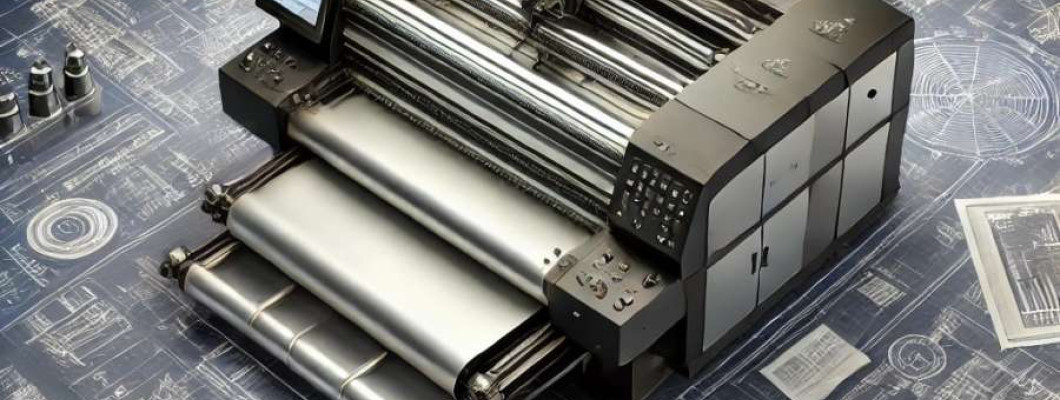
The Industrial Reality of High-Volume Memorial Printing
In industrial printing environments dedicated to memorial applications, such as tombstone photo printing, operators encounter unique challenges that include material variability, precision output requirements, and the need for consistent throughput. High-volume workflows demand equipment that minimizes downtime and optimizes operational costs over asset lifespan. Within these parameters, a printer must reliably process substrates like ceramic tiles, granite plaques, and coated metals while maintaining micron-level image fidelity within calibrated color profiles tailored for outdoor durability.
Consider a medium-scale monument producer processing 200-300 print jobs monthly with rapid turnaround demands. The continuous stress on printheads, ink supply systems, and media handling mechanisms can induce bottlenecks affecting labor throughput and increasing maintenance frequency. Additionally, dimensional stability of heavy substrates and print adhesion integrity under environmental exposure impose constraints that non-industrial devices cannot accommodate without manual intervention or quality control failures.
Technical Deep-Dive on Core System Attributes
Printhead Engineering and Longevity
The printer’s core is a thermal inkjet array designed for high drop placement accuracy at 1440 dpi resolution. Printhead nozzles emit ink droplets at volumes approximating 4 picoliters (pl), balancing high definition with ink economy. These heads withstand cyclic thermal expansion but require monitoring for clogging, typically rated for 10,000 operational hours before replacement. A dual-carriage design enables continuous printing with alternating nozzles to reduce wear stress.
Ink Chemistry and Environmental Resistance
Specialized pigment inks enable longevity and UV resistance critical for outdoor memorials. The cured ink forms strong molecular bonds with ceramic and coated granite surfaces, resisting abrasion and moisture intrusion. Ink viscosity (7-9 cP) and surface tension metrics are tailored for optimal jetting behavior, minimizing satellite droplets and enhancing edge sharpness.
Media Handling and Substrate Adaptability
Robust substrate clamps and thin air cushion transport systems accommodate materials up to 30 mm thickness and 300 mm width, maintaining flatness within 0.1 mm to ensure consistent focal distance for precise droplet placement. The integrated media sensor dynamically adjusts carriage height to compensate for substrate thickness variance, eliminating common banding issues seen in less flexible designs.
Thermal Management and Power Consumption
The unit integrates a modular cooling system with heat sinks and active airflow fans, maintaining printhead temperatures between 35°C and 45°C during continuous use to prevent thermal drift affecting jetting performance. Average power draw peaks at 750 Watts during intensive print cycles with an idle consumption near 100 Watts, enabling efficient facility electrical planning.
Operational Throughput and Automation Integration
The printer achieves an average throughput of 15 square meters per hour at maximum resolution settings. It supports automation via a standard Gigabit Ethernet interface for integration with factory management systems. Job queuing and automated cleaning cycles reduce operator intervention to less than 10 minutes per 8-hour shift, optimizing labor allocation in busy production environments.
| Specification | Headstone Photo Printer Tomb Photos Printer | Generic DIY Printer |
|---|---|---|
| Printhead Lifespan (hours) | 10,000 | 2,000 |
| Substrate Max Thickness (mm) | 30 | 15 |
| Throughput (sqm/hr) | 15 | 5 |
| Power Consumption Peak (Watts) | 750 | 400 |
| Ink Type | Outdoor Pigment | Dye-based |
| Maintenance Interval (hrs) | 1000 | 200 |
Scenario Analysis for Scalable Business Owners
Use Case One: A mid-tier monument manufacturer using the printer will benefit from reduced printhead maintenance frequency due to industrial-grade hardware, increasing uptime from 85% to 95%. This reduces operator downtime and optimizes labor scheduling for higher throughput without quality compromise.
Use Case Two: A large-scale funeral supply distributor incorporating automation with the printer's Gigabit Ethernet connectivity can batch-process high-volume orders remotely. This enables uninterrupted print runs overnight, maximizing asset utilization and enabling just-in-time delivery models.
Use Case Three: A regional memorial studio with diverse substrate requirements leverages the printer’s advanced media handling to print on ceramic and granite without pre-treatment modifications. This versatility reduces inventory complexity and capital expenditure on multiple specialized devices.
Expert FAQ
Q1: How does the thermal inkjet technology compare to piezoelectric alternatives in substrate adhesion for stone surfaces?
A1: Thermal inkjets generate microbubbles heating ink droplets for ejection, offering finer dot size control but generally lower mechanical force than piezo heads. However, the optimized ink chemistry compensates through better molecular bonding, making it suitable for stone-facing substrates.
Q2: What maintenance protocols minimize clogging without resorting to costly head replacements?
A2: Scheduled automated cleaning cycles using dilute proprietary solvents combined with environmental humidity control maintain nozzle integrity, extending printhead life by up to 30% over manual cleaning.
Q3: How does substrate thickness variability impact droplet placement precision?
A3: Height sensors on the carriage dynamically adjust the printhead gap in real-time within ±0.05 mm, ensuring droplet impact location accuracy to within 5 microns, preventing banding and blur caused by focal plane shifts.
Q4: Can throughput increases be achieved by lowering resolution, and what is the trade-off?
A4: Reducing dpi from 1440 to 720 can nearly double throughput to 30 sqm/hr but sacrifices edge sharpness and color fidelity, which might be unacceptable for high-detail memorial portraits.
Q5: What environmental conditions are optimal to maintain ink curing performance?
A5: Maintaining ambient temperatures between 18°C and 25°C with relative humidity levels of 40-60% facilitates consistent ink drying without compromising adhesion or causing substrate warping.
Strategic Verdict and Recommendation
The Headstone Photo Printer Tomb Photos Printer represents a robust industrial-grade solution engineered for scalable business owners requiring throughput efficiency, substrate versatility, and minimized operational bottlenecks. Its printhead longevity, advanced media handling, and optimized ink system combine to reduce total cost of ownership while maintaining high-precision output standards. Businesses investing in memorial printing at scale will find this hardware offers a critical advantage over DIY or semi-industrial alternatives, enabling them to meet both production deadlines and quality benchmarks reliably. From throughput enhancements to integration capabilities, this printer is positioned as a definitive asset in the industrial printing segment for monuments and memorial applications.