
Infrastructure Challenges and Lifecycle Maintenance of the 40x60CM Heat Press Machine for Scalable Businesses
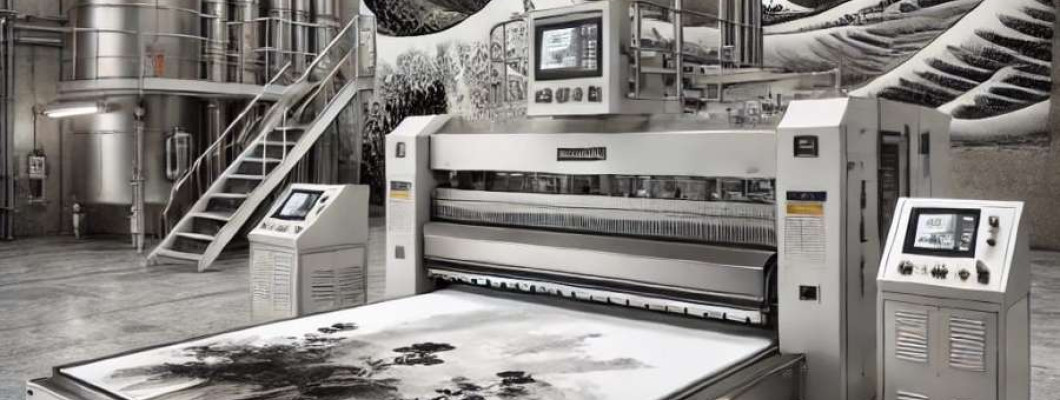
The Industrial Reality of Integrating Heat Press Technology into Scalable Production
In the environment of scalable manufacturing businesses focused on custom textile printing, the adoption of specialized hardware like a 40x60CM heat press machine introduces complex infrastructure integration issues that demand rigorous attention. Unlike smaller, artisanal heat presses, this machine operates on a scale that shifts operational dynamics substantially, affecting throughput capacity, operator safety, and thermal load management within production floors.
High-throughput businesses frequently encounter bottlenecks not only due to the mechanical cycling speed of the heat press but also from the supporting infrastructure that governs power distribution, ventilation, and automation compatibility. For instance, a 40x60CM platen size requires significant energy — often in kilowatt ranges that challenge existing electrical setups — and generates sustained thermal output requiring advanced cooling solutions or reconfigured floor layouts to prevent heat accumulation. Ignoring these factors impairs uptime and escalates lifecycle maintenance costs.
Moreover, integrating such machines into automated workflow lines necessitates compatibility with conveyor systems, robotic arms, or programmable logic controllers (PLCs). Considering the physical footprint and throughput timing, inefficient integration can cause cascading delays, increasing labor costs and underutilizing the heat press asset. These industrial realities emphasize that scaling does not simply mean equipping more machines but engineering an infrastructure ecosystem oriented around machine specifications and operational demands.
Technical Deep-Dive into Heat Press Infrastructure and Lifecycle Maintenance
Power Consumption and Thermal Management
The 40x60CM heat press typically consumes between 1500 to 1800 Watts during operation. Given a duty cycle of approximately 30 seconds per press under continuous use, the thermal output to the environment is around 600-800 Watts, which demands adequate ventilation. Hypothetically, if a production line operates five machines simultaneously, the combined load reaches upwards of 9 kW electrical power with significant thermal discharge.
Effective infrastructure must include dedicated power circuits rated at 20A with thermal cutoffs to prevent overload. Additionally, forced ventilation or localized cooling using HEPA-filtered airflows can extend component longevity by maintaining ambient temperatures below 25°C. Without such measures, thermal degradation of internal heating elements and pressure sensors accelerates repair cycles.
Automation Compatibility and Cycle Throughput
The machine operates with manual or semi-automatic controls, featuring a platen press time adjustable up to 999 seconds and a pressure range commonly between 0.1 to 5 kg/cm². For scalable businesses, integration with programmable actuators or conveyor sync introduces automation challenges. The mechanical cycle speed (approximately two cycles per minute at optimal settings) must be harmonized with upstream and downstream processes to prevent idle time or bottlenecks.
Comparing the 40x60CM press to smaller 30x30CM units—the latter have faster cool-down and press cycles but insufficient platen size for bulk substrates—establishes a trade-off between size and throughput that infrastructure planners must balance. Detailed timing studies and buffer zones are essential for workflow optimization.
Material Handling and Ergonomic Considerations
Substrate size and handling logistics significantly impact labor costs and operational safety. At 40x60 CM, the platen accommodates medium to large-format substrates, reducing the frequency of presses but requiring automated or mechanized handling for efficiency. Ergonomics studies indicate that repetitive manual loading/unloading at this size increases musculoskeletal risk over long shifts, influencing workforce management and potentially increasing absenteeism.
Maintenance Cycles and Lifecycle Cost Modeling
Lifecycle maintenance for the heat press involves routine calibration of temperature sensors, replacement of Teflon sheets approximately every 3,000 hours of usage, and inspection of hydraulic or pneumatic pressure systems. Cost modeling shows that neglecting scheduled maintenance accelerates failures in heating elements, resulting in costly downtime.
Assuming a baseline cost of $150 per maintenance cycle and an operational schedule of 8 hours daily, the effective maintenance interval of 4-6 weeks balances asset longevity with operational continuity. Factoring labor and spare parts, monthly maintenance costs average $500-$700 per unit. Businesses must embed these predictable expenses into operational budgets.
Comparative Table of Key Infrastructure Specifications
| Specification | 40x60CM Heat Press Machine | 30x30CM Heat Press Machine |
|---|---|---|
| Platen Size (mm) | 400 x 600 | 300 x 300 |
| Power Consumption (Watts) | 1500-1800 | 800-1000 |
| Thermal Output (Watts) | 600-800 | 350-450 |
| Cycle Time (Seconds) | 30-35 | 20-25 |
| Typical Maintenance Interval (Hours) | 3000 | 2000 |
| Recommended Automation Compatibility | Semi-Automatic, PLC Integration Possible | Manual or Basic Semi-Automatic |
Scenario Analysis of 40x60CM Heat Press Use Cases in Scalable Businesses
Case 1 Industrial Apparel Manufacturer
A company producing branded workwear at volume benefits from the 40x60CM platen as it covers large logo areas in a single press reducing cycle redundancy. However, infrastructure upgrades to power and ventilation are mandatory to sustain continuous operation of multiple units. This hardware choice yields a throughput increase of 25% compared to smaller presses but requires upfront capital investment in electrical and HVAC systems.
Case 2 Print-on-Demand E-Commerce Start-Up
Smaller scale operations may find the machine overpowered and face underutilization, resulting in inefficient asset depreciation. Notably, if growth is projected, infrastructure planning must anticipate machine-specific demands to prevent retrofitting costs later. The larger platen supports more diverse substrates, offering expansion flexibility.
Case 3 Contract Textile Processing Facility
Here the machine fits as a mid-tier asset in mass production lines with semi-automated workflows. Its cycle time and automation capabilities align well with the line speed, but staff training on maintenance cycles and ergonomic handling becomes critical. The investment in infrastructure ensures maximum uptime and predictable maintenance cycles, optimizing operational expenditure and extending machine life.
Expert FAQ Explaining Advanced Technical Aspects
Q1 How does platen size directly influence heat distribution uniformity?
Larger platens tend to have inherent thermal gradients; the 40x60CM model employs embedded nichrome wire layouts with PID temperature controllers to maintain ±2°C uniformity across the surface, critical for consistent curing on large substrates.
Q2 What are the risks of inadequate ventilation in high-throughput scenarios?
Thermal buildup can cause sensor drift, insulation degradation, and operator discomfort, leading to unplanned downtime. Forced air systems that maintain ambient temperature below 25°C are required to mitigate these risks.
Q3 Can the machine interface with Industry 4.0 monitoring systems?
While primarily semi-automatic, the device can be retrofitted with sensors and PLC inputs for integration into digital dashboards, enabling predictive maintenance analytics and cycle time optimization.
Q4 How does substrate type affect the required pressure settings?
Denser textiles or multi-layer composites require higher pressure (up to 5 kg/cm²) to ensure heat transfer, while delicate materials need precise control below 1 kg/cm² to avoid damage, necessitating operator skill or automated pressure modulation.
Q5 What are the best practices for extending heating element lifespan?
Operating at recommended temperatures with avoidance of over-pressurization cycles extends life. Regular cleaning of Teflon sheets and ensuring even platen contact are critical preventive measures.
Strategic Verdict and Recommendation
The 40x60CM Heat Press Machine presents itself as a robust, industrial-grade asset suitable for scalable business environments where infrastructure investment and maintenance discipline are prioritized. It bridges efficiency and size requirements that smaller heat presses cannot match without materially increasing operational staff costs and throughput limitations.
When infrastructure is upgraded with adequate power distribution, ventilation, and automation interfaces, the machine delivers operational continuity and predictable lifecycle expenses. This combination results in favorable total cost of ownership outcomes compared to piecemeal expansion with smaller or less capable devices.
For scalable business owners seeking reliable, medium-to-large substrate heat pressing with manageable maintenance and integration demands, the 40x60CM Heat Press Machine is highly recommended as a definitive solution meeting industrial throughput and infrastructure integration challenges.