
Infrastructure Challenges and Throughput Analysis of the Spot A4 LED UV Printer Cylinder Printing for Scalable Businesses
The Industrial Reality
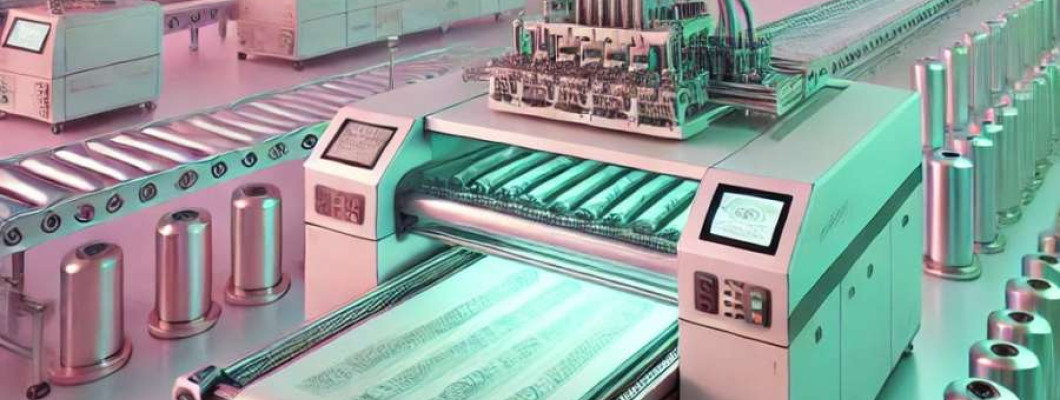
In modern industrial printing environments, the integration of LED UV printers for cylinder printing presents a specific set of infrastructure challenges that directly affect throughput and automation efficiency. Businesses scaling operations from prototype to mass production often encounter bottlenecks not at the print quality level, but within workflow automation and environmental controls. The Spot A4 LED UV Printer Cylinder Printing must therefore be assessed not only by its printhead precision or ink chemistry but by its physical and operational compatibility within existing manufacturing lines.
Consider a cylindrical printing line producing promotional metal bottles. The printing cycle duration per unit is influenced by the curing time of LED UV ink, substrate handling mechanisms, and the printer's ability to maintain registration accuracy under industrial throughput demands. An infrastructure manager tasked with maximizing rack density and minimizing thermal footprints must evaluate how this printer’s small form factor A4 bed size integrates without causing production delays or excessive workspace expansion.
Thermal management is critical because LED UV curing generates localized heat, and uncontrolled hotspots can induce substrate deformation in thin-walled cylinders. When placed in high-density racks, heat dissipation becomes a limiting factor. Additionally, compliance with industrial safety standards relating to UV exposure and ozone emission needs to be guaranteed, particularly in automated lines where human intervention is limited.
The decision to adopt the Spot A4 LED UV Printer Cylinder Printing platform involves balancing print throughput with infrastructure costs for climate control, energy, and operator safety. Hence, understanding these operational nuances is essential before scaling this technology into an enterprise environment where print volume and speed define profitability.
Understanding Thermal Profiles and Printhead Efficiency
The LED UV printhead in the Spot A4 printer typically emits UV wavelengths around 395 nm for instant curing. Given a printhead droplet size of approximately 10 pl and a nominal resolution of 1200 dpi on the cylindrical surface, it achieves high precision but generates localized heat at a rate of approximately 45 W per active print channel in continuous mode.
A hypothetical thermal dissipation model indicates that without active cooling, substrate surface temperature can rise by 7–10 °C within 30 seconds of continuous printing. This increase risks warping especially for aluminum or thin plastic cylinders with wall thickness below 0.5 mm. Incorporating forced air cooling or integrating the printer into a climate-regulated enclosure is therefore mandatory to sustain throughput beyond 60 units per hour without print defects.
Substrate Handling and Automation Integration
The printer accommodates cylindrical items up to 110 mm diameter with length of up to 300 mm. The A4 printing area (210 mm x 297 mm) allows for multiple cylindrical items to be processed simultaneously only if arranged with automated rotary fixtures capable of 360-degree rotation with micron-level registration accuracy.
Automated conveyor integration requires synchronization between cylinder rotation speed and printhead ink drop firing timing, which is controlled via proprietary firmware. The maximum rotational speed without compromising image integrity is approximately 5 revolutions per second, equating to a print time of around 6 seconds per cylinder when printing a full 300 mm length wrap. This throughput aligns well with mid-tier industrial batch production but presents challenges for large-scale continuous production lines requiring cycle times below 3 seconds per cylinder unless parallel printhead arrays are deployed.
Energy Consumption and Rack Density Considerations
Measured power consumption averages 250 W during active printing, inclusive of LED curing and embedded control electronics. Heat output in confined racks reaching over 5 units in a 1 RU vertical stacking arrangement will require additional ventilation or liquid cooling solutions. For facilities targeting high rack densities, this implies trade-offs between the number of printers per rack unit and energy costs related to climate control systems.
Table 1 compares energy and throughput metrics for single-unit Spot A4 LED UV printing versus a hypothetical dual-unit array representing a clustered production cell:
| Parameter | Spot A4 Single Unit | Dual-Unit Cluster |
|---|---|---|
| Max Throughput (units/hr) | 600 | 1200 |
| Power Consumption (W) | 250 | 480 |
| Heat Output (W) | 250 | 480 |
| Rack Units Occupied (RU) | 1 | 2 |
| Cooling Requirement | Forced Air | Liquid Cooling Recommended |
Compliance and Environmental Safety
LED UV printers produce minimal ozone compared to traditional mercury vapor UV lamps, reducing the need for complex ventilation. The Spot A4 LED UV Printer complies with CE and RoHS standards for electromagnetic emissions and hazardous substances. Operators benefit from reduced UV exposure risk due to enclosed curing zones and interlocked safety features preventing accidental access while printing.
Environmental controls in industrial settings must still address heat dissipation and particulate management from ink aerosolization. The printer’s design minimizes solvent emissions, but maintenance protocols require frequent checks to prevent ink buildup within nozzles, as it could lead to print quality degradation or failure of piezoelectric printheads.
Scenario Analysis
Scenario 1: Mid-Volume Promotional Cylinder Printing Facility
In a production environment manufacturing 500–700 units daily using metallic drink containers, the Spot A4 printer’s throughput and integration capabilities meet operational targets without excessive footprint expansion. Its automated rotary fixtures help maintain tight registration on curved surfaces, enabling consistent branding with minimal operator intervention. The energy footprint is manageable with existing air conditioning systems, making the printer viable for mid-sized scaling efforts.
Scenario 2: High-End Cosmetic Container Customization
This use case benefits from the printer’s high resolution and micron-level precision. Here, throughput is secondary to print quality and substrate versatility, including plastics with coatings sensitive to heat. The printer’s LED curing and enclosed design mitigate thermal stress, preserving container integrity. The integration into small batch automated lines is fully compatible with luxury packaging workflows.
Scenario 3: Large-Scale Industrial Manufacturer with High Rack Density Needs
For mass production exceeding 10,000 units per day, infrastructure challenges intensify. The printer’s 1 RU footprint allows stacking but requires advanced cooling solutions. Throughput limits necessitate deploying multiple units or shifting to parallel printhead arrays, increasing CAPEX and operational complexity. Such businesses must invest in tailored climate control to maintain print consistency and uptime, balancing increased infrastructure costs against rapid output requirements.
Expert FAQ
Q1: What is the expected printhead lifespan under continuous industrial operation?
The piezoelectric printheads in the Spot A4 LED UV printer typically sustain up to 2 billion actuations before requiring replacement, equating to approximately 2 years of continuous 16-hour daily operation under normal maintenance.
Q2: How does LED UV curing energy compare to traditional mercury lamps?
LED UV consumes roughly 50% less energy with a more focused wavelength output, reducing heat generation and environmental impact. This efficiency enables faster curing times and less substrate damage.
Q3: Can the printer handle non-metal cylindrical substrates?
Yes, substrates such as coated plastics and glass are compatible, provided they meet size and thermal tolerance parameters. Surface preparation for ink adhesion is critical for non-metal materials.
Q4: What maintenance frequency is required to avoid nozzle clogging?
Daily nozzle checks and cleaning cycles are recommended during high-volume runs. Automated cleaning scripts integrated into the firmware enable consistent printhead health without downtime.
Q5: How does the printer control registration accuracy during cylinder rotation?
An optical encoder paired with firmware synchronization ensures micron-level alignment by adjusting droplet firing timing in real-time relative to the cylinder's rotational position. This mechanism is vital for consistent wrap-around printing.
Strategic Verdict and Recommendation
For scalable business owners evaluating industrial-grade cylinder printing solutions, the Spot A4 LED UV Printer Cylinder Printing balances precision, throughput, and infrastructure demands effectively. Its compact design supports integration into automated lines with manageable thermal management and environmental controls. While throughput scale-ups beyond mid-level production require infrastructure enhancements, the platform’s print quality and automation compatibility position it as a strong contender for businesses targeting moderate batch sizes and diverse substrates.
To thoroughly evaluate deployment feasibility, prospective users should consider cooling and synchronization requirements, but the technology’s industry compliance and energy efficiency reduce long-term costs and risks. Overall, we recommend adopting the Spot A4 LED UV Printer Cylinder Printing as a definitive solution for industrial-scale cylinder printing operations demanding high throughput without sacrificing substrate integrity or operational safety.