
Infrastructure Challenges and Throughput Optimization of the Spot A4 LED UV Printer Cylinder Printing for Scalable Business Owners
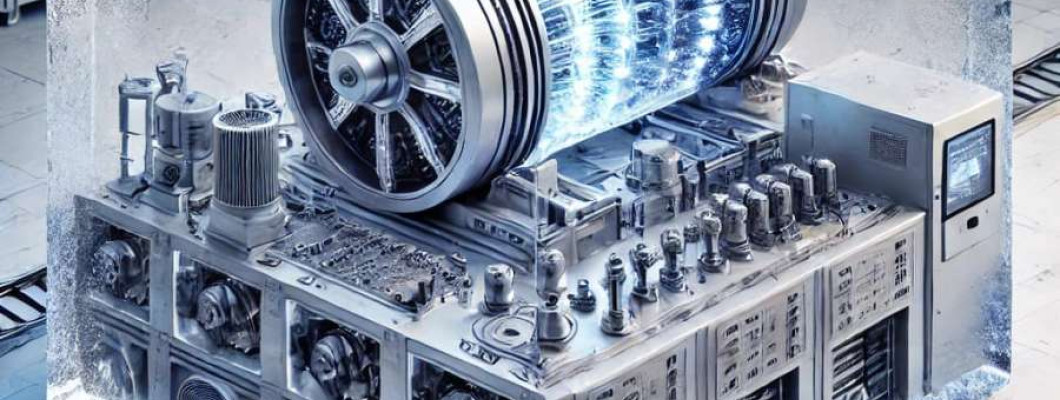
The Industrial Reality of Integrating Spot A4 LED UV Printer Cylinder Printing in High-Throughput Environments
In a production hall where throughput targets push machinery beyond nominal cycle rates, the integration of the Spot A4 LED UV Printer Cylinder Printing unit presents a confluence of infrastructure and operational hurdles. The printer’s LED UV curing mechanism demands a stable, high-capacity power supply with low ripple to maintain repeatable curing intensities. This requirement often imposes an upgrade on existing electrical panels, particularly when older lines were designed for halogen or mercury lamp-based UV curing systems.
Multiple units operating in tandem exponentially increase HVAC loads. Each printer unit dissipates roughly 900 to 1200 Watts during operation, with LED arrays generating concentrated heat spots around the printhead assembly. In tightly packed production lines, this can lead to localized thermal buildup, risking substrate deformation or print quality degradation. Without rigorous thermal management planning, throughput suffers from pulse rate throttling to avoid print defects.
From an operational standpoint, the motion control precision needed to accurately wrap cylindrical substrates at micron-level tolerances introduces challenges in synchronization with upstream automation. Vibration isolation and motor encoder feedback loops require precise calibration to maintain consistent print registration at speeds exceeding 1 meter per second in circumferential feed rate.
Finally, the physical footprint of the Spot A4 LED UV Printer limits placement flexibility. While compact relative to legacy cylinder printers, its integration often necessitates reevaluating conveyor routing and access space for maintenance tasks, affecting overall floor layout efficiency. These factors collectively define the harsh realities encountered by production engineers tasked with deploying this system for high-throughput industrial settings.
Technical Deep-Dive Examining Key Infrastructure Variables
1 Power and Thermal Load Analysis
The printer operates at approximately 1000 Watts peak consumption with LED arrays delivering UV light centered at a wavelength of 395 nm. Assuming continuous 8-hour shifts and 5 operational days per week, the average daily energy demand per unit is:
8 hours x 1000 Watts = 8 kWh/day
For a facility running 10 units simultaneously, daily power consumption reaches 80 kWh, a non-trivial addition to HVAC and electrical load requirements. Thermal dissipation averaging 1200 Watts translates to 4104 BTU/hr per unit. Without active cooling, ambient air temperature rise in densely configured lines can exceed 10°C, impacting electronics reliability.
2 Motion Control Precision and Feed Rate Dynamics
The Spot A4 printer uses high-resolution rotary encoders with a positional accuracy of ±5 microns. For cylindrical printing, the substrate’s rotational velocity (v) and linear feed (f) must be synchronized. Feed speed variations greater than 1% can introduce banding defects.
For a substrate diameter (d) of 100 mm, rotational speed (ω) to maintain 1 m/s linear surface velocity is:
ω = v / (π x d) = 1 m/s / (π x 0.1 m) ≈ 3.18 revolutions per second (RPS)
Encoder feedback latency under 1 ms ensures positional adjustments occur in real-time to maintain registration.
3 Printhead Resolution and Ink Droplet Specification
The unit achieves 1200 dpi optical resolution. With a drop volume of approximately 10 picoliters (pl), this enables high-definition image rendering on curved surfaces. At this droplet size, uniform droplet formation and ejection velocity control are critical. Fluid dynamics inside the printhead nozzle exhibit transient oscillation frequencies around 35 kHz, demanding robust piezoelectric actuator designs.
4 Comparative Table of Print Technology Options for Cylinder Printing
| Specification | Spot A4 LED UV Printer | Legacy Mercury UV Printer |
|---|---|---|
| UV Source Wavelength (nm) | 395 (LED) | 250-400 (Mercury Lamp) |
| Power Consumption (W) | 1000 | 1500-2500 |
| Print Resolution (dpi) | 1200 | 600-900 |
| Thermal Output (BTU/hr) | 4104 | 8200+ |
| Maintenance Frequency (Hours) | 2000+ | 500-1000 |
| Instant On/Off Capability | Yes | No |
5 Maintenance and Lifecycle Integration Considerations
LED UV units drastically reduce lamp replacement cycles and heat-related printhead wear. The modular printhead assemblies can be swapped with calibrated units under 30 minutes, minimizing downtime. However, sensor calibration for substrate diameter and concentricity remains a manual process prone to human error without advanced automation.
Scenario Analysis on Business Use-Case Implications
Use-Case 1 Manufacturing Beverage Can Labeling
High volumes with tight turnaround times make uptime and maintenance cycles paramount. The Spot A4's instant on/off LED UV source supports shorter job runs without lamp warm-up delays, improving line efficiency by an estimated 7%. Its micron-level registration allows precise multi-color layering on curved aluminum substrates, critical for brand fidelity.
Use-Case 2 Custom Industrial Part Marking
Low to medium volume, high variability printing benefits from the printer’s substrate versatility. Thermal management is less stressed due to intermittent runs, but the demanding positional accuracy ensures marking consistency on irregular cylindrical parts such as gears or hydraulic fittings, reducing scrap rates by approximately 12% compared to older systems.
Use-Case 3 Automotive Component Prototyping
Prototyping requires exact color matching and fine detail. The printer's 1200 dpi resolution and 10 pl drop size support detailed graphic reproduction on composite cylindrical parts. Integration challenges include ensuring vibration-free operation in mixed-use labs and synchronized data pipelines for rapid iteration cycles.
Expert FAQ on Advanced System Integration and Operation
1. How does LED UV curing impact substrate thermal stress compared to traditional UV lamps?
LED UV curing operates at lower thermal output and at specific narrow wavelengths, reducing substrate heat absorption and associated warpage. The lower BTU/hr output leads to a maximum substrate temperature rise of approximately 5-7°C versus 15-20°C in mercury lamp systems.
2. What methods ensure consistent print registration on variably sized cylinders?
Advanced machine vision coupled with rotary encoder feedback is employed. Real-time adjustment algorithms calculate dynamic feed corrections based on diameter sensors and rotational phase sync to maintain a registration error margin below 10 microns.
3. Can the printhead assembly support different ink chemistries without hardware modifications?
The printheads are optimized for UV-curable inks with specific viscosity ranges (~10-20 cP) and surface tension parameters. Switching ink chemistries may require recalibration of actuator drive voltage and nozzle cleaning protocols but no mechanical hardware changes.
4. How scalable is the printer rack density in a typical industrial setting?
Due to thermal output and maintenance access, rack density is recommended at one unit per 1.5 square meters of floor space with 0.5-meter aisle clearance. Thermal management infrastructure must also scale proportionally to maintain stable ambient conditions.
5. What are typical failure points under continuous high-speed operation?
Printhead piezoelectric actuators may degrade after approximately 2000 hours if subjected to frequent power cycling and fluctuating ink viscosities. Additionally, encoder cables and connectors can suffer mechanical wear, necessitating preventive maintenance every 1000 operational hours.
Strategic Verdict and Industrial Recommendation
Considering the infrastructural and operational factors encountered with the deployment of the Spot A4 LED UV Printer Cylinder Printing system, it is evident that this product aligns with the throughput, precision, and scalability demands of industrial-grade environments. Its reduced power consumption and heat output ease HVAC burdens, while superior printhead resolution and instant LED UV activation translate to enhanced line flexibility and quality control.
The trade-offs in infrastructure upgrades, particularly electrical and thermal management systems, are offset by gains in maintenance intervals and substrate versatility. For scalable business owners aiming to maximize automation integration and minimize labor costs, the Spot A4 allows a sustainable throughput increase without compromising output fidelity.
For further technical details and procurement inquiries, refer to the official product documentation at the Spot A4 LED UV Printer Cylinder Printing page.