
Infrastructure Challenges and Throughput Solutions for the 40x60CM Heat Press Machine in Scalable Business Operations
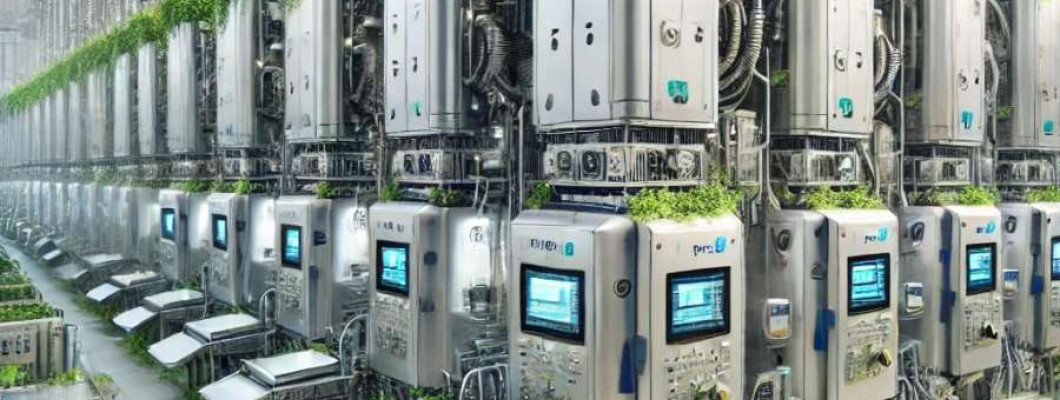
The Industrial Reality of Integrating Heat Press Machines in High-Volume Production Lines
In industrial-scale manufacturing environments where throughput and automation dictate profitability, the integration of heat press machines such as the 40*60CM Heat Press Machine presents both technical and infrastructural challenges. These challenges manifest primarily in the synchronization of thermal cycles with conveyor and robotic automation, compatibility with existing facility power and ventilation systems, and maintaining consistent pressure distribution over prolonged operating hours to avoid bottlenecks.
A scenario common among rapidly scaling print-on-demand and textile decoration businesses involves multiple heat press units operating simultaneously within densely packed production cells. The constrained footprint of 40*60 centimeters allows for relatively compact machine layouts; however, the heat dissipation requirements and electrical draw — typically in the range of 1200 to 1800 Watts per unit — impose significant demands on facility electrical infrastructure and HVAC systems. Without appropriate power distribution and thermal management strategies, the overall line efficiency can degrade due to downtime caused by overheating or power surges.
From a materials handling perspective, the heat press's cycle times, generally around 15 to 30 seconds per press depending on substrate and transfer medium, dictate the maximum achievable throughput. In high-volume settings, the human factor—namely manual loading and unloading—can quickly become a limiting factor unless mitigated through automation. These operational nuances underline the importance of viewing the 40*60CM Heat Press Machine not as an isolated component but as part of a highly orchestrated industrial ecosystem.
Technical Deep-Dive into Hardware Capabilities and System-Level Integration
1. Thermal Control and Power Consumption
The 40*60CM Heat Press Machine typically achieves target temperatures between 0 and 220 degrees Celsius using embedded PID control circuits ensuring temperature stability within ±1 °C. The heating element’s power rating, usually around 1500 Watts, balances rapid heat-up times (~5 minutes) against energy efficiency considerations.
2. Pressure Distribution and Mechanical Structure
A critical parameter for high-precision output is even pressure distribution across the 40x60 cm platen surface. Mechanical leverage systems or pneumatic actuators often provide adjustable pressures ranging from 0 to 6 bars. The uniformity of pressure to within ±0.2 bar across the platen mitigates transfer inconsistencies. Structurally, steel frames with reinforced joints assure longevity and minimal flex under continuous operation.
3. Cycle Timing and Automation Integration
Transfer cycle durations vary with substrate materials; 15-30 seconds is standard. When integrated into automated lines, the heat press must interface via digital I/O or serial protocols (e.g., RS-485, Modbus) for start/stop signals, status reporting, and fault conditions. This enables closed-loop synchronization with conveyor and robotic arms.
4. Cooling and Heat Dissipation
Effective heat dissipation mechanisms such as integrated cooling fans or water-cooled plates reduce platen and ambient temperatures post-press, enabling faster cycle turnover. Failure to maintain ambient temperatures below 35 degrees Celsius in multi-unit setups risks thermal derating of electronic components and accelerated mechanical wear.
5. Footprint and Infrastructure Requirements
| Parameter | 40x60CM Heat Press Machine | Industrial Conveyor Heat Press |
|---|---|---|
| Footprint (WxD mm) | 650 x 800 | 1500 x 900 |
| Max Power (Watts) | 1500 | 4500 |
| Cycle Time (seconds) | 15-30 | 5-10 |
| Pressure Range (bar) | 0-6 | 0-8 Pneumatic |
| Integration Interface | Digital I/O, Serial | PLC Control, Ethernet/IP |
| Cooling Method | Fan or passive | Water-cooled platen |
Scenario Analysis Highlighting Throughput and Automation Effects in Diverse Business Models
Scenario 1: Small Batch Custom Apparel Production
A boutique apparel business using the 40*60CM Heat Press Machine benefits from its compact size and ease of manual operation. Cycle times of 20 seconds per item allow for roughly 180 presses per 1-hour shift per machine. However, manual loading limits throughput. Optimizing workspace ergonomics and introducing semi-automation such as jig fixtures can improve output by 20-30%.
Scenario 2: Medium-Scale Print-on-Demand Fulfillment Center
Here, multiple units operate in parallel within a 48 RU rack-like footprint with automated conveyor-fed loading. The heat press’s digital interface integrates with existing PLCs for synchronized operation, maximizing throughput of 500+ units per 8-hour shift. Managing thermal loads across multiple machines requires enhanced HVAC capacity and real-time temperature monitoring to prevent drift.
Scenario 3: High-Volume Industrial Textile Decorator
For industrial decorators processing tens of thousands of substrates weekly, the 40*60CM machine’s smaller footprint enables dense machine clustering. However, cycle times limit throughput compared with larger conveyorized presses. Investment prioritizes robotic automation downstream for loading/unloading and immediate cooling zones to maintain cycle efficiency. Electrical infrastructure upgrades to 3-phase power ensure stable operation.
Expert FAQ Addressing Complex Operational Concerns
Q1: How does platen material composition affect heat transfer uniformity?
A: Platen materials such as anodized aluminum or stainless steel differ in thermal conductivity (Aluminum ~205 W/m·K vs Stainless Steel ~16 W/m·K). Aluminum platens ensure rapid, uniform heat distribution conducive to consistent transfers across the 40x60 cm area.
Q2: What is the impact of ambient temperature fluctuations on press cycle times?
A: Ambient increases above 35 °C can increase cycle times by up to 10%, owing to diminished heat dissipation and elevated system thermal loads that lengthen cooldown phases.
Q3: Can the 40x60CM machine interface directly with centralized SCADA systems?
A: Typically, yes, via serial communication or digital I/O, enabling real-time status monitoring and integration into supervisory control layers.
Q4: How does repeated cycling affect the lifespan of heating elements?
A: Industrial-grade heating elements rated for >10,000 cycles maintain consistent output when operated within manufacturer temperature thresholds, but overheating accelerates degradation.
Q5: What maintenance schedule optimizes uptime for multi-shift operations?
A: Weekly inspection of electrical connectors, quarterly calibration of pressure sensors, and biannual replacement of heating elements or silicone pads minimize unexpected downtime.
Strategic Verdict and Recommendation for Industrial-Grade Scalability
The 40*60CM Heat Press Machine aligns well with scalable business models emphasizing throughput and automation, provided infrastructure integration is thoughtfully approached. Its balanced power consumption, compact footprint, and programmable controls facilitate dense machine placement and networked operation within sophisticated production lines.
Given the criticality of thermal management, pressure consistency, and cycle synchronization in industrial environments, this unit represents a solid industrial-grade solution when paired with appropriate electrical and HVAC support systems. The flexibility afforded by its integration interfaces supports scaling from manual operation to fully automated workflows without compromising reliability.
Potential users seeking asset longevity without exorbitant capital expenditure will find the 40*60CM Heat Press Machine a decisive component of their production infrastructure. For detailed product specifications and procurement guidance, consult the manufacturer's official page for the 40*60CM Heat Press Machine.