
Infrastructure Challenges Define the True Industrial Viability of the A4 Roll DTF Printer
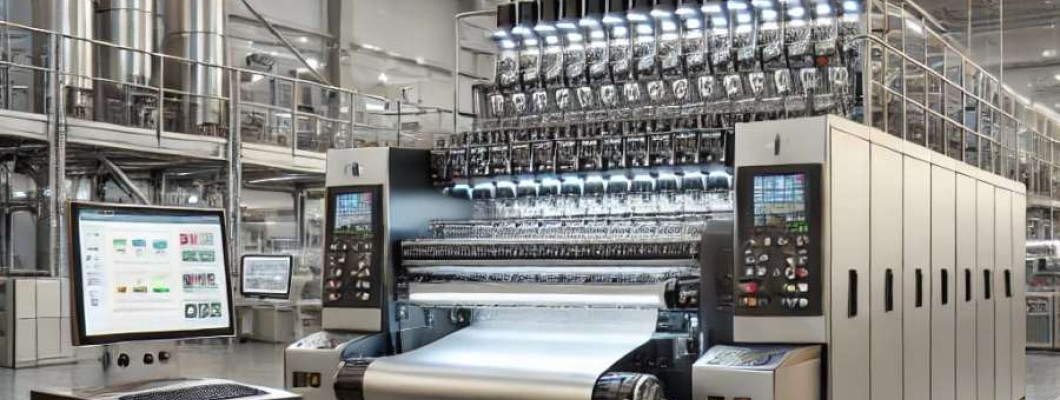
The Industrial Reality of Integrating the A4 Roll DTF Printer into Established Production Lines
The transition from laboratory-scale or artisanal direct-to-film (DTF) printing to industrial-grade throughput introduces substantial infrastructure integration challenges. For an A4 Roll DTF Printer, often perceived as a compact or mid-tier device, these challenges become pronounced when targeting high-volume or continuous production environments. The core issue resides not merely in the printer's standalone output capabilities but in its seamless assimilation into sophisticated enterprise workflows that demand synchronized hardware, environmental controls, and data management.
Consider a scenario in a textile manufacturing facility specializing in multi-shift operations. The printer must reliably interface with automated material feeding systems, drying units, and quality inspection modules. A failure to adapt power supply tolerances, network protocols, or physical footprint within existing floor plans materially stalls productive uptime. Additionally, environmental factors such as humidity and particulate contamination, typical in integrated facilities, may exceed the hermetic parameters the DTF printer is designed for, resulting in accelerated wear or output variability.
Beyond physical integration, software interoperability is a critical bottleneck. Legacy management systems optimized for screen printing or sublimation often lack drivers or scripting support for DTF print queue management, ink formulation tracking, or real-time anomaly detection. These gaps extend lead times and impose retraining costs on operators, while also limiting the printer's capacity to leverage enterprise resource planning (ERP) or manufacturing execution systems (MES) for predictive maintenance cycles.
Thus, the infrastructural challenge is an ecosystem puzzle where every interface—electrical, mechanical, digital—must be precisely calibrated. This calibration defines whether the A4 Roll DTF Printer operates as an isolated device or as a robust node within a larger industrial printing matrix.
Technical Deep-Dive into Infrastructure Integration for the A4 Roll DTF Printer
Electrical and Mechanical Interface Constraints
Standard industrial printers often require rigid electrical input specifications, typically 220-240V AC single-phase with surge protection and uninterrupted power supply (UPS) integration. The A4 Roll DTF Printer’s nominal power consumption typically ranges between 150-250 Watts depending on operational modes, but transient spikes during heating and curing phases can exceed 300 Watts. This demands power regulation hardware capable of microsecond response time to voltage fluctuations to prevent printhead damage.
Mechanically, the device footprint must be compatible with existing conveyor and robotic handling systems. Typical A4 Roll DTF Printers measure around 900 mm (width) by 700 mm (depth) with a height of approximately 1200 mm, excluding peripheral drying or curing modules. Spatial constraints in production floors with tight aisle widths (>1500 mm minimum clearance required) can necessitate costly infrastructural modification.
Thermal Management and Environmental Control Metrics
Direct-to-film printing inks have precise thermal curing windows, usually 140-170°C for 20-40 seconds depending on ink chemistry. Ambient temperature fluctuations or inadequate airflow can cause under- or over-curing, leading to adhesion failures or film distortion. Maintaining a controlled environment with relative humidity between 40% and 60% is essential; deviations induce droplet size inconsistencies and color variations due to ink viscosity changes.
Active cooling systems integrated into the printing workstation design improve long-term component reliability. Printheads operating at 2 pL nozzle sizes require stable thermal conditions to avoid nozzle clogging and degradation, typically limiting operational downtime to maintain throughput targets.
Digital and Network Integration Complexities
Standard communication protocols on the A4 Roll DTF Printer include USB 3.0 and Ethernet with TCP/IP support for data transfer. Industrial integration demands compatibility with factory LANs protected by firewalls and segmented subnets. Lack of standardized API or SDK support for automating print job scheduling complicates integration with higher-level control systems.
Latency in print queue communication must stay under 50 milliseconds to maintain seamless job switching, particularly in multi-job batch processing. Furthermore, the absence of native support for secure socket layer (SSL) encryption in firmware limits deployment in environments with stringent cybersecurity frameworks.
Ink Handling and Consumables Logistics Challenges
The A4 Roll DTF Printer uses pigment-based inks with proprietary carrier fluids optimized for durability and color fidelity. Supply chain constraints on specialized inks, especially in regional manufacturing hubs, can result in unplanned downtime. Additionally, ink viscosity requires daily monitoring and adjustment using precision rheometers to maintain nozzle performance.
Consumables like specialized polyester films and adhesive powders have shelf lives constrained by storage conditions. Managing inventory with first-expiry-first-out (FEFO) procedures at scale requires integration with warehouse management systems (WMS) to avoid waste and maintain production continuity.
Maintenance Access and Lifecycle Management
Access points for routine maintenance such as printhead cleaning, film path inspection, and ink cartridge replacement are designed for small-batch environments. Scaling to industrial production requires reengineering these access protocols to minimize operator downtime, ideally reducing maintenance tasks to under 10 minutes per shift.
Component lifespans such as printhead durability (typically 1-3 million linear centimeters of print) and pump service intervals (every 1000 operational hours) must be tracked through integrated sensors feeding predictive maintenance dashboards to avoid unexpected failures.
| Integration Aspect | A4 Roll DTF Printer | Industrial-Grade DTF Printer Benchmark |
|---|---|---|
| Power Consumption Peak (Watts) | 300 | 500-700 |
| Operational Footprint (mm WxDxH) | 900x700x1200 | 1500x1200x1600 |
| Printhead Nozzle Size (pL) | 2 | 1.5-2 |
| Network Protocol Support | USB 3.0, Ethernet TCP/IP | Ethernet TCP/IP, API/SDK, SSL |
| Maintenance Downtime per Shift | 15-20 minutes | Under 10 minutes |
Scenario Analysis for Business Use-Cases
Small-to-Medium Textile Manufacturer Scaling Production
A textile manufacturer moving from manual screen printing to DTF requires reliable integration to maintain output without staff expansion. The A4 Roll DTF Printer’s smaller footprint and moderate power needs align well with existing floor space. However, lacking advanced network interfaces, it mandates manual job management, increasing operator intervention and labor costs. Environmental control upgrades are necessary to maintain color consistency, adding upfront CAPEX.
Custom Print Shop Leveraging High-Mix, Low-Volume Orders
For print shops offering high customization and frequent substrate changes, the A4 Roll DTF Printer excels in micron-level control and rapid job switching. Yet, daily maintenance overheads and consumable logistics require disciplined operational protocols. The absence of predictive maintenance integration increases risk of sudden printhead failures, which disrupt tight turnaround times.
Enterprise Apparel OEM Integrating Inline Production
Apparel original equipment manufacturers (OEMs) deploying inline finishing lines encounter significant electrical harmonization challenges. The A4 Roll DTF Printer’s power transients demand power conditioning equipment, and its lack of secure network protocols complicates integration with MES systems. Despite these challenges, its precise thermal management enables superior print durability essential for OEM quality standards.
Expert FAQ About the A4 Roll DTF Printer Infrastructure Integration
What specific power conditioning is recommended for stable operation?
Buffered UPS units with a minimum 1 kVA capacity and automated voltage regulation (AVR) systems capable of ±10% voltage stabilization are essential to handle the thermal curing phase power spikes.
Can the printer's firmware be customized for MES compatibility?
Currently, firmware customization options are limited, requiring middleware solutions or custom driver development to integrate with factory MES frameworks effectively.
What are the thermal tolerances for printhead longevity?
Maintaining consistent printhead temperatures within ±3°C of nominal operating temperature extends nozzle life by up to 30%, reducing maintenance frequency.
How critical is environmental humidity control around the printer?
Relative humidity deviations beyond 20% cause ink viscosity variation, leading to droplet size inconsistencies and color shifts; hence, maintaining tight humidity control is crucial.
What inventory management practices optimize ink and consumable usage?
Implementing barcode tracking linked with WMS and applying FEFO rotation with temperature-controlled storage maximizes consumable shelf life and avoids production delays.
Strategic Verdict and Industrial Recommendation
Addressing infrastructure integration challenges is vital for realizing the A4 Roll DTF Printer’s full potential within industrial environments. Its size and power efficiency make it appealing for mid-scale applications, yet enterprises seeking seamless integration with automated systems must invest in supplementary infrastructure upgrades including power conditioning, environmental controls, and custom network middleware.
Despite these integration hurdles, the printer delivers precision and throughput that meet stringent industrial standards for color fidelity and adhesion durability when deployed with appropriate environmental and IT support systems. For those prioritizing modular scalability and lifecycle management within a factory ecosystem, the A4 Roll DTF Printer stands as a recommended industrial-grade solution that bridges compact design with high-end operational demands.