
Infrastructure Challenges in Integrating the A4 Roll DTF Printer at Scale for Scalable Business Owners
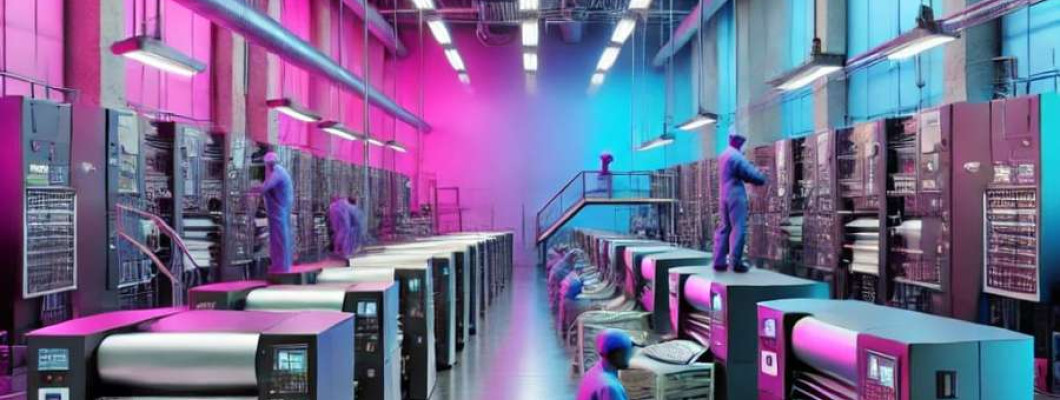
The Industrial Reality of Integrating A4 Roll DTF Printers
For scalable business owners, transitioning to direct-to-film (DTF) printing technologies such as the A4 Roll DTF Printer presents a complex infrastructure puzzle beyond upfront acquisition costs. The challenge extends into accommodating the device’s physical footprint, power consumption patterns, environmental requirements, and workflow compatibility with existing enterprise systems. In a typical high-throughput apparel or promotional items production line, spatial constraints inside print production facilities are a critical bottleneck. The A4 Roll DTF Printer typically occupies approximately 1.2 meters in width and 0.8 meters in depth, with height nearing 1.0 meter, necessitating a dedicated workstation with unobstructed airflow and ergonomic access for continuous roll feeding and output collection.
Power infrastructure demands are another significant hurdle. The device’s rated power draw peaks at an estimated 350 Watts during intense printing cycles involving white ink laydown and curing phases. Without precise electrical load balancing and dedicated circuits, facility-wide voltage fluctuations and unintended downtime are common hidden costs. Additionally, thermal management is seldom addressed upfront. Integrated fans and localized heating elements in the printer produce continuous heat, which, if unmitigated through ventilation or HVAC integration, can exacerbate ambient conditions affecting print consistency and operator endurance.
Network infrastructure integration also requires attention. The A4 Roll DTF Printer supports USB and Ethernet interfaces but lacks native Wi-Fi or cloud connectivity, limiting remote monitoring capabilities. This requires installation of intermediary print server hardware or adaptation of existing local area network architectures. When scaled to multiple printers, the cumulative network traffic and print job queuing latency can add unanticipated workflow constraints.
Technical Deep-Dive on Infrastructure Integration
1. Power and Electrical Infrastructure
Calculating the operational electrical load is essential. The printer’s 350 W peak draw translates to continuous consumption of 0.35 kW when active. Assuming a 16-hour production day, this equates to 5.6 kWh daily energy use per unit. For a multi-printer installation with n units, total load L = 0.35 kW × n concurrently running units. Facility wiring must accommodate a safety margin of 25%, so setup amperage A = (L × 1000) / Voltage × 1.25. For 220 V operation, a 4-unit setup consumes approximately 6.36 A under peak conditions, necessitating dedicated breakers and surge protection.
2. Thermal Management Physics
Continuous operation generates heat flux Q which can be approximated as 10% of electrical input power dissipated as heat: Q = 0.1 × 350 W = 35 W per device. In small production cells, cumulative heat raises ambient temperature T ambient rise = (Q × n) / (ρ × Cp × V ÷ t), where ρ is air density (1.225 kg/m³), Cp specific heat capacity (~1005 J/kg·K), V volume of enclosed space, and t time. Without active ventilation, a room of 20 m³ housing 3 printers may experience temperature rises of 5–10 °C over a single shift.
3. Physical Footprint and Workflow Layout
The printer’s roll feed and output system require clearance zones for operator access and material handling. Minimum aisle spacing of 1 meter on each side is recommended. Cumulative spatial requirements for multiple units scale linearly but can be optimized via shared roll feeding stations and conveyor integration, depending on enterprise automation level.
4. Network and Data Transfer Considerations
USB 3.0 interface throughput peaks near 5 Gbps, but printing pipelines rarely saturate this due to data volume and print speed constraints. Ethernet (1 Gbps) connectivity is preferred for centralized print server setups. Network latency under 10 ms and packet loss below 0.1% are vital to maintain print job integrity. When queuing multiple print jobs across printers, network segmentation with VLANs improves performance.
5. Comparative Infrastructure Paths Evaluation
| Infrastructure Aspect | USB-Centric Setup | Ethernet Network Setup | |
|---|---|---|---|
| Connectivity Speed | Up to 5 Gbps | 1 Gbps | |
| Remote Monitoring | Limited | Enabled via Print Servers | |
| Scalability | Low (1:1 printer-to-PC) | High (Multi-printer management) | |
| Installation Complexity | Low | Moderate (network config) | |
| Cost Impact | Low initial | Higher upfront |
Scenario Analysis of Use-Case Impact
1. Small Apparel Startup
With one or two A4 Roll DTF Printers, the startup typically faces minimal infrastructure upgrades. USB connectivity suffices, and power draw remains manageable on existing circuits. However, print job queuing and limited automation may constrain throughput beyond 100 garments/day.
2. Mid-Size Custom Merchandise Facility
Scaling to 5-10 units requires dedicated power circuits, enhanced ventilation, and networked print server setups. These upgrades add CAPEX and demand skilled IT and facilities staff, but enable daily throughputs exceeding 500 items with higher uptime.
3. Industrial Production Plant
Over 20 printers demand full integration into enterprise infrastructure with controlled power distribution panels, HVAC system synchronization, and network segmentation for operational resilience. Real-time monitoring and automated roll change mechanisms become necessary. This level maximizes print density and production automation but demands rigorous lifecycle maintenance planning.
Expert FAQ on A4 Roll DTF Printer Infrastructure
Q1: How critical is dedicated electrical wiring for printer stability?
A1: Dedicated wiring reduces voltage drop and transient interference, stabilizing printhead operation and preventing print quality degradation.Q2: Can ambient temperature fluctuations affect ink adhesion?
A2: Yes, fluctuations beyond 22 ±5 °C can alter ink viscosity and curing rates, leading to inconsistent film adhesion and color fidelity.Q3: Is network segmentation mandatory for multi-unit setups?
A3: While not mandatory, segmentation via VLANs helps isolate print traffic, reducing latency and packet collisions, improving workflow fluidity.Q4: What are the maintenance implications of high operational temperatures?
A4: Elevated temperatures can accelerate component wear, increasing printhead clogging and electronic failures, raising maintenance frequency.Q5: How does roll handling ergonomics impact production efficiency?
A5: Poor ergonomics cause operator fatigue and errors during roll feeding, reducing uptime. Implementing rail guides and motorized roll feeders enhances continuous operation capability.
Strategic Verdict and Recommendation
The A4 Roll DTF Printer presents a robust, industrial-grade solution when integrated with deliberate infrastructure planning tailored to scalable business owner needs. Its moderate electrical and spatial requirements position it favorably for incremental scaling from startup through industrial production levels. However, success depends on anticipating thermal management, power distribution, and network segmentation challenges early in the installation phase to mitigate hidden costs and operational bottlenecks.
In conclusion, for enterprises aiming to elevate throughput while maintaining production consistency, the A4 Roll DTF Printer delivers decisive advantages in print quality and substrate versatility. It demands an infrastructure upgrade roadmap that, while non-trivial, is achievable with established enterprise-grade electrical, HVAC, and network engineering disciplines. Thus, it is strongly recommended as a viable core asset for scalable DTF printing operations.