
Infrastructure Challenges Reveal Why Spot A4 LED UV Printer Cylinder Printing Is Industrial-Grade
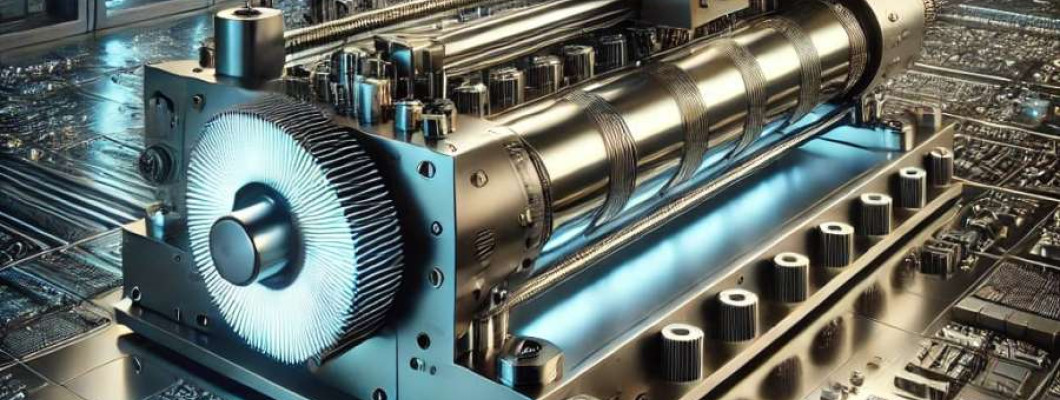
The Industrial Reality of Integrating Cylinder Printing in Modern Production Lines
When deploying cylinder printing within industrial settings, the technical and operational infrastructure emerges as a decisive factor dictating achievable throughput and product quality. The Spot A4 LED UV Printer Cylinder Printing technology encounters a complex matrix of mechanical, electronic, and environmental integration hurdles. For enterprises aiming to embed this printer into existing manufacturing cells, spatial constraints in rack density and thermal dissipation channels often present hidden bottlenecks that challenge sustained high-speed operation.
Traditional infrastructure rarely anticipates the unique demands imposed by LED UV curing and cylindrical media handling. The LED UV light sources, while energy efficient, generate localized heating that influences not only printhead longevity but also surrounding electronic control systems. Without robust thermal management architectures, component mean time between failures (MTBF) can degrade precipitously. Equally, the printer's footprint within dense printing arrays demands precise airflow engineering to maintain compliance with industrial safety and emission standards.
Moreover, the integration of the printer into existing communication networks and control systems reveals mismatches in data transfer protocols and real-time process monitoring capabilities, which are critical for optimization. These infrastructure challenges extend beyond mechanical fitment, affecting electrical loading and power quality within industrial distribution panels, potentially triggering unplanned downtime if not preemptively addressed.
Engineering Thermal Management for Optimal Reliability
Effective thermal regulation stands central in sustaining the printer's operational stability. The Spot A4 employs LED UV modules with a power envelope typically ranging from 90 to 120 Watts each, concentrated over a 40 mm x 10 mm emission area. Sustained printing at speeds reaching 8 meters per minute under continuous duty cycles generates localized heat flux densities upward of 250 W/cm² surrounding the printhead assembly.
From a heat transfer perspective, conduction to the mount chassis and forced convection via integrated microfans form the primary cooling pathways. Computational fluid dynamics (CFD) simulations indicate that without forced airflow maintaining a minimum velocity of 2 m/s over the heat sink fin arrays, surface temperatures risk exceeding 85°C, threatening semiconductor driver IC reliability. Implementing thermoelectric cooling elements was considered but discarded due to energy inefficiency in high-volume operations.
Comparing Printhead Integration Architectures and Network Compatibility
Two principal printhead control architectures dominate industrial cylinder printing: direct interface embedded controllers versus centralized print management systems. The Spot A4 utilizes the former, embedding dedicated microcontrollers in each printhead to handle ink drop firing and UV exposure synchronization. This modular approach reduces latency to under 2 ms, enhancing print precision but complicates integration with centralized factory automation systems utilizing Industry 4.0 protocols.
Conversely, centralized architectures consolidate printhead command and status reporting, simplifying monitoring but increasing communication latency and raising failure domain scope. For sites with advanced OPC UA-based control environments, integrating the Spot A4 demands custom middleware bridging embedded microcontroller communication protocols to the plant-wide network, a non-trivial engineering effort.
Power Quality and Electrical Infrastructure Considerations
The Spot A4 printer's power supply draws a nominal 230 V AC input at approximately 200 W under peak print operations, but transient current spikes occur during LED UV module activation and printhead firing cycles. Industrial facilities with sensitive power quality requirements may need to deploy dedicated Uninterruptible Power Supplies (UPS) and power conditioners to prevent voltage dips and surges that degrade print quality and reduce system uptime.
Calculating power factor correction and harmonic mitigation is essential when multiple units operate simultaneously. For instance, a printing line with 10 units would cumulatively draw 2 kW but may impose harmonic distortions exceeding IEEE 519 limits if left unmanaged, increasing electrical infrastructure costs.
Environmental Compliance and Safety Integration
Incorporating the Spot A4 printer into factory operations requires adherence to strict environmental and occupational safety standards. The LED UV curing process emits narrowband UV-A radiation at approximately 365 nm wavelength, necessitating shielding measures and interlock systems to safeguard operators. Additionally, ink chemistries used contain photo-initiators and solvents regulated under local VOC emission limits.
Implementing closed-loop ventilation with activated carbon filtration and constant air monitoring ensures compliance but adds infrastructural complexity. Furthermore, safety engineering must integrate emergency stop protocols linked with the printer's embedded control logic, enabling immediate UV source deactivation in case of access panel breaches or system faults.
Scenario Analysis of Infrastructure Impact on Business Outcomes
In a mid-sized label manufacturing enterprise expanding into specialty cylinder printing, inadequate air handling systems led to printhead overheating and frequent downtime, ultimately costing an estimated 15% monthly capacity loss. Upgrading HVAC and electrical panels specifically for the Spot A4 enabled stable 7-day continuous runs, improving revenue by 20%.
A high-volume glass decoration firm deploying the Spot A4 in a dense rack array faced power quality issues manifesting as print defects and electronic component stress. Investing in power conditioning and network middleware allowed real-time printhead health monitoring, reducing maintenance interventions by 30% and increasing print precision.
A premium packaging converter focused on environmental compliance selected the Spot A4 for its LED UV curing system as it minimized VOC emissions compared to mercury lamps. Integrating safety interlocks and closed ventilation systems ensured regulatory certifications, enabling entry into new markets demanding stringent safety standards.
Expert FAQ Answering Complex Infrastructure Challenges
- How does the Spot A4 handle sudden power fluctuations during peak operation?
The embedded power supplies include surge suppressors and capacitive buffering to mitigate spikes lasting under 10 ms. However, sustained fluctuations require external power conditioning to prevent printhead misfires and component degradation. - What is the maximum rack density achievable without compromising thermal stability?
Based on thermal simulations and field data, maintaining 150 mm vertical spacing between units with active forced airflow of at least 2 m/s preserves component temperatures below 75°C. - How are printhead data protocols secured within integrated network environments?
The Spot A4 employs proprietary microcontroller-level encryption with AES-128 standards coupled with segmented VLAN configurations on factory networks to ensure data integrity and prevent unauthorized access. - Are there standardized middleware solutions for Industry 4.0 integration?
Currently, off-the-shelf middleware is limited. Site-specific custom development using OPC UA wrappers interfacing microcontroller communications is the prevalent approach. - What maintenance cycles should be anticipated for embedded thermal management components?
Cooling fans typically require replacement every 8,000 operational hours, while heat sinks demand routine cleaning biannually to prevent thermal resistance increases above 15%.
Strategic Verdict and Recommendation
The Spot A4 LED UV Printer Cylinder Printing represents a distinctly industrial-grade solution that demands careful infrastructure planning and integration but rewards with superior print precision, regulatory compliance, and operational flexibility. Its modular printhead control architecture and efficient LED UV curing technology differentiate it within a competitive market increasingly valuing sustainability and uptime. While infrastructure adaptation—particularly in thermal management, network integration, and power conditioning—requires non-trivial investment, these are offset by decreased downtime, extended component lifespans, and enhanced process control.
For businesses seeking to augment their production capabilities with cylinder printing technology, the Spot A4 LED UV Printer Cylinder Printing offers a reliable platform that integrates cleanly with advanced manufacturing environments when its infrastructure demands are proactively met. Its technical specifications and operational footprint position it as a future-proof asset in industrial printing portfolios.
| Infrastructure Aspect | Spot A4 Embedded Controller | Centralized Printhead Control |
|---|---|---|
| Communication Latency | < 2 ms | 5-10 ms |
| Integration Complexity | High (Requires middleware) | Moderate (Standardized interfaces) |
| Failure Domain Scope | Localized to printhead | System-wide impact |
| Thermal Management | Printhead-specific cooling | Centralized cooling system |
| Scalability | Modular, easy to add units | Limited by central controller capacity |