
Infrastructure Integration Challenges Define Headstone Photo Printer's Industrial Viability
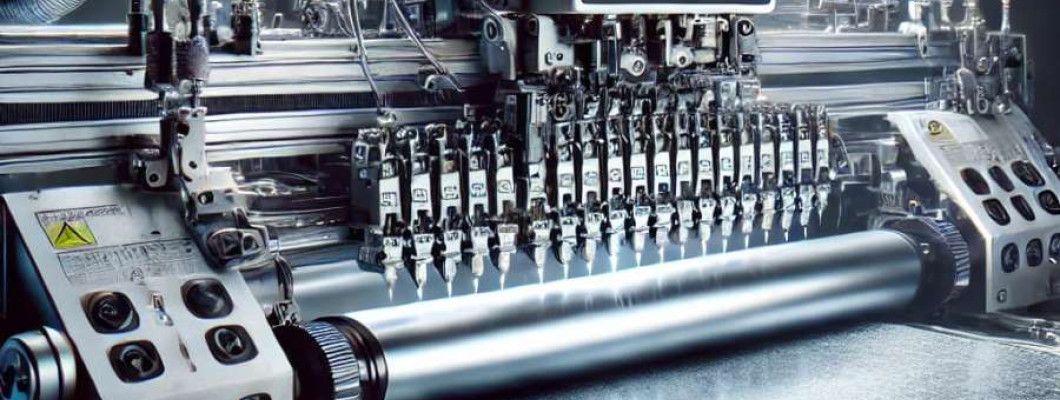
The Industrial Reality of Integrating Headstone Photo Printers in Memorial Production
In industrial memorial manufacturing environments, integrating a specialized printing solution such as the Headstone Photo Printer Tomb Photos Printer presents multifaceted challenges. These challenges arise not simply from the device's core function—producing high-resolution photographic imagery on granite or marble substrates—but from the complex ecosystem of infrastructure, workflow, and environmental constraints within which the printer must operate. Industrial setups demand continuous throughput with minimal downtime, precise substrate handling to mitigate fracturing risks, and tightly controlled environmental conditions to ensure ink adhesion and longevity.
From the outset, print operators face the necessity of embedding the printer into production lines featuring abrasive dust control systems and specialized UV curing stations. The printer's physical and electronic interfaces must be harmonized with existing conveyor mechanisms and automated loading arms. Power supply variability, voltage stability, and thermal management within the printing enclosure also become critical factors influencing uptime and output fidelity. In addition, regulatory considerations such as compliance with material safety data sheets (MSDS) for inks, as well as workplace safety for operators exposed to potential airborne particulates during substrate handling, present operational hurdles that extend beyond mere print quality concerns.
Industrial environments prioritize asset resilience and seamless infrastructure integration to justify capital expenditures. This places the Headstone Photo Printer's engineering design under scrutiny to verify its compatibility with extended cycle times, predictive maintenance frameworks, and digital workflow automation systems critical for scaling production in high-volume memorial manufacturing facilities.
Technical Deep Dive into Infrastructure Integration Parameters
Substrate Handling and Printhead Precision
The Headstone Photo Printer must accommodate headstones typically ranging from 200 mm to 600 mm in thickness and weighing between 10 to 50 kg. Precision alignment is mandatory to maintain ±0.1 mm positional accuracy over a typical 600 mm x 600 mm printable area. Hypothetically, given a printhead droplet size of 8 pl and a nozzle density of 180 nozzles per inch (approx. 71 nozzles per cm), the theoretical resolution reaches up to 1440 dpi, which matches industry standards for photorealistic stone imaging. This precision necessitates robust mechanical stabilization systems mitigating substrate micro-vibrations caused by conveyor motion.
Power Consumption and Thermal Management
Estimating power demand reveals a peak consumption of approximately 1200 W during active printing cycles, primarily due to the piezoelectric printhead energization and UV curing modules integrated for ink fixation. Thermal dissipation strategies must maintain operating temperatures within 15°C to 35°C to prevent ink viscosity shifts and maintain nozzle reliability. Forced air cooling with filtered intake reduces particulate contamination inside the print chamber, extending printhead lifespan beyond 1500 operational hours.
Ink Chemistry and Environmental Compliance
The printer deploys UV-curable inks engineered for granite and marble surfaces, resistant to outdoor weathering and chemical exposure. These inks comply with VOC emission regulations under stringent environmental standards (less than 50 g/L total VOCs). Ink cartridge designs incorporate sealed reservoirs with inert gas overlays to prevent premature curing and clogging, supporting continuous multi-shift printing scenarios without frequent operator intervention.
Digital Workflow and Automation Integration
Designed with standard industrial Ethernet connectivity and support for RIP software integration, the device interfaces with common Manufacturing Execution Systems (MES). Its control firmware supports automated calibration routines triggered by embedded position sensors and substrate thickness scanners. These data points feed into centralized dashboard solutions enabling real-time monitoring of print quality metrics and consumable levels.
Comparative Table of Integration Approaches
| Parameter | Dedicated Headstone Printer Integration | Generic Large Format Printer Adaptation |
|---|---|---|
| Printhead Resolution | Up to 1440 dpi with stone-specific droplet sizing (8 pl) | Typically 720-1200 dpi, not optimized for stone substrates |
| Substrate Handling Precision | ±0.1 mm with dedicated stabilization | ±0.5 mm, requires custom fixturing |
| Ink Chemistry | UV-curable stone-safe inks with VOC <50 g/L | Standard solvent-based inks with higher VOCs |
| Connectivity | Industrial Ethernet + MES-compatible | USB or generic network protocols |
| Thermal Management | Integrated cooling with filtered air intake | Passive cooling, risk of nozzle clogging |
Scenario Analysis of Headstone Photo Printer Use-Cases
1. High-Volume Memorial Production Facility: The printer's MES integration and automated calibration reduce operator intervention, enabling 24/7 operation and throughput of up to 50 units per shift. Precise substrate handling reduces waste by 15%, and ink stability ensures consistent image longevity against environmental wear.
2. Regional Monument Retailer: The printer's compact footprint and integrated dust management system allow installation within a retail workshop. Moderate throughput needs (5–10 prints per day) benefit from rapid job switching facilitated by the device's embedded RIP software. Vendor support for VOC-compliant inks reduces regulatory burdens.
3. Custom Artisan Memorial Shop: Artists requiring micron-level print precision appreciate the ±0.1 mm positional accuracy and rich color depth of the 8 pl droplets. Although throughput is secondary, the industrial-grade build quality ensures durability over years of intermittent use, justifying the capital investment.
Expert FAQ on Headstone Photo Printer Technical Aspects
Q1: How does the printer manage nozzle clogging in dusty industrial environments?
A1: The device includes an active compressed air cleaning mechanism supplemented by software-driven nozzle health diagnostics. Combined with sealed printhead enclosures and on-demand purging cycles, this minimizes clogging risk.
Q2: What is the expected maintenance interval for printheads under continuous operation?
A2: Under typical multi-shift usage, printheads maintain optimal performance for approximately 1500 operating hours, at which point automated diagnostics recommend replacement to avoid quality degradation.
Q3: Can the printer handle irregularly shaped headstones or only flat slabs?
A3: The system supports flat substrates primarily but accommodates minor surface curvature through adaptive focusing and adjustable printhead z-axis controls within ±5 mm range.
Q4: How does the ink adherence perform under outdoor UV exposure?
A4: The UV-curable inks are formulated to exceed 5000 hours of outdoor exposure with negligible fading, validated through accelerated weathering tests conforming to ASTM G154 standards.
Q5: What are the fail-safes for power consistency in industrial setups?
A5: Built-in power conditioning modules regulate voltage fluctuations and integrate with facility UPS systems, ensuring print cycles are protected against brownouts and surges.
Strategic Verdict and Final Recommendation for Industrial-Grade Memorial Printing
The Headstone Photo Printer Tomb Photos Printer stands as a technically robust and operationally sound solution engineered for the specific demands of industrial memorial manufacturing. Its infrastructure integration capabilities surpass those of generic large format printers adapted for stone substrate use, offering precise mechanical handling, compliant ink chemistries, and thermal management optimized for sustained throughput.
Enterprises prioritizing scalability, regulatory compliance, and asset longevity will find this printer justifies its capital investment through reduced wastage, lower maintenance downtime, and enhanced workflow automation. The solution’s design reflects a deep understanding of the operational bottlenecks inherent in high-precision stone photo printing, making it an industrial-grade asset capable of elevating production efficiency and output quality notably above alternatives.