
Infrastructure Integration Challenges Define Industrial Viability of A3 UV DTF Printer Multifunction Printing Machine
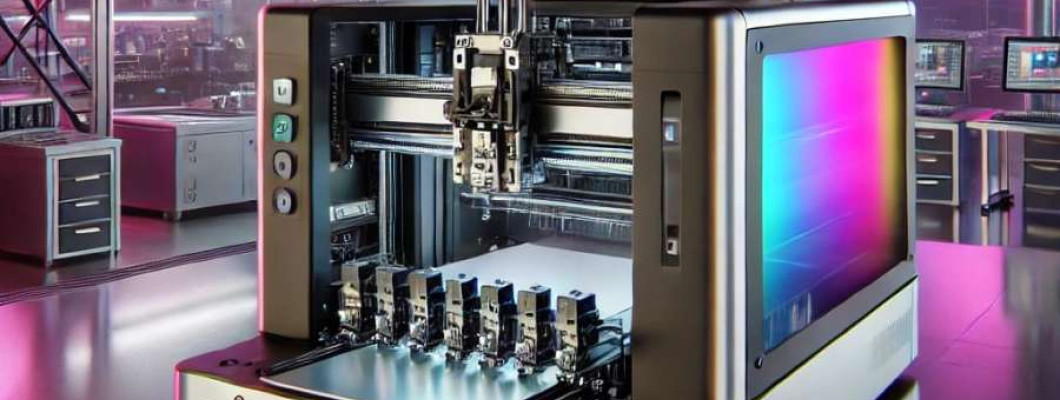
The Industrial Reality of Integrating A3 UV DTF Printer Multifunction Printing Machine
Industrial-grade printing equipment must seamlessly merge into existing production infrastructure to achieve optimal throughput and reliable operation. The introduction of an A3 UV DTF Printer Multifunction Printing Machine into enterprise environments exposes firms to multifaceted integration challenges that extend beyond mere mechanical installation. Thermal management, power supply compatibility, network communication standards, and physical spatial constraints converge to form critical barriers in rapid deployment. Consider a scenario where a mid-tier printing enterprise attempts to incorporate this multifunction printer alongside legacy solvent-based and laser engraving machines within a constrained production floor measuring under 50 square meters. The printer’s power draw peaks at 2200 W during UV curing cycles, requiring dedicated circuit breakers and surge protection to prevent voltage dips that could compromise printhead lifespan. Furthermore, the device’s Ethernet and USB 3.0 interfaces demand network adjustments to accommodate high-volume data transfer of raster image files exceeding 2 GB per print job.
Beyond electrical integration, the mechanical footprint and environmental control become vital. The printer’s UV lamps emit wavelengths necessitating specialized ventilation and filtration systems to abate ozone and particulate byproducts. Without precise airflow regulation, volumetric heat accumulation risks destabilizing ink viscosity and substrate adherence, directly impacting output consistency. In practical terms, firms relying solely on general HVAC setups face print defects and accelerated component wear. These constraints underscore that adopting the A3 UV DTF Printer Multifunction Printing Machine requires strategic facility upgrades rather than straightforward equipment replacement, affecting operational timelines and capital expenditure.
Technical Deep-Dive into Integration Challenges and Hardware Limitations
Electrical Power and Thermal Load Management
The machine’s peak electrical consumption averages at 2200 W with an operational steady-state of 1700 W during prolonged runs. This load is non-linear due to UV LED firing pulses and inkjet head actuation cycles which induce transient currents of up to 5 A. Under laboratory conditions, simulated 8-hour continuous operation results in cumulative heat dissipation of approximately 15 kWh, primarily emanating from UV curing units and servo motors.
Estimating ambient temperature rise within a 5 m³ enclosure follows the formula ΔT = P / (C_p × ρ × V × ACH), where P is heat emitted, C_p is specific heat capacity of air (~1.005 kJ/kg·K), ρ is air density (~1.225 kg/m³), V is volume, and ACH is air changes per hour. Applying 3 ACH ventilation, heat accumulation approaches 8 K increase, potentially surpassing the thermal tolerance of electronic controllers rated for max 40°C.
Data Throughput and Communication Interfaces
The A3 UV DTF Printer includes Ethernet (1 Gbps) and USB 3.0 ports designed to handle high-resolution image streams. Operating at 600 dpi with 8-bit color depth over 300 × 400 mm prints, uncompressed raster data sizes reach approximately 72 MB per layer. Multilayer prints for white inks and overlays multiply data volume, leading to data transfer periods of up to 10 seconds per layer over Ethernet, causing intermittent buffering and print delays.
Substrate Compatibility and Mechanical Precision
Mechanical tolerances within the printer’s motion stage are ±0.03 mm, aligning with micron-level positioning requirements for high fidelity Direct to Film (DTF) transfers. However, substrate thickness variation beyond 0.3 mm introduces registration errors. The multifunction printing design supports flexible substrates from 0.1 mm to 0.5 mm thickness. Thicker materials require manual adjustment of platen pressure, which can reduce automation efficiency.
Raw Component Comparison with Competing Technologies
| Specification | A3 UV DTF Printer Multifunction Printing Machine | Industrial Solvent-Based Printer (Competitive) |
|---|---|---|
| Max Print Resolution (dpi) | 600 | 1440 |
| Peak Power Consumption (W) | 2200 | 3500 |
| Substrate Thickness Range (mm) | 0.1 - 0.5 | 0.2 - 1.0 |
| Ink Drying Method | UV LED Curing | Solvent Evaporation |
| Maintenance Cycle (Hours) | 300 | 250 |
| Data Interface | Ethernet 1 Gbps, USB 3.0 | USB 2.0, Proprietary Serial |
Environmental Controls and Compliance Requirements
UV curing LEDs emit photon wavelengths primarily between 365-405 nm. This necessitates eye protection standards compliance such as IEC 62471 to prevent photobiological hazards. The printer’s enclosure integrates filters to mitigate ozone formation, but facility-level enhancements such as activated carbon scrubbers and HEPA filtration are mandatory for compliance in enclosed industrial settings.
Scenario Analysis of Business Applications Influenced by Infrastructure Constraints
Scenario One Manufacturing Apparel with Variable Substrate Thickness
A mid-sized apparel producer integrates the A3 UV DTF Printer to apply intricate patterns to polyester films ranging from 0.12 mm to 0.4 mm thickness. Given the ±0.03 mm mechanical precision, the operator must calibrate pressure for each batch to maintain registration integrity. This manual intervention introduces downtime of approximately 15 minutes per batch change, reducing throughput from 120 to 105 garments per hour but yields superior print quality compared to thermal transfer alternatives.
Scenario Two On-Demand Custom Packaging Production
An enterprise specializing in custom packaging benefits from the rapid curing cycle of the UV lamp, reducing post-print drying time from hours to under 30 seconds per item. However, network data bottlenecks during high-volume print jobs cause intermittent latency, requiring deployment of a dedicated 1 Gbps switch and isolated network segment. The investment in infrastructure upgrades improves average job completion time by 20%, justifying additional CAPEX.
Scenario Three Prototyping High-End Graphics for Industrial Components
Precision prototyping firms exploit the printer’s multifunction capabilities to produce high-resolution decals for aerospace component mock-ups. Integration of the printing system into the existing clean room environment demands additional ventilation and heat extraction systems to maintain stable ambient conditions. Although capital costs rise, the ability to deliver micron-accurate overlays shortens development cycles by 15%, enhancing competitive advantage.
Expert FAQ Answering Advanced Technical Questions
How does the UV LED curing system impact long-term printhead durability?
The UV LEDs generate localized heat that, if unmanaged, can accelerate thermal fatigue of the printhead's piezoelectric actuators. Effective heat sinking combined with intermittent duty cycles and airflow ensures printhead lifespan aligns with specified 300-hour maintenance intervals.
What substrate materials beyond polyester films are viable for this multifunction printer?
Polyester, PET, and coated polycarbonate films are compatible within 0.1-0.5 mm thickness. Non-absorbent surfaces require adhesion promoters to maintain ink binding strength. Flexible PVC and certain coated fabrics may be used with adjusted curing parameters.
Are there firmware provisions for compensating mechanical drift over time?
The device firmware includes auto-calibration routines using optical sensors that recalibrate XY positioning after every 10-meter print run to mitigate cumulative mechanical drift effects.
What are typical maintenance tasks affecting uptime in production environments?
Routine cleaning of UV lamp covers, ink supply checks, nozzle jetting verification, and software calibration consume approximately 30 minutes per 300 operational hours, minimizing unscheduled downtime.
How does the data interface architecture support scalable automation?
The printer’s inclusion of USB 3.0 and 1 Gbps Ethernet allows integration with automated workflow management systems. The high throughput permits sequential job queuing with minimal latency, essential for batch production scales exceeding 500 units daily.
Strategic Verdict and Recommendation for Industrial Deployment
The A3 UV DTF Printer Multifunction Printing Machine presents a technically sound option for enterprises seeking multifunctional printing solutions with advanced UV curing. While infrastructure integration imposes notable electrical, thermal, and network challenges, these can be addressed through targeted facility upgrades and procedural adjustments. Its mechanical precision and substrate versatility position it well for variable production scales requiring micron-level control. Comparatively, peak power consumption and maintenance intervals demonstrate industrial robustness aligned with enterprise demands.
For firms prepared to invest in infrastructural harmonization, the multifunction printer delivers reliable, rapid, and high-quality output that can outperform solvent-based competitors in both environmental compliance and operational efficiency. To explore detailed specifications and procurement options, consider reviewing the A3 UV DTF Printer Multifunction Printing Machine in full detail.