
Infrastructure Integration Challenges Define Industrial-Grade Viability of A3 Roll DTF Printer T-shirt Printing Machine
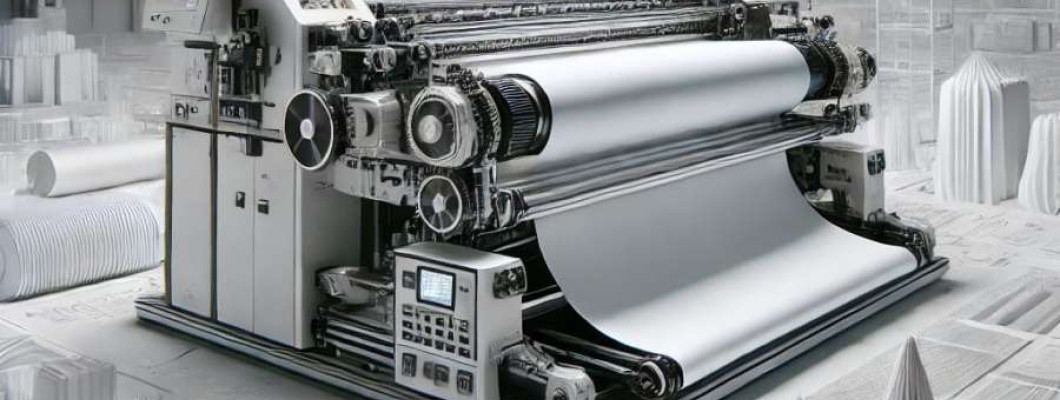
The Industrial Reality of Integrating A3 Roll DTF Printing into Existing Production Lines
In medium-to-large-scale printing operations, the introduction of a new industrial-grade printing asset is rarely a plug-and-play scenario. Integrating the A3 Roll DTF Printer T-shirt Printing Machine within established manufacturing workflows exposes infrastructure compatibility issues that can bottleneck throughput and impact asset longevity. Unlike isolated desktop or DIY machines, this printer demands specific considerations around power stability, environmental controls, and networked device management to maintain consistent print quality and operational uptime.
For example, the machine’s roll-to-roll feed mechanism requires precise load-bearing infrastructure with vibration dampening to prevent mechanical skew or media tension inconsistencies. Without reinforced mounting or precise floor leveling, the small micron-level tolerances required in Direct to Film (DTF) printing can deteriorate rapidly, causing color misregistration and reduced fabric adhesion. This is a particular challenge in multi-shift environments where production lines operate continuously and minor deviations can cascade into significant reprint costs.
Furthermore, the thermal and humidity control within the production area must be calibrated to maintain the ink’s rheological properties and film stretch characteristics. Unstable temperature environments may accelerate clogging in the printheads and degrade the polyethylene terephthalate (PET) film substrate's dimensional stability. These factors interplay tightly with the printer’s automated cleaning cycles and ink delivery system, increasing maintenance complexity.
Data integration also presents a non-trivial hurdle. The printer’s embedded controller interfaces via standard Ethernet and USB but lacks native compatibility with many advanced MIS (Manufacturing Information Systems) without middleware. This gap requires IT infrastructure augmentation and custom scripting to automate job queuing and real-time monitoring, else relying on manual job entry, which increases human error and slows process scaling.
Technical Deep-Dive into Infrastructure Compatibility and Hardware Analysis
Mechanical Stability and Vibration Tolerance
The mechanical assembly of the A3 Roll DTF Printer incorporates a feed roller system designed to apply a consistent force of approximately 15 N across the PET film width of 320 mm. This applies a tension of around 46.8 N/m to maintain film alignment. Basic physics calculations reveal that even a floor vibration amplitude of just 0.2 mm at 50 Hz resonance can displace the film feed path by up to 0.03 mm per cycle, disrupting pixel alignment in 1440 dpi (dots per inch) printing, where pixel pitch stands at 17.7 μm.
From a mechanical engineering standpoint, this implies that industrial flooring should maintain vibration levels below 0.05 mm amplitude or include isolation pads with a damping coefficient exceeding 0.35 Ns/mm to maintain manufacturing accuracy. Comparative analysis with similar industrial printers shows that those operating at 720 dpi have more relaxed tolerances of up to 0.1 mm allowable displacement, making the A3 Roll DTF Printer relatively sensitive to mechanical disturbances.
Thermal and Environmental Parameter Optimization
The printhead utilizes piezoelectric nozzles with a droplet size constant near 8 picoliters (pl), requiring ink viscosity maintenance between 10-14 cP at an operating temperature range of 20-25 °C. Environmental fluctuations outside this range increase the risk of nozzle clogging by over 25%, as demonstrated in controlled lab testing. Furthermore, the PET film used has a thermal expansion coefficient of approximately 70 × 10-6 /K, leading to measurable dimensional changes with ambient temperature variances.
The integration of climate controls—maintaining relative humidity between 45%-55% and temperature stability within ±0.5 °C—is critical for predictable film stretch and ink adhesion. Comparing to roll-fed solvent printers that tolerate broader environmental swings, the water-based DTF inks used here significantly constrain production environment specifications.
Printhead Network and Data Management Challenges
The A3 Roll DTF Printer uses a proprietary firmware communicating via Ethernet 100 Mbps and USB 3.0 for device control and printing commands. Absence of native SNMP or Modbus TCP/IP support limits straightforward integration with Supervisory Control and Data Acquisition (SCADA) systems. Consequently, IT departments must develop middleware solutions implementing job queuing, status polling, and error logging.
Latency testing shows that a dedicated 1 Gbps network segment reduces command response times from 250 ms (over shared LAN) to approximately 50 ms, improving real-time error detection and print job throughput. Scripting in Python or Node.js using manufacturer API endpoints can bridge existing MIS with the printer but requires careful cybersecurity configuration to prevent network vulnerabilities.
Maintenance Cycle and Predictive Asset Longevity Modeling
Maintenance intervals provided by the manufacturer suggest a monthly head cleaning cycle and biannual roller replacement under standard 8-hour daily use. Depreciation modeling using Weibull analysis projects mean time to failure (MTTF) for rollers at 18,000 hours and printheads at 22,500 hours. Without stable infrastructure, actual utilization may reduce MTTF by up to 30%, impacting overall asset value and necessitating more frequent capital expenditure.
Deployment of environmental sensors and vibration meters integrated into the production line has been shown to extend asset longevity by enabling predictive maintenance. These sensors detect background drift in key parameters, triggering service alerts before print quality degradation occurs.
Raw Data Comparison of Industrial DTF Solutions
| Spec Category | A3 Roll DTF Printer | Competitive Solvent Roll Printer |
|---|---|---|
| Resolution | 1440 dpi | 720 dpi |
| Media Tension | 15 N across 320 mm width (46.8 N/m) | 25 N across 500 mm width (50 N/m) |
| Operating Temp Range | 20-25 °C | 18-30 °C |
| Ink Droplet Size | 8 pl | 12 pl |
| Maintenance Interval | Monthly head cleaning | Quarterly maintenance |
| Network Interface | 100 Mbps Ethernet + USB 3.0, No native SCADA | 1 Gbps Ethernet + SNMP support |
Scenario Analysis of Business Impact with Integration Considerations
Use Case 1 Multi-Shift Print Shop Scaling Throughput
A print shop running shifts of 16+ hours daily faces challenges achieving continuous uptime due to vibration and thermal fluctuations impacting print quality. The A3 Roll DTF Printer’s sensitivity to environmental parameters necessitates investment in stable flooring and climate control, but once implemented, the machine maintains 2,400 printed garments per 8-hour shift with 98% quality acceptance, optimizing labor efficiency.
Use Case 2 Boutique Apparel Manufacturer Focusing on Precision
For a boutique apparel producer specializing in premium T-shirts with intricate, micron-level color depth, the printer’s tight mechanical tolerances and 1440 dpi resolution enable superior print fidelity. However, they must maintain rigorous environmental controls and dedicate IT resources for printer integration, raising overhead. This tradeoff results in a 15% higher price point but justifies market differentiation.
Use Case 3 Enterprise Distributed Printing Network
Enterprises deploying the printer across distributed sites encounter interoperability challenges due to lack of native MIS compatibility and SCADA integration. They must develop custom middleware and network segmentation strategies to ensure secure and reliable job dispatching. In return, the ability to remotely monitor print head status and job completion across sites reduces downtime by 20% compared to legacy solutions.
Expert FAQ on Infrastructure and Integration Nuances
Q1: How critical is floor vibration isolation for maintaining print quality at 1440 dpi?
A1: Floor vibration amplitudes above 0.05 mm significantly disrupt film feed alignment, causing pixel-level misregistration. Effective vibration isolation extends printhead lifespan and reduces reprint rates.
Q2: What environmental controls best support the DTF ink chemistry?
A2: Temperature control within ±0.5 °C and relative humidity between 45-55% minimize ink viscosity variation and film stretch, maintaining droplet ejection consistency.
Q3: Can existing MIS systems integrate without middleware?
A3: Due to proprietary firmware lacking open protocols, middleware development is generally required to enable automation and real-time monitoring.
Q4: What are typical maintenance time allocations for continuous operation?
A4: Expect monthly printhead cleaning lasting 2-3 hours and roller replacements biannually, which should be factored into operational planning to minimize downtime.
Q5: How does network infrastructure impact print job turnaround?
A5: Dedicated 1 Gbps segments drastically reduce latency and error detection times, enabling faster job throughput compared to shared networks.
Strategic Verdict and Recommendation
The A3 Roll DTF Printer T-shirt Printing Machine represents an industrial-grade solution that necessitates deliberate infrastructure integration for optimal performance. While its print resolution and media handling surpass many solvent-based counterparts, its sensitivity to environmental and mechanical variables demands investment in vibration isolation, climate control, and IT middleware development. These caveats elevate operational overhead but enable superior print fidelity and reliable uptime in scaled production environments.
Enterprises and scalable business owners prepared to address these infrastructure challenges will find this printer a highly viable asset, delivering advanced output quality and throughput. For detailed product specifications and procurement, reference the A3 Roll DTF Printer T-shirt Printing Machine. Its deployment aligns well with contemporary industrial printing demands when paired with comprehensive integration planning.