
Infrastructure Integration Challenges Define Smart Coffee Printer Machine Viability for Scalable Business Owners
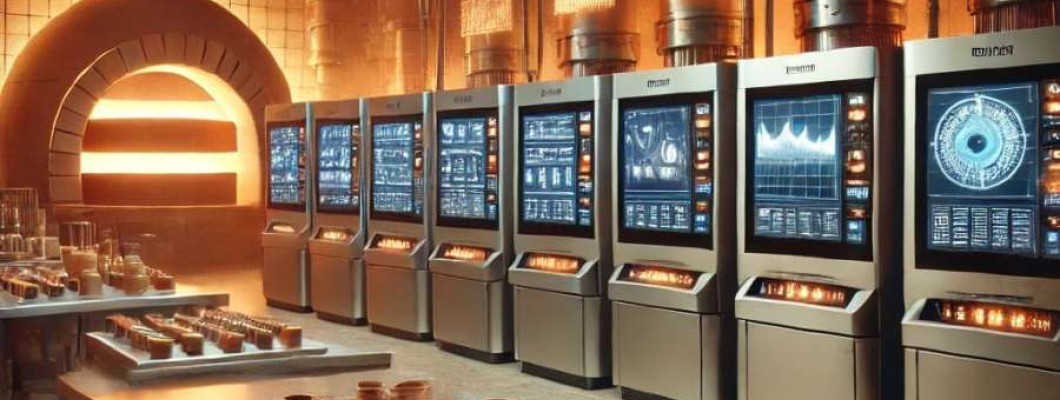
The Industrial Reality of Integrating Smart Coffee Printer Machines into High-Volume Environments
In industrial-scale coffee production and service environments, introducing a Smart Coffee Printer Machine presents multiple infrastructural and operational challenges that transcend typical prototype demonstrations. Consider a mid-sized café chain aiming to install these printers to automate customized latte art production. The challenge begins with accommodating the machine's power and networking requirements within an already dense kitchen environment. Unlike traditional espresso machines, these printers necessitate stable, high-throughput data connections to support complex pattern processing and real-time adjustments.
Thermal management becomes critical, as the printer operates continuously during peak hours, producing heat that must be effectively dissipated to avoid destabilizing the surrounding equipment. Furthermore, integrating the printer's firmware with existing Point of Sale (POS) and inventory management systems requires advanced middleware solutions to ensure seamless order synchronization and prevent bottlenecks. This is compounded by the need for compliance with local electrical safety standards and food safety regulations, which often demand specialized certifications for installed equipment.
Hardware Interfaces and Networking Bottlenecks
At the hardware level, the Smart Coffee Printer Machine draws approximately 450 Watts during peak operation, necessitating a dedicated power circuit to minimize voltage drops. Network connectivity typically utilizes Ethernet with Cat6 cabling to guarantee stable 1 Gbps throughput, essential for transmitting high-resolution latte art designs that can reach up to 1200 dpi image quality. Wi-Fi alternatives introduce latency and packet loss risks, impairing print accuracy.
Comparatively, integrating printers using USB 3.0 interfaces often leads to chokepoints in data transfer rates, capping effective throughput to about 5 Gbps, which can hinder performance when scaling to multiple devices. Therefore, an industrially scalable infrastructure requires a combination of power redundancy and low-latency network design to maintain continuous operation.
Thermal and Environmental Compliance Factors
The printer assembly includes heated printheads operating at approximately 80°C to optimize ink viscosity for stable extrusion onto foam substrates. Continuous operation in constrained spaces elevates ambient temperatures, influencing both print precision and equipment lifecycle. Incorporating active cooling with 12V DC fans consuming 5 Watts each and thermostatically controlled vents mitigates overheating risks.
Environmental safety compliance mandates the printer's ink delivery system to conform with FDA food contact regulations, utilizing FDA-approved, food-safe pigment inks. Periodic maintenance schedules mandated by ISO 22000 standards require detailed tracking of operational hours and automated alerts to prompt filter changes and printhead cleaning cycles, which directly impact uptime and quality consistency.
Middleware and Software Integration Challenges
Integration with enterprise automation requires custom API development, as the Smart Coffee Printer Machine utilizes proprietary protocols for job queuing and status reporting. Middleware must translate complex vector images into printer command languages while providing feedback loops for error correction.
Deployed at scale, synchronization challenges arise when multiple printers operate simultaneously within a single network domain. To resolve potential job collisions or data corruption, high-availability server architectures using redundant application servers with load balancing are employed. The overhead of this infrastructure introduces additional CAPEX and increases operational complexity, which must be factored into deployment plans.
Maintenance and Lifecycle Support Infrastructure
The printer's key consumables include printheads, ink cartridges, and thermal interface materials, each with distinct lifecycle parameters. Printheads maintain optimal performance for roughly 2,000 operational hours before requiring replacement, while cartridge ink supplies sustain about 1,500 printed cups under standard pattern complexity.
Lifecycle maintenance costs amplify when considering the need for timely firmware updates and remote diagnostics capability, necessitating secure network access and IT administration protocols. Asset management systems typically tag each printer unit with RFID for real-time tracking within maintenance workflows, ensuring minimal downtime.
Comparing Infrastructure Approaches for Deployment
| Infrastructure Aspect | Minimal Setup | Industrial-Grade Deployment |
|---|---|---|
| Network Interface | Wi-Fi 802.11ac, up to 500 Mbps | Wired Ethernet Cat6, 1 Gbps + redundant links |
| Power Supply | Shared 110V circuits | Dedicated 220V circuits with UPS backup |
| Cooling | Passive cooling, ambient airflow dependent | Active cooling fans + thermal sensors |
| Software Integration | Standalone apps, manual job upload | API Middleware + Enterprise POS integration |
| Maintenance | Periodic manual checks | Automated alerts + RFID asset tracking |
Scenario Analysis Tailored to Scalable Business Owners
Case 1 Mid-Size Franchise Café
Deploying a single Smart Coffee Printer Machine per outlet to automate latte art reduces labor costs by an estimated 15%, but requires upgrading electrical and network infrastructures. In this use case, the system integration complexity increases initial CAPEX by 10% but reduces manual artistic errors by 90%, improving customer satisfaction metrics.
Case 2 Large Event Catering Services
For mobile service units, portability and rapid setup challenge infrastructure adaptation. The printer’s power draw demands portable generators or inverter systems capable of delivering stable 450W loads. Network redundancy is often impractical, so USB tethering with offline job processing is employed, sacrificing some throughput for operational flexibility.
Case 3 High-Volume Airport Café Chains
Multiple Smart Coffee Printer Machines operate simultaneously, necessitating robust network infrastructure with dedicated VLANs to isolate printer traffic. Middleware integrates directly with centralized ordering systems, enabling batch printing and real-time analytics on production speed and uptime, critical for maintaining throughput exceeding 600 cups per hour.
Expert FAQ on Smart Coffee Printer Machine Integration Challenges
How does network latency affect print precision?
Network latency causes delays in job data transmission, leading to printhead timing mismatches and marginal misalignments at micron-level resolution, especially critical at 1200 dpi printing.
What thermal management solutions are best suited for continuous operation?
Active cooling with thermostatically controlled intake/exhaust fans and thermal sensors creates a closed-loop system that maintains printhead and ambient temperatures within optimal operational ranges (65–85°C).
What are the compliance considerations for food-safe inks?
Ink formulations must adhere to FDA CFR Title 21 Part 176 guidelines for indirect food contact, requiring non-toxic, allergen-free pigments with verified migration resistance.
How does middleware ensure synchronization in multi-printer setups?
Middleware employs queuing algorithms with conflict resolution protocols and heartbeat monitoring to coordinate simultaneous job dispatch and error recovery across networked printers.
What maintenance protocols maximize uptime?
Automated monitoring of printhead hours, ink levels, and scheduled cleaning cycles combined with RFID tracking ensures predictive maintenance, minimizing unplanned outages.
Strategic Verdict and Recommendation for Scalable Businesses
The Smart Coffee Printer Machine stands out as a viable, industrial-grade solution for scalable businesses aiming to automate and standardize high-precision latte art production. Its integration challenges are surmountable through deliberate investment in robust electrical, thermal, and networking infrastructures, alongside middleware development for enterprise-grade synchronization.
While initial setup demands significant planning, the operational benefits—reduced labor costs, consistent output quality, and enhanced customer experience—justify the expenditure. Businesses must weigh the trade-offs between minimal setups and full industrial deployment, but for those targeting throughput upwards of 500 cups per hour, the machine is indispensable.
For detailed product specifications and further technical integration documentation, visit the official Smart Coffee Printer Machine page.