
Infrastructure Integration Challenges Define Viability of the A3 Roll DTF Printer for Scalable Business Owners
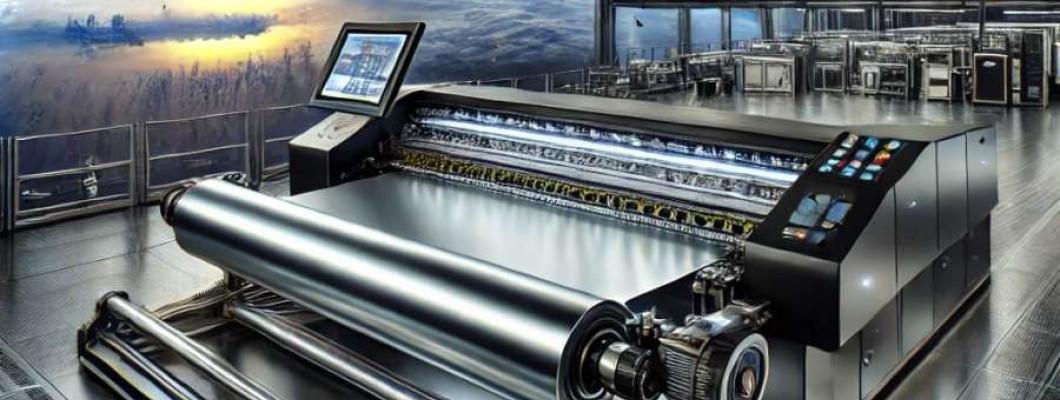
The Industrial Reality of Integrating A3 Roll DTF Printers into Scalable Production Lines
In large-scale manufacturing environments where throughput, automation, and labor costs are critical metrics, deploying an A3 Roll DTF (Direct to Film) printer is complex. The printer's physical footprint, connectivity options, power consumption, and downtime impact cannot be viewed in isolation. Instead, these factors intersect with existing factory automation, print queue management systems, and workforce skillsets. A business focused on scaling print output faces operational bottlenecks when the printer's integration requires bespoke infrastructure adaptations such as dedicated electrical circuits, environmental controls for ink chemistry stability, and specialized software drivers for automated job scheduling.
Consider a scenario where a mid-sized apparel manufacturer aims to increase print job volume by 30% annually using A3 Roll DTF printers. Without harmonizing the printer's throughput speed with the conveyor line speed or robotic arm pick/place timings, print queues accumulate, eroding the projected labor cost savings. These printers often demand a controlled ambient temperature within 20-25°C to maintain ink viscosity and film adhesion, necessitating additional HVAC expenditures. Coupling this with the need for trained operators to manage color calibration and substrate loading underlines the challenge. Infrastructure readiness becomes a decisive factor rather than the printer's nominal speed or resolution alone.
Technical Deep-Dive into Infrastructure Integration of A3 Roll DTF Printers
Power and Thermal Management
The typical A3 Roll DTF printer operates within a 220-240V 50/60Hz electrical specification, drawing 750-850 Watts during peak print cycles. Thermal management is critical; internal heating elements maintain the film temperature between 45-55°C to optimize ink curing and adhesion. Without adequate ventilation or heat dissipation systems, localized temperature spikes can lead to premature component failures, specifically in printheads and rollers.
Connectivity and Data Throughput
Modern A3 Roll DTF printers support USB 3.0 and Ethernet interfaces, with data transfer rates capable of sustaining 120MB/s peak throughput for raster image processor (RIP) software. However, integrating these printers into existing print management software ecosystems requires API compatibility and network security protocols. Latency spikes caused by suboptimal network architecture can result in print job stalls and waste of substrates.
Mechanical Dimensions and Factory Layout
The average footprint spans approximately 1500mm (length) x 600mm (width) x 1200mm (height), weighing in excess of 85 kg. Operational clearance of 500mm on all sides is recommended for maintenance access. Factories with limited floor space must reconsider line rearrangements or install mobile platforms with heavy-duty casters to accommodate this equipment.
Ink Chemistry Handling and Environmental Controls
DTF inks typically exhibit rheological properties sensitive to humidity (ideal range 40-60%) and temperature. Environments with fluctuating humidity risk film buckling or ink bleeding. Dedicated humidity control systems, such as desiccant dehumidifiers or precision HVAC units, ensure consistent print quality. Chemical safety protocols must govern ink storage and handling to comply with VOC emission regulations.
Automation Integration and Workflow Scalability
| Integration Aspect | Basic Setup | Enterprise Scalable Setup |
|---|---|---|
| Data Transfer | Single USB connection, manual job loading | Dedicated Ethernet network with RIP software integration and job queuing |
| Print Queue Management | Operator-managed manual job sequences | Automated workflow with barcode/RFID substrate tracking and robotic arm control |
| Environmental Control | Standard factory HVAC | Temperature and humidity-controlled chambers with real-time monitoring |
| Maintenance Access | Manual, operator-dependent | Predictive maintenance software with remote diagnostics and alerts |
Scenario Analysis Highlighting Business Use-Case Impact
Use Case One: Apparel Manufacturer Expanding Print Volume
Integrating the A3 Roll DTF printer into an existing semi-automated line requires retrofitting the facility with environmental controls and network upgrades. Failure to do so results in print job bottlenecks and increases labor costs despite the printer’s nominal 80 m2/hour throughput capacity. Proper infrastructure investment aligns print speed with line speed, reducing downtime by estimated 15% and increasing net throughput by 20% annually.
Use Case Two: Boutique Custom Print Shop Scaling Automation
A small business moving towards automation benefits from the printer’s compact form factor and Ethernet connectivity. However, challenges arise in programming the print management software to interface with order processing systems. The integration demands specialized IT consultancy and hardware modifications. Once resolved, the shop experiences a reduction in human error and turnaround time by 25%, enabling scalable growth without linear increases in labor.
Use Case Three: Print Service Provider Centralizing Production
In a multi-printer facility, installing multiple A3 Roll DTF units necessitates centralized environmental controls and an upgraded power distribution system to mitigate peak load risks. Synchronizing print job scheduling across units requires enterprise-grade software solutions. Correctly executed, this integration enhances redundancy and uptime, pushing annual utilization rates beyond 90%, significantly improving return on capital equipment.
Expert FAQ on A3 Roll DTF Printer Integration Challenges
Q1: What are the critical electrical considerations for scaling multiple A3 Roll DTF printers?
Each unit demands stable 220-240V supply with surge protection. Simultaneous operation can cause load imbalance, requiring dedicated circuit breakers and possibly power factor correction to ensure stable operation.Q2: How does film temperature control affect printhead longevity?
Consistent film temperature reduces ink viscosity fluctuations that can clog nozzles, extending printhead life. Overheating may warp rollers and degrade print quality, necessitating precise thermal sensors and feedback loops.Q3: What network architecture optimizes print data transfer for high throughput?
A segregated LAN with gigabit Ethernet switches supporting QoS prioritization yields low latency and minimal packet loss. Wired connections outperform Wi-Fi for reliability in industrial environments.Q4: How essential is environmental conditioning in maintaining ink adhesion on different substrates?
Moisture and temperature dramatically influence ink curing kinetics. Controlled humidity prevents film curling; stable temperature ensures chemical reaction rates remain within tolerance, crucial for adhesion on polyester versus cotton blends.Q5: Can predictive maintenance software integrate with the A3 Roll DTF printer?
Yes, provided the printer firmware supports remote diagnostic protocols and data export. Integration reduces unexpected downtime by scheduling maintenance based on usage analytics rather than fixed intervals.
Strategic Verdict and Recommendation
The A3 Roll DTF printer stands as a technically sound and viable industrial-grade solution, especially for scalable business owners prioritizing throughput and automation. While the printer hardware itself delivers competitive speed and image quality, the decisive factor for successful deployment is addressing infrastructure integration challenges. Proper investment in power stability, thermal and environmental controls, network architecture, and automation integration is imperative to realize the printer's full potential without hidden operational bottlenecks.
For businesses capable of addressing these factors, the A3 Roll DTF Printer offers an industrial-grade platform that balances mechanical robustness, advanced connectivity, and scalability. Its relatively compact footprint combined with adaptable connectivity makes it suitable for both semi-automated lines and fully automated print production environments. As enterprises look to optimize labor costs and throughput, this solution aligns well with evolving industrial manufacturing practices, provided adequate infrastructure planning is prioritized.