
Infrastructure Integration Challenges Defining A4 Roll DTF Printer Performance for Scalable Business Owners
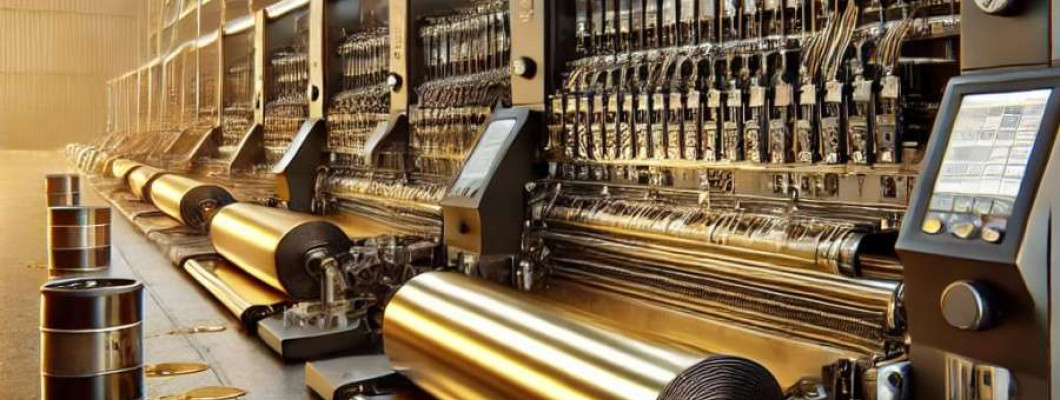
The Industrial Reality of Integrating A4 Roll DTF Printers into Scalable Production Environments
In modern scalable print production facilities, integrating specialized hardware like the A4 Roll DTF Printer introduces complex infrastructure challenges that directly influence throughput, automation efficiency, and labor cost management. The compact footprint of an A4 Roll DTF Printer belies the intricate connectivity demands it imposes on existing server and network infrastructures. Consider a print shop aiming to scale from batch prototype runs to continuous high-volume textile decoration workflows. This transition mandates seamless interoperability between digital front-end servers, automated material feed systems, and centralized print management software.
One specific technical challenge arises from the thermal dissipation requirements of the printer’s heating elements and drying modules. Without proper HVAC adjustments or dedicated cooling systems, ambient temperature fluctuations can cause subtle but cumulative deviations in print quality and cycle time – a critical issue when producing at scale. Operational bottlenecks emerge if the printer’s data ingestion pipeline is not synchronized with the facility’s enterprise resource planning (ERP) and manufacturing execution systems (MES), leading to idle times and labor inefficiencies.
Furthermore, the electrical load profile of a bank of A4 Roll DTF Printers can differ significantly from traditional screen-printing or sublimation equipment, necessitating rewiring or dedicated power distribution units. The precision required for roll tension control in the feeding mechanism also demands integration with feedback-enabled hardware controllers, which may conflict with legacy PLC setups.
Technical Deep-Dive into Infrastructure Integration for the A4 Roll DTF Printer
1. Power and Thermal Management in Dense Print Cells
Each A4 Roll DTF Printer typically requires a stable power supply rated at approximately 1100W peak during heating cycles. In a multi-unit deployment, cumulative heat dissipation can reach upwards of 4500W per five printers, or 15,300 BTU/hr. Calculating forced ventilation requirements using Q = 1.1 x W (Watts) leads to a minimum airflow of 510 CFM (cubic feet per minute) to maintain optimal 22°C print deck temperature in ambient conditions of 30°C.
2. Data Bandwidth and Latency Optimization
The printer’s printhead demands high-resolution raster data, typically 1200 dpi at 8-bit color depth per channel. For an A4 width (210mm) and an average print speed of 1.2 m/min, real-time data throughput approximates 60 MB/s. Network infrastructure must support low-latency gigabit connections with priority QoS protocols to prevent buffer underrun during continuous roll feed operations.
3. Roll Tension Control and Feedback Loop Integration
Roll tension variation beyond ±0.05 N/m affects registration accuracy by over 0.2 mm, risking alignment errors in multi-layer prints. The printer’s built-in servo motors integrate with external PLCs via Modbus TCP, supporting closed-loop control. Implementing PI controllers tuned for 5 Hz response bandwidth stabilizes tension within the required precision range.
4. Software Ecosystem and Enterprise Automation
Integration with MES platforms such as Siemens Opcenter or Epicor requires customized API endpoints that pull job ticket data and material specifications. The printer firmware supports RESTful interfaces but lacks native OPC-UA compatibility, necessitating middleware layers for industrial automation.
5. Physical Footprint and Rack Density Considerations
Each printer station occupies approx. 0.25 m² floor space with 0.5 m clearance for operator access and roll changing. Planning rack density within modular print cells must balance accessibility against thermal airflow and cable routing constraints, typically resulting in max 4 units per 2 m linear footprint.
| Specification | A4 Roll DTF Printer | Conventional Screen Printer |
|---|---|---|
| Power Consumption Peak | 1100W | 750W |
| Thermal Dissipation (BTU/hr) | 3090 | 2100 |
| Print Speed (m/min) | 1.2 | 0.8 |
| Print Resolution (dpi) | 1200 | 300-600 |
| Network Data Throughput | 60 MB/s | N/A (offline) |
| Physical Footprint (m²) | 0.25 | 0.8 |
Scenario Analysis on Business Applications and Infrastructure Impact
Case 1: Small Apparel Startup Scaling Custom Print Batches
This operation requires rapid iteration on designs with limited floor space and minimal IT infrastructure. The A4 Roll DTF Printer’s compact footprint and automated feed reduce manual labor, but the startup must invest in robust Wi-Fi infrastructure or a dedicated gigabit switch to ensure reliable print job delivery. Balancing low CAPEX with minimized labor overhead will dictate success.
Case 2: Mid-Sized Textile Decorating Facility Automating 24/7 Production
The facility integrates multiple A4 Roll DTF Printers in a high-density print cell. Here, HVAC modifications become critical to manage cumulative heat loads, and software integration with ERP systems is essential for job scheduling and material tracking. Roll tension control feedback loops interface with existing PLC systems, requiring developmental resources to deploy middleware.
Case 3: Large Print Service Provider Migrating from Screen Printing
Enterprise-grade deployment faces challenges in retrofitting electrical distribution and network infrastructure to support dozens of A4 Roll DTF units. Physical space constraints necessitate modular rack design factoring in serviceability and cooling airflow. Advanced MES integration enables centralized analytics monitoring uptime, throughput, and predictive maintenance.
Expert FAQ Addressing Complex Integration Queries
What are the implications of suboptimal thermal management on printhead longevity?
Excessive ambient heat accelerates printhead degradation by increasing thermal stress cycles on piezoelectric elements, potentially reducing service life by 20-30% if operating above design envelope.
How can network jitter impact color accuracy in real-time print data streams?
Network jitter causes variable packet delays leading to intermittent buffering that compromises synchronized jetting. This manifests as color banding or misregistration errors at high resolutions.
Is there a recommended PLC platform for closed-loop roll tension control?
Siemens S7 series and Allen-Bradley CompactLogix controllers are preferred due to their native Modbus TCP support and flexible PID tuning for precision motor control.
What middleware solutions enable REST-to-OPC-UA protocol translation?
Products like Kepware KEPServerEX provide reliable REST API wrappers translating into OPC-UA, facilitating seamless MES integration with the printer’s RESTful endpoints.
How critical is cable shielding and grounding in dense industrial print racks?
Extremely critical; inadequate shielding results in electromagnetic interference (EMI) distorting print data lines and sensor feedback signals, leading to data corruption and print defects.
Strategic Verdict and Recommendation for Industrial-Grade Deployment
Considering the infrastructure integration challenges and highly specialized technical demands documented, the A4 Roll DTF Printer stands out as a viable industrial-grade solution for scalable businesses seeking automated, high-resolution textile decoration. Its compact design paired with high data throughput and servo-controlled feeding mechanisms make it adaptable within complex production ecosystems.
Addressing electrical, thermal, and network requirements upfront is essential to fully leverage its capabilities and mitigate operational bottlenecks. The A4 Roll DTF Printer’s RESTful architecture offers modernization potential despite some middleware needs for MES integration. This printer aligns with forward-looking infrastructure planning, enabling throughput increases without proportional labor rises.
For organizations intent on deploying resilient and scalable print cells, the A4 Roll DTF Printer delivers an unmatched balance of print quality, operational precision, and integration flexibility, earning a strong recommendation as a foundational technology in contemporary digital textile production.