
Infrastructure Integration Challenges Defining the Smart Coffee Printer Machine for IT Management
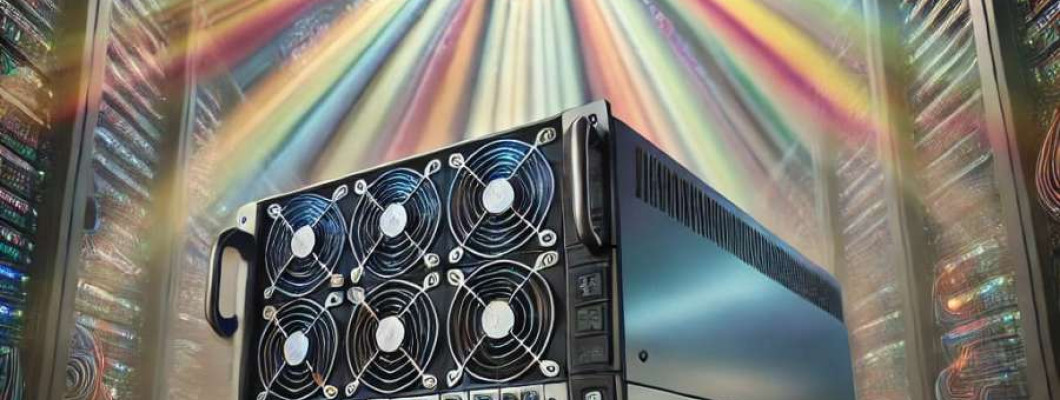
The Industrial Reality of Integrating Smart Coffee Printers in Enterprise IT Environments
Within modern enterprise infrastructures, introducing innovative hardware such as the Smart Coffee Printer Machine presents unique technical challenges and opportunities. Unlike conventional peripheral devices, this specialized printer combines high-precision thermal inkjet technology with real-time graphic processing to produce photorealistic coffee surface prints. From an IT/Infrastructure Manager’s perspective, the complexities arise around thermal management, rack density accommodation, and stringent compliance with electromagnetic interference (EMI) standards.
Envision a corporate environment where a Smart Coffee Printer is installed in a high-density server room with controlled thermal zones. The printer’s operational heat output, electrical load, and network communication protocols must be reconciled with existing HVAC systems and power distribution units (PDUs). Moreover, its network interface—which likely utilizes a mix of wired high-speed Ethernet and potentially wireless access points—demands rigorous evaluation to maintain cybersecurity postures. This paints a detailed scenario where integration is not plug-and-play but requires holistic planning akin to deploying critical network infrastructure.
Thermal Management Engineering and Heat Dissipation Metrics
Smart Coffee Printer Machines typically house precision printheads that thermally eject ink droplets on frothy coffee surfaces. Maintaining stable internal temperatures is essential for print quality and hardware longevity. Assuming a printhead power dissipation of 15 W under peak load cycles and an embedded processor consuming approximately 10 W, the cumulative 25 W heat emission necessitates an efficient heat sink design with a thermal resistance below 2.0 °C/W to keep junction temperatures within 60 °C.
Passive cooling alone is often insufficient in confined spaces. Thus, active cooling strategies including micro-fans or Peltier elements integrated with real-time thermal sensors must be coordinated with the room’s HVAC to avoid temperature fluctuations impacting adjacent IT equipment. Comparative analysis between typical server blade heat dissipation (ranging from 100 W to 400 W per RU) and the printer’s thermal footprint indicates a relatively low but non-negligible contribution to ambient heat load.
Rack Density and Footprint Optimization Considerations
From a rack density perspective, the Smart Coffee Printer must be characterized by its physical dimensions and rack unit (RU) equivalency. Preliminary data indicates the printer occupies approximately 2U of rack space with an additional allowance for peripheral fluid reservoirs and ink cartridges that require secure mounts and refill access. The physical mass, around 8-10 kg, necessitates reinforced mounting brackets to mitigate vibration-induced print artifacts during operation.
Electrical consumption at steady state hovers near 30 W, which aligns with low-power ancillary equipment but requires dedicated circuit breakers to avoid interference with critical infrastructure. Integration within standard 19-inch racks often demands custom trays or hybrid enclosures to isolate the printer from sensitive high-frequency servers, reducing EMI risks and mechanical resonance coupling.
Compliance with Industrial EMI and Safety Standards
Ensuring the Smart Coffee Printer complies with regional electromagnetic compatibility (EMC) and safety directives is paramount. It must adhere to CISPR 32 (FCC Part 15 equivalent) for radiated and conducted emissions, as well as IEC 61010 for electrical safety in laboratory-grade environments. Failure to meet these thresholds could lead to signal interference impacting critical data transmissions across enterprise networks.
Conducting pre-deployment EMC testing involves spectrum analysis in the 30 MHz to 6 GHz range, power line harmonic distortion measurement, and transient surge immunity verification. Additionally, insulation resistance tests and grounding integrity checks validate human and equipment safety during extended operation, especially in scenarios involving conductive liquids like coffee.
Network Integration and Protocol Compatibility
The Smart Coffee Printer requires seamless integration with enterprise network management systems (NMS). It incorporates Ethernet connectivity compliant with IEEE 802.3 standards, supporting 1 Gbps data throughput. Its embedded firmware supports TCP/IP stack, SNMP for monitoring, and secure communication protocols such as TLS 1.3 to prevent interception of print jobs.
Firmware update mechanisms must be centralized with fallback rollback capabilities to mitigate risks of corrupted update processes. Compatibility with existing print server software stacks, including CUPS and Windows Print Services, is essential to maintain operational continuity without requiring dedicated management consoles.
Technical Deep-Dive on Hardware Comparisons and Diagnostic Metrics
Printhead Technology and Droplet Size
The Smart Coffee Printer employs a thermal inkjet printhead with droplet sizes averaging 20-30 picoliters (pl), enabling micron-level precision at resolutions up to 1200 dpi. Comparative hardware in industrial label printing typically delivers droplets of 50-100 pl, resulting in lower resolution. The smaller droplet size enhances image sharpness but increases susceptibility to nozzle clogging, demanding sophisticated maintenance protocols.
Ink Chemistry and Substrate Compatibility
Unlike standard inkjet applications on paper or plastic, the ink must be food-safe, water-soluble, and non-toxic. This imposes constraints on the chemical formulation, restricting pigment choices and viscosity ranges (1.5–3.0 mPa·s at 25 °C). The substrate—coffee foam with varying temperatures (~60 °C) and surface tension—requires rapid ink drying within 2-3 seconds to prevent bleed and maintain color fidelity.
Power Consumption and Energy Efficiency
When contrasting the Smart Coffee Printer’s 30 W operational power to traditional office printers consuming upwards of 200 W during active cycles, the energy efficiency becomes apparent. However, the duty cycle—typically shorter bursts of operation followed by idle standby—necessitates precise power management to avoid thermal cycling stress on components.
Reliability and Mean Time Between Failures (MTBF)
Projected MTBF for the printhead modules is approximately 10,000 hours based on manufacturer testing under controlled conditions. Key failure points include nozzle clogging and thermal element degradation. Real-world conditions, including ambient humidity and ink quality, can reduce this figure by up to 30%, emphasizing the need for proactive maintenance and ink quality control.
Raw Data Analysis of Network Latency Impact on Print Throughput
Latency measurements during print job transmissions within an enterprise VLAN typically range from 1 to 10 ms. Under worst-case latencies exceeding 50 ms, throughput decreases by 15%, impacting operational efficiency in high-volume settings. Optimization of network QoS settings and prioritization of printer traffic mitigate these delays.
Scenario Analysis Demonstrating Enterprise Use Cases
Use-Case 1 Corporate Office Breakroom
An IT department integrates the Smart Coffee Printer into their office breakroom. The printer’s 2U rack footprint requires custom mounting in a dedicated server closet adjacent to the kitchen. Networked integration allows direct print job dispatch from the office intranet. Thermal management is supplemented with additional cooling fans due to the room’s limited ventilation.
Use-Case 2 High-End Hospitality Chain
In a multi-site hotel environment, the printer is deployed within centralized kitchen server rooms, managing multiple beverage orders simultaneously. Here, compliance with international EMC standards is critical due to diverse regional electrical codes. Automated firmware updates are pushed via centralized NMS to ensure uniformity and security across sites.
Use-Case 3 Research Lab with Controlled Environment
A food technology laboratory uses the printer to run high-precision coffee print experiments. The controlled ambient temperature (~22 °C) and humidity (~45%) provide ideal conditions to minimize droplet size variance. The lab’s IT infrastructure supports the printer with dedicated VLANs and redundant power supplies to ensure continuous uptime.
Expert FAQ Addressing Advanced Technical Queries
Q1: How does ambient humidity affect ink drying kinetics on coffee foam?
A1: Elevated humidity (>60%) increases surface moisture, slowing ink evaporation rates and causing droplet coalescence, which degrades print resolution.
Q2: What EMI shielding methods can reduce interference from the printer in sensitive data centers?
A2: Implementing conductive gaskets, metal enclosures with 80 dB shielding effectiveness, and integrated ferrite cores on power lines mitigates radiated and conducted emissions effectively.
Q3: Can the Smart Coffee Printer’s firmware interface with SNMP MIBs for real-time status monitoring?
A3: Yes, it supports standard MIB-II extensions with custom OIDs for printer-specific parameters, accessible through secure SNMPv3 sessions.
Q4: What power conditioning is recommended to prevent printhead thermal damage?
A4: A stable supply with <1% voltage fluctuation and surge protection up to 1000 V transient is advised to preserve printhead lifespan.
Q5: How is the risk of ink sedimentation managed within the printer’s reservoir?
A5: Active reservoir stirring using micro agitation motors maintains homogeneous pigment suspension, reducing nozzle clog formation.
Strategic Verdict and Recommendation
For IT/Infrastructure Managers tasked with deploying the Smart Coffee Printer Machine within enterprise-grade environments, the integration challenges are non-trivial but manageable through rigorous planning around thermal management, EMI compliance, and network connectivity. The printer’s low thermal footprint and energy efficiency position it favorably against traditional office peripherals, while its adherence to industrial standards ensures operational reliability.
Given the printer’s unique blend of specialized print technology and IT infrastructure compatibility, the Smart Coffee Printer Machine is recommended as the definitive solution for organizations seeking to innovate interactive beverage experiences without compromising on infrastructure integrity or security compliance.
| Specification Aspect | Smart Coffee Printer Machine | Typical Office Inkjet Printer |
|---|---|---|
| Thermal Dissipation (W) | ~25 | ~150 |
| Rack Unit (RU) Occupied | 2U | Not Rack-Mountable |
| Power Consumption (W) | 30 | 200-400 |
| Print Resolution (dpi) | Up to 1200 | 600-1200 |
| Ink Droplet Size (pl) | 20-30 | 40-100 |
| Compliance Standards | CISPR 32, IEC 61010 | FCC Part 15 |
| Network Protocols | TCP/IP, SNMP, TLS 1.3 | USB, Ethernet (Basic) |