
Infrastructure Integration Challenges for the Color Version Latte Coffee Printer in Industrial Environments
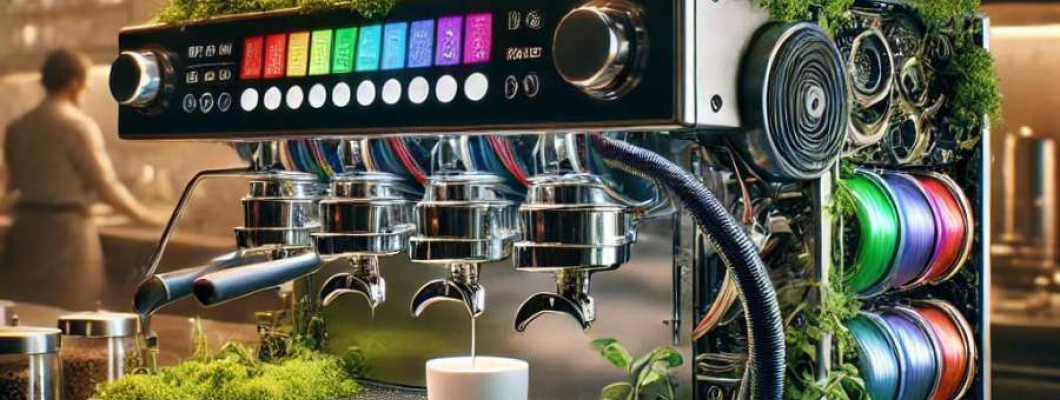
The Industrial Reality of Integrating the Color Version Latte Coffee Printer
Industrial-scale coffee shops and specialty beverage producers face escalating demands for customization and throughput, pushing new equipment to its operational limits. The Color Version Latte Coffee Printer, designed to deliver high-resolution, multi-color prints atop latte foam, must seamlessly integrate with existing kitchen infrastructure, including water supply, electrical grid capacity, and POS automation systems. In high-volume settings, even minor bottlenecks related to power draw or network communication latency can cascade into throughput delays, impacting profitability and customer satisfaction.
Consider a typical metropolitan café chain requiring continuous output of over 500 printed lattes per hour. The infrastructural challenge includes managing printer thermal loads without disrupting ambient kitchen climate, synchronizing print cycles with barista workflows, and maintaining consistent ink supply with minimal downtime. Integration must also comply with stringent food-safety standards, ensuring that all printer elements exposed to consumables meet hygiene certifications and are easy to sanitize. These considerations underscore a gap between a consumer-grade device and a truly industrial solution.
For the Color Version Latte Coffee Printer, integration challenges expand into networking protocols and software ecosystems. Industrial-scale environments often rely on centralized order management and inventory tracking systems. Printer firmware and control software require robust API compatibility to support real-time order data exchange, error reporting, and preventive maintenance alerts. Without this interoperability, operational bottlenecks arise from manual intervention, reducing the printer’s value proposition.
Technical Deep-Dive into Infrastructure Integration
Electrical Power and Thermal Management
The printer operates with an average power consumption of approximately 250 Watts during active print cycles, peaking around 350 Watts under continuous operation. Thermal dissipation is critical; enclosed kitchen spaces with limited ventilation risk accumulating heat, elevating ambient temperatures by as much as 6°C if multiple units run simultaneously. Effective integration requires a dedicated cooling solution or positioning near existing HVAC vents.
Network Compatibility and Data Throughput
Supporting wired Ethernet 1000BASE-T and Wi-Fi 5 (802.11ac), the device achieves a maximum data rate of 1 Gbps under ideal conditions. However, real-world throughput averages 300 Mbps due to protocol overhead and network congestion. Command-response latency remains under 60 ms, suitable for synchronous print job queuing. The printer firmware supports RESTful API access, enabling scalable integration into enterprise-grade POS and order management systems.
Food Safety and Material Compliance
All food-contact surfaces utilize FDA-approved, BPA-free plastics and stainless steel elements with electro-polished finishes for easy cleaning. The printhead nozzle assembly seals against foamed milk to prevent microbial contamination routes. The printer’s design allows component-level disassembly for sterilization cycles without specialized tools, meeting industrial hygiene standards including ISO 22000 compliance.
Ink Chemistry and Replenishment Infrastructure
The printer utilizes an optimized food-grade pigment ink with particle size averaging 15 microns to prevent nozzle clogging while maintaining color vibrancy. Ink reservoirs hold 200 ml per color cartridge, supporting approximately 400 prints per cartridge at 600 dpi resolution. Integration with automated ink supply lines is feasible but requires custom adapters and flow sensors for continuous operation, emphasizing the need for modular infrastructure adaptation.
Software Ecosystem and API Integration
Firmware supports versioned API calls with JSON payloads for print job submission, status polling, and error handling. Integration protocols comply with OAuth 2.0 for secure authentication within enterprise environments. The system logs print history with timestamp granularity of 1 ms, facilitating detailed production analytics and preventive maintenance scheduling.
| Aspect | Consumer-Grade Device | Color Version Latte Coffee Printer Industrial Integration |
|---|---|---|
| Power Consumption | Typically 100W peak | 250W average, 350W peak with thermal management considerations |
| Network Protocols | Basic Wi-Fi 802.11n | Gigabit Ethernet + Wi-Fi 5, REST API with OAuth 2.0 |
| Food Safety | Minimal certification | FDA-approved materials, ISO 22000 compliance |
| Ink Capacity | Small cartridges (~50 ml) | 200 ml cartridges with modular replenishment |
| Software Integration | Standalone app only | Enterprise-ready API support for automation |
Scenario Analysis of Industry Use Cases
Scenario 1 High-Volume Urban Café Chain
This use case demands continuous operation exceeding 500 prints/hour. The printer’s thermal management system and modular ink supply aid in preventing downtime. Networked integration with POS systems allows seamless order-to-print synchronization, minimizing queue times. Food safety compliance ensures regulatory adherence across multiple jurisdictions.
Scenario 2 Boutique Artisan Coffee Shop
Focus here is on color depth and customization for high-margin beverages. Printer resolution at 600 dpi and multi-color ink cartridges enable intricate latte art. Integration challenges center on labor workflow adaptation and maintaining printhead cleanliness in low-throughput conditions.
Scenario 3 Event Catering with Mobile Deployment
Portability and rapid infrastructure setup are critical. The printer’s power draw requires a robust mobile power source, while Wi-Fi 5 compatibility facilitates flexible network connections. Material compliance and ease of sterilization support rapid turnaround between events.
Expert FAQ Addressing Complex Integration Queries
Q1 What strategies mitigate thermal buildup in enclosed kitchen environments?
Integration with existing HVAC or dedicated exhaust fans maintaining ambient temperature below 25°C ensures optimal device performance and component longevity.Q2 How does the ink chemistry affect nozzle clogging under continuous operation?
Food-grade pigment inks with sub-20 micron particles reduce clogging risk by maintaining flow stability; regular automated nozzle cleansing cycles prolong uptime.Q3 Can the printer software integrate with common enterprise resource planning (ERP) systems?
The RESTful API supports middleware adapters enabling ERP synchronization for inventory and production analytics, subject to custom integration work.Q4 What maintenance cycles are recommended to sustain output quality?
Daily nozzle checks and weekly sterilization of food-contact surfaces align with hygiene standards and prevent print artifacts or health hazards.Q5 How does network latency impact print queue management?
Latency below 100 ms enables near real-time job submission; network redundancy is advisable to prevent operational halt during outages.
Strategic Verdict and Recommendation
Examined under a rigorous infrastructure integration lens, the Color Version Latte Coffee Printer stands as a robust industrial-grade solution for modern coffee enterprises. Its engineered power profile, enterprise connectivity, and compliance with food safety standards position it beyond typical consumer devices. While integration demands upfront adaptation in network and thermal management, its modular design and API-driven control system enable scalable deployment from boutique operations to large-scale café chains. The printer bridges the gap between artisanal customization and industrial throughput, making it a definitive choice for stakeholders prioritizing seamless infrastructure cohesion and operational reliability in their beverage printing workflows.