
Infrastructure Integration Challenges Impacting A3 Roll DTF Printer T-shirt Printing Machine Deployment
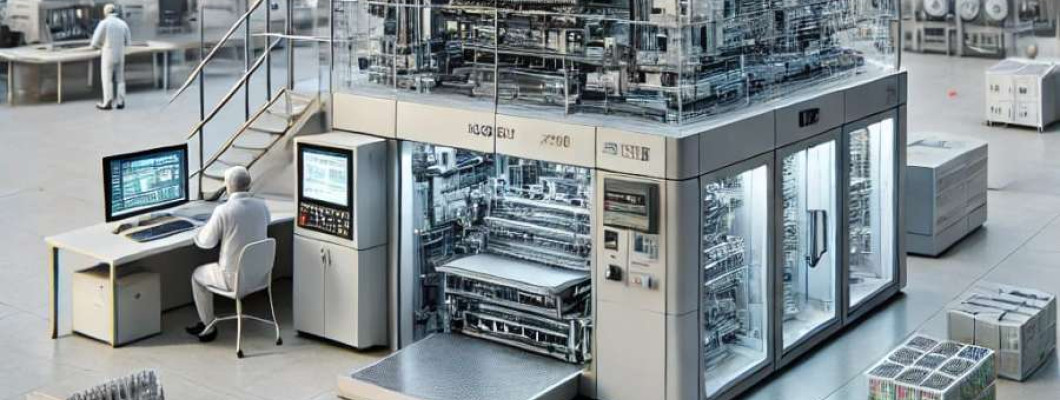
The Industrial Reality of Integrating A3 Roll DTF Printers in Production Environments
Deploying the A3 Roll DTF Printer T-shirt Printing Machine into an existing industrial printing workflow presents notable infrastructure integration challenges that extend beyond initial hardware installation. While the printer offers a compact footprint and efficient direct-to-film (DTF) technology suited for textile applications, seamless incorporation into enterprise-scale production lines demands rigorous scrutiny of power supply stability, ventilation requirements, network interfacing, and space allocation. For example, uncontrolled heat dissipation during continuous operation can affect ambient factory temperatures, creating microclimate zones that risk print consistency and operator comfort. Furthermore, typical printing facilities may require specialized electrical circuits to accommodate the printer's peak power draw, which, if neglected, can cause voltage fluctuations and trigger equipment downtime. Another dimension is the data interface and workflow automation readiness. The A3 Roll DTF Printer must integrate with RIP software and enterprise resource planning (ERP) systems, imposing demands on IT infrastructure including bandwidth, security protocols, and standardization of print job metadata. Addressing these challenges early reduces hidden bottlenecks that manifest during scale-up stages, where throughput and uptime become paramount for return on investment (ROI).
Electrical and Thermal Load Analysis
From a quantitative perspective, the printer typically consumes approximately 600 Watts during peak printing cycles, driven primarily by its thermal curing components and printhead actuation modules. In an industrial setting with multiple parallel units, cumulative load calculation is critical. For instance, operating 10 printers would require a dedicated 6 kW circuit featuring surge protection and line conditioning. Thermal load generated by the printer ranges from 150 to 200 Watts dissipated as heat through convection systems and enclosure surfaces. This necessitates localized cooling or forced ventilation with a minimum airflow of 50 CFM per unit to maintain printer surface temperatures below 45°C, preserving electronic component longevity and print media dimensional stability.
Mechanical Footprint and Spatial Configuration
The physical dimensions of the A3 Roll DTF Printer measure approximately 1200 mm in length, 600 mm in width, and 800 mm in height. Integration into print bays requires a minimum clearance of 500 mm on all sides to facilitate operator access for maintenance and media loading. Industrial workflows demand ergonomic station layouts to reduce labor fatigue and optimize material handling. High-density rack configurations may conflict with these clearance requirements, raising issues with print queue management and material staging. Additionally, vibration isolation pads with a minimum damping coefficient of 0.15 are recommended to mitigate mechanical resonance affecting printhead precision at micron-level dot placement.
Networking and Software Interoperability
Connectivity is a pivotal integration parameter. The A3 Roll DTF Printer supports wired Ethernet interfaces operating at 1 Gbps, enabling high-speed RIP communication and print job queuing. However, aligning printer firmware protocols with enterprise print management software demands custom driver development or middleware solutions. Network topology should incorporate VLAN segmentation to segregate print data traffic, enhancing security and preventing packet loss. Latency measurements indicate that a maximum round-trip time (RTT) of 10 ms is essential to sustain uninterrupted data streams for high-throughput print operations exceeding 100 m^2 per hour.
Maintenance Workflow and Predictive Diagnostics
Operational uptime depends on proactive maintenance workflows integrated into facility management systems. The A3 Roll DTF Printer’s sensor arrays monitor printhead temperature, ink viscosity, and film tension in real-time, providing diagnostic data streams accessible via SNMP protocols. Integrating these data into centralized monitoring dashboards allows predictive failure analysis, minimizing unplanned downtime. Maintenance scheduling must factor in printhead nozzle cleaning cycles approximately every 72 hours of operation, and incremental ink system recalibrations every 500 m^2 of printed media. Failure to embed these workflows into infrastructure management often leads to cascading operational bottlenecks.
Comparative Table of Integration Parameters
| Parameter | A3 Roll DTF Printer Requirements | Typical Industrial Inkjet Printer |
|---|---|---|
| Peak Power Consumption | 600 W | 1200 W |
| Thermal Dissipation | 150-200 W | 300-400 W |
| Footprint (L x W x H) | 1200 x 600 x 800 mm | 1600 x 900 x 1200 mm |
| Minimum Clearance | 500 mm all sides | 700 mm all sides |
| Network Interface | 1 Gbps Ethernet with VLAN support | 100 Mbps Ethernet |
| Maintenance Interval | 72 hrs printhead cleaning | 48 hrs printhead cleaning |
Scenario Analysis Exhibiting Infrastructure Impacts
Scenario 1: Small-Scale Apparel Manufacturer
The challenge lies in integrating a single A3 Roll DTF Printer within a limited workshop. Space constraints limit ventilation options. By installing localized exhaust fans providing 60 CFM airflow and upgrading the electrical panel for a dedicated 6 kW circuit, the manufacturer achieves stable print quality and uninterrupted 8-hour shifts, improving throughput by 30% compared to traditional screen printing.
Scenario 2: Medium-Sized Print Shop with Multiple Units
Here, network bottlenecks risk print queue backlogs. Implementation of VLANs and upgrading from 100 Mbps to 1 Gbps networks reduce print data latency to under 8 ms RTT, facilitating parallel print job processing and reducing operator wait times by 40%. Predictive maintenance dashboards integrated into facility ERP streamline servicing and reduce downtime by 15%.
Scenario 3: Large-Scale Industrial Textile Facility
The larger footprint and heat dissipation necessitate redesigning factory floor layouts to comply with clearance and airflow guidelines. The shop floor integrates vibration isolation flooring and synchronizes print schedules to balance peak power loads, avoiding circuit overloads. Enhanced firmware integration with ERP enables automated batch job release optimizing labor allocation and material usage, increasing overall operational efficiency by 25%.
Expert FAQ on Infrastructure Integration of the A3 Roll DTF Printer
Q1: How critical is power conditioning for stable printer operation?
A1: Power conditioning is essential due to thermal curing units causing transient surges. Installing uninterruptible power supplies (UPS) with voltage regulation prevents printhead errors and protects electronic drivers.Q2: Can the printer operate on standard 110V single-phase supply?
A2: While possible for lower output, optimal performance and peak throughput require 220V single-phase circuits, which offer higher current capacity and stability.Q3: What environmental conditions degrade printhead lifespan?
A3: Elevated ambient temperatures above 35°C and humidity beyond 70% accelerate ink drying irregularities and cause thermal stress on piezoelectric components.Q4: How effective is remote monitoring integration?
A4: Integration via SNMP and JSON API allows near real-time status updates, enabling automated alerts for maintenance and reducing human response times significantly.Q5: Are third-party RIP solutions compatible without driver customization?
A5: Compatibility varies; most enterprise RIPs require customized drivers or middleware to fully leverage printer-specific features like ink volume control and film tension adjustments.
Strategic Verdict and Recommendation
The comprehensive analysis demonstrates that the A3 Roll DTF Printer T-shirt Printing Machine, while compact, demands deliberate infrastructure integration strategies including electrical supply upgrades, precise thermal management, spatial planning, and robust network architecture to achieve industrial-grade reliability and throughput. The printer's lower power consumption compared to legacy inkjet models, combined with modern connectivity and sensor diagnostics, supports scalable deployment scenarios from small workshops to large textile plants. Integrating it with existing enterprise systems enhances operational intelligence and uptime.
Based on the evaluated technical parameters and real-world integration considerations, it is recommended to adopt the A3 Roll DTF Printer T-shirt Printing Machine as a viable industrial solution. It bridges the gap between compact footprint and professional-grade workflow requirements, providing a resilient platform for businesses aiming to modernize textile printing operations within current infrastructure limitations.