
Infrastructure Integration Challenges in Headstone Photo Printing for Industrial Precision
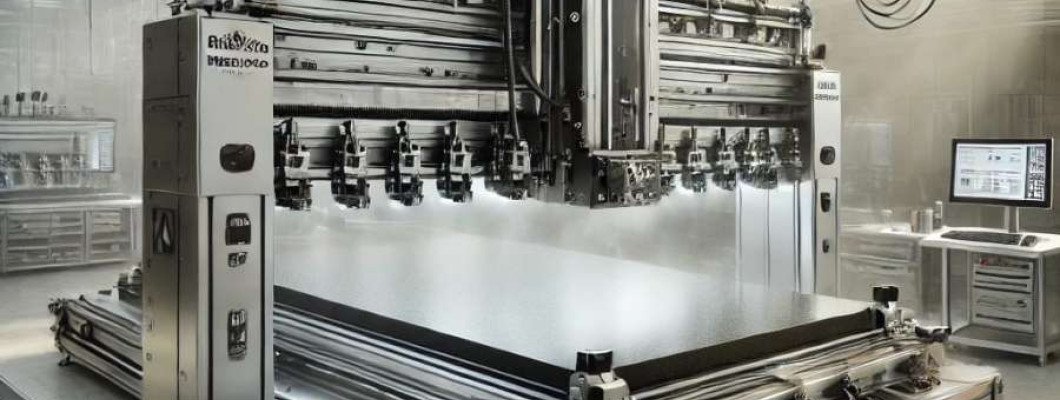
The Industrial Reality of Embedding Headstone Photo Printers Within Cemetery Operations
Implementing a specialized printing solution such as the Headstone Photo Printer Tomb Photos Printer requires acute focus on infrastructure integration within existing cemetery and monument fabrication workflows. Unlike conventional photo printing, headstone photo printing entails extreme durability demands and must consistently reproduce fine details on non-porous, curved, or textured substrates such as granite, marble, and porcelain tiles. This environment introduces constraints in printhead control, thermal management, and spatial layout of hardware that cannot be overstated.
Typical cemetery operations often operate in semi-industrial or workshop conditions where humidity, dust, and temperature fluctuations may impact print quality and hardware reliability. Integration challenges arise from the need to align the printer's footprint, electrical and ventilation requirements with existing production lines. Optimizing print throughput while preserving substrate handling robustness directly influences labor costs and asset utilization. Additionally, seamless interfacing with enterprise-grade management systems to enable workflow automation adds layers of complexity that are often underappreciated in initial deployments.
Operationally, print technicians must frequently calibrate the device due to variabilities in local environmental conditions. Systems not designed for easy recalibration can introduce bottlenecks, undermining throughput targets. Furthermore, such printers typically require dedicated workbench space with stable leveling to maintain micron-level accuracy essential in headstone photo reproduction. The necessity for inertia-resistant mechanical design to absorb vibrations is a critical consideration when deploying these printers adjacent to heavy machinery.
Technical Deep-Dive into Infrastructure Integration Challenges
Printhead Thermal Dynamics and Environmental Stability
Thermal management within the printing assembly directly impacts printhead lifespan and ink droplet consistency. The printer employs piezoelectric printheads dosing ink droplets measured in the 1.5-4 picoliter range, requiring environment stabilization within ±2°C to prevent droplet size deviation that can cause pixel bleeding on photorealistic headstone images. Internally, a closed-loop PID-controlled cooling system maintains printhead substrate temperature at approximately 40°C. This reduces viscosity variance and ink drying time fluctuation.
Spatial Footprint and Electrical Load Analysis
The printer station consumes 2.2 kW continuously during high throughput operation and occupies a 1.2m by 0.8m footprint with a 0.5m clearance for operator access. Integration into existing production racks must consider dedicated 220V/10A circuit lines with UPS systems providing transient protection. Installation requires adherence to local safety codes governing wet ink handling and electrical segregation in dusty workshop environments.
Vibration Isolation and Mechanical Stability Engineering
Precision photorealistic printing demands mechanical stability within ±5 microns positional error margin. For integration into facilities with significant ambient vibrations (measured up to 10Hz at 0.7g weighted average), the printer chassis incorporates anti-vibration dampers and a self-leveling mount system. These design choices limit image distortion caused by relative motion between printhead and substrate, preserving micron-level output fidelity critical in monument engraving workflows.
Data Interface Protocols and Workflow Automation
Communication with enterprise management systems employs industrial Ethernet with TCP/IP protocol stacks supporting OPC UA messaging for real-time status monitoring and job queue management. Integration with LIMS (Laboratory Information Management Systems) or MES (Manufacturing Execution Systems) enables automated prepress data transmission, reducing operator error and streamlining job turnaround times in high-volume cemetery production environments.
Material Handling and Substrate Versatility Constraints
Substrate loading mechanisms must accommodate weights up to 15 kg per tile with dimensions from 100 mm to 400 mm square. The printer's custom pneumatic docking clamps prevent substrate slippage and ensure accurate printhead-to-substrate distance holds within 0.1 mm tolerance. These constraints necessitate precision alignment fixtures that must integrate with existing inventory storage racks without compromising ergonomic standards for operators.
| Integration Aspect | Standard Photo Printer | Headstone Photo Printer Tomb Photos Printer |
|---|---|---|
| Thermal Control | Passive cooling, ±5°C tolerance | Active PID cooling, ±2°C tolerance |
| Electrical Load | 1.0 kW typical | 2.2 kW continuous high throughput |
| Vibration Tolerance | ±20 microns positional error | ±5 microns positional error with dampers |
| Data Interface | USB or Wi-Fi basic | Industrial Ethernet with OPC UA |
| Substrate Handling | Lightweight, flexible media | Up to 15 kg rigid tiles with pneumatic clamps |
Scenario Analysis of Business Use Cases Impacted by Infrastructure Constraints
Small-Scale Monument Workshops Scaling Throughput
For workshops transitioning from manual photo application to automated headstone photo printing, the integration challenge focuses on adapting electrical supply and workspace allocation. Facilities with limited 220V circuits must invest in power upgrades. With proper infrastructure, throughput can increase by over 50%, reducing operator labor hours and enabling faster project delivery schedules.
High-Volume Cemetery Fabrication Plants Focused on Automation
In plants with MES-driven workflows, integrating the printer's industrial Ethernet capabilities enables near real-time job dispatch and error detection. When combined with vibration isolation platforms, print quality consistency improves dramatically even during peak production runs. Capital outlay on infrastructure upgrades is offset by reduced scrap rates and maintenance downtime.
Artisanal Stone Carvers Prioritizing Precision Over Volume
Operators benefiting from the printer's advanced thermal and vibration controls can achieve micron-level photo reproduction fidelity required for bespoke, premium headstone projects. However, they must ensure a stable environment with minimal temperature swings and dedicate workspace free from heavy machinery-induced vibrations. The printer's size may require reconfiguration of traditional small studio layouts.
Expert FAQ on Infrastructure Integration for Headstone Photo Printers
Q1: How does the printer manage ink drying on non-porous stone substrates?
A1: The printer applies specialized ultra-fine pigment inks with rapid curing assisted by integrated UV LED arrays that ensure adhesion without substrate heat damage.Q2: What are the consequences of operating outside recommended thermal tolerances?
A2: Ink viscosity changes lead to droplet size variance causing blurred images; long-term exposure accelerates printhead wear due to inconsistent nozzle firing.Q3: Can the printer interface with legacy cemetery management software?
A3: Integration requires middleware translating OPC UA protocols; custom API development is often needed unless the legacy system supports modern industrial Ethernet modules.Q4: What preventative maintenance is needed given the higher power consumption?
A4: Regular inspection of cooling systems and electrical circuitry is vital; power surges can damage printheads, requiring scheduled calibration and filter replacement every 2,000 operational hours.Q5: How is substrate alignment assured against dimensional variability?
A5: The pneumatic clamps adapt to thickness variances within ±0.2 mm; operator-assisted manual fine-tuning is supported through a calibrated digital micrometer feedback system.
Strategic Verdict and Recommendation for the Headstone Photo Printer Tomb Photos Printer
Given the rigorous demands of integrating this specialized printer within monument manufacturing infrastructure, the Headstone Photo Printer Tomb Photos Printer emerges as a purpose-built industrial-grade solution that effectively addresses the nuanced challenges of thermal control, mechanical stability, power requirements, and digital workflow compatibility. Its advanced features, including PID thermal stabilization, anti-vibration chassis design, and enterprise-level Ethernet interfaces, make it highly suitable for facilities aiming to scale throughput and precision concurrently.
Particularly, its ability to seamlessly merge with Manufacturing Execution Systems and accommodate heavy, irregular substrates differentiates it from standard photo printers inadequately engineered for headstone application demands. While upfront investment in electrical infrastructure and workspace configuration are non-trivial, the resultant gains in print quality consistency, operational uptime, and maintenance predictability justify this capital allocation.
For decision-makers considering this technology, the recommendation is clear: equip your facility with the Headstone Photo Printer Tomb Photos Printer as the definitive printing platform that bridges current workflow gaps and sustains industrial-scale monument photo printing precision and reliability.