
Infrastructure Integration Challenges in Industrial-Grade A3 Spot UV Printing Analyzed for Scalable Business Owners
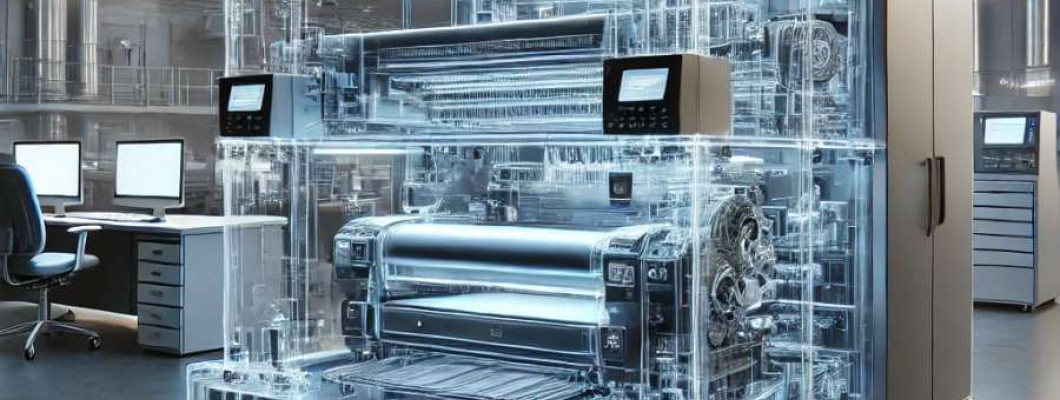
The Industrial Reality of Integrating A3 Spot UV Printing into Scalable Operations
Industrial printing workflows demand precision, consistency, and seamless integration with production line infrastructure. The challenge of embedding an A3 Spot UV Printing Machine UV Coating Printer into existing systems reveals bottlenecks often underestimated by scalable business owners. Spot UV coating adds a critical layer of value through enhanced gloss, tactile depth, and selective protection, but the equipment’s operational demands require compatibility with factory floor environmental controls, power distribution standards, and software ecosystems.
Consider a mid-sized packaging manufacturer implementing an A3 Spot UV printer for short-run, high-margin projects. The printer’s footprint, power consumption peaks, and cooling requirements conflict with limited existing electrical capacity. Furthermore, rapid job turnaround mandates the printer’s digital interface to synchronize with prepress workflow software without manual conversion delays. Human factors—operator ergonomics and training—compound integration complexity, especially when high-precision calibration is essential to maintain micron-level dimensional tolerance across variable substrates.
Failure to address these infrastructure constraints leads to workflow interruptions, product defects, and increased maintenance downtime, directly impacting throughput and operational cost efficiency. Real-world operational scenarios frequently expose gaps in facility readiness that delay ROI realization and erode competitive advantage.
Technical Review of Key Infrastructure Integration Parameters
Power and Thermal Management Demands
The A3 Spot UV Printing Machine typically operates with a 220V single-phase supply consuming approximately 1.2 kW during peak coating application cycles. Given the UV curing process relies on mercury arc or LED UV lamps generating 100-150 W/cm of UV intensity, the thermal output requires dedicated ventilation or active cooling to maintain optimal printhead temperature within a 25°C ± 3°C band. Neglecting this results in printhead degradation and coating inconsistencies.
Digital Interface and Workflow Compatibility
Industrial-grade UV coating printers must support high-speed RIP (Raster Image Processing) data transfers via USB 3.0 or Ethernet 1 Gbps interfaces. Their drivers should integrate with major prepress systems (e.g., EFI Fiery, Adobe PDF Print Engine). The ability to handle variable data printing enhances versatility for batch customization, critical in scalable environments.
Precisely Controlled Mechanical Transport System
The machine’s mechanical transport advances substrates at speeds ranging 0.5 - 1.5 m/min delivering print resolutions up to 1200 dpi with positional accuracy within 0.05 mm. Servo motors paired with optical encoders provide closed-loop feedback to maintain spot UV coating alignment with underlying print imagery. This precision is mandatory to avoid registration errors that compromise visual quality and product value.
Maintenance and Lifecycle Considerations
Component-level failure analysis highlights the UV lamp’s limited operational lifespan of approximately 1,500 hours, necessitating scheduled replacements. Printhead nozzles require daily cleaning cycles to prevent clogging from varnish viscosity fluctuations, influenced by ambient humidity and temperature. These factors mandate environmental control integration for maintenance predictability.
Physical Footprint and Floor Load Impact
The A3 Spot UV printer’s footprint spans approximately 1.2 m × 0.8 m with a net weight of 75 kg. Operational vibrations and acoustic emissions comply with industrial safety norms but require anti-vibration mounts when integrated near sensitive equipment. The floor load capacity must accommodate the static weight and dynamic operational forces to prevent structural fatigue over time.
| Parameter | Industrial UV Printer Integration | Non-Industrial DIY Spot UV Printer |
|---|---|---|
| Power Consumption | ~1.2 kW peak with regulated cooling | ~0.5 kW peak, limited cooling |
| Print Resolution | Up to 1200 dpi with 0.05 mm accuracy | Up to 600 dpi with 0.15 mm accuracy |
| Digital Connectivity | Gigabit Ethernet, USB 3.0, RIP integration | Basic USB, no RIP support |
| Maintenance Cycle | Daily printhead cleaning; UV lamp replace every 1,500 h | Weekly cleaning; UV lamp replace every 800 h |
| Physical Dimensions | 1.2 m x 0.8 m footprint, 75 kg weight | Compact 0.8 m x 0.5 m, 40 kg weight |
Scenario Analysis for Scalable Businesses Leveraging Spot UV Printing
Scenario 1: Rapid-Response Packaging Customization
A packaging company specializing in limited-edition products requires quick turnaround of UV spot coated labels at 500 units per day. The printer’s ability to integrate with production scheduling software and maintain throughput without manual intervention enables consistent delivery. Thermal management keeps downtime below 2% monthly, preserving labor cost efficiency.
Scenario 2: High-Mix Print Runs with Variable Data
An enterprise serving multiple brands benefits from variable data printing capabilities, enabling unique QR codes and serial numbers coated with UV varnish. The printer’s high positional accuracy ensures spot coating aligns precisely over customized graphics, elevating brand authenticity and reducing rejects.
Scenario 3: On-Demand Tactile Marketing Collateral
Marketing agencies producing small runs of tactile brochures rely on the A3 Spot UV Printer’s micron-level coating precision over diverse substrates including textured cardstock. Infrastructure integration allows remote job submission from design teams, improving workflow efficiency significantly.
Advanced FAQ Addressing Integration and Operational Complexity
Q1: How does substrate thickness variation affect UV curing efficacy and alignment?
A1: Variations beyond 0.3 mm can shift the focal distance of UV lamps, reducing cure depth and causing misregistration. Automated height sensors recalibrate the coating head in real time to compensate.
Q2: What are the vibration tolerances for the printer in shared industrial settings?
A2: The printer maintains print quality with ambient vibrations up to 0.3 mm amplitude at 60 Hz. Vibrations exceeding that require isolation mounts.
Q3: Can the printer handle solvent-based varnishes or only UV-curable coatings?
A3: The system is optimized strictly for UV-curable coatings due to lamp and printhead design; solvent varnishes may damage components.
Q4: What redundancy is built into the cooling system?
A4: Dual cooling circuits with automatic failover prevent thermal shutdown during extended high-volume runs.
Q5: How is print job security maintained in networked environments?
A5: Encrypted data transfer protocols (TLS 1.2) with role-based access controls restrict unauthorized job submissions and protect intellectual property.
Strategic Verdict and Recommendation
The A3 Spot UV Printing Machine UV Coating Printer stands as a definitive solution in scalable business environments demanding industrial-grade performance and seamless infrastructure integration. Its calibrated power profile, advanced digital interfacing, and mechanical precision set it apart from DIY alternatives, safeguarding production continuity and product quality. Strategic investment in this system, including necessary facility upgrades, yields high throughput efficiency with predictable lifecycle costs—criteria essential to competitive scalability.
For companies intent on elevating printed product value while optimizing operational workflows, the printer’s integration capabilities and maintenance predictability make it an indispensable industrial asset. Further details on specifications and procurement can be examined at the product’s official page A3 Spot UV Printing Machine UV Coating Printer.