
Infrastructure Integration Challenges in the A4 Roll DTF Printer for the Scalable Business Owner
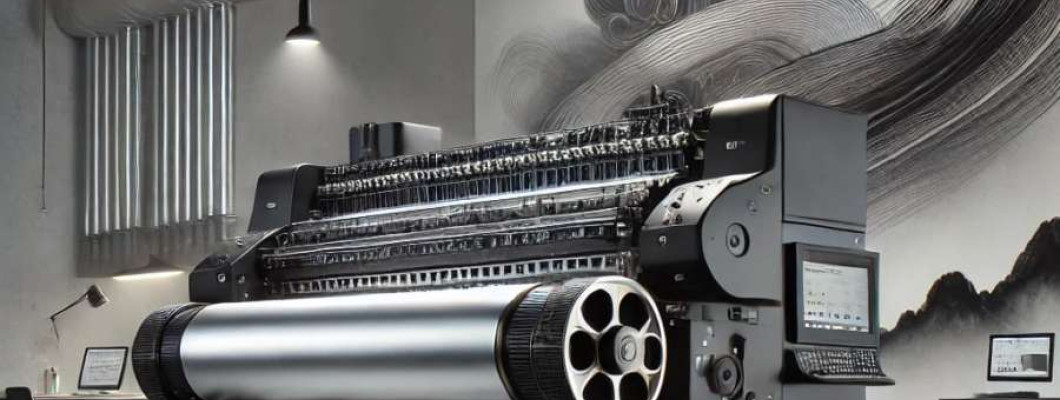
The Industrial Reality of Integrating A4 Roll DTF Printers into Business Workflows
Scaling print production through industrial-grade equipment such as the A4 Roll DTF Printer demands precise infrastructure alignment beyond mere hardware acquisition. Technical bottlenecks frequently emerge when attempting to embed a printer primarily designed for roll-to-roll printing into existing factory floor architectures and production lines. This is particularly challenging for scalable business owners aiming to optimize throughput, automation, and labor costs.
Consider a mid-sized textile printing facility upgrading capacity to serve a growing e-commerce apparel brand. The A4 Roll DTF Printer, with its roll-fed continuous printing advantage, requires integration with upstream material handling systems and downstream curing or drying units. Failure to align conveyor speeds, humidity controls, or electrical power provisioning results in cumulative operational lags that subvert expected productivity gains.
Furthermore, print uptime reliability hinges heavily on environmental factors such as temperature stabilization and air particulate control. Many scalable operations underestimate these requirements, causing print defects or premature component wear. The challenge extends to software communication protocols as well; the printer’s control interface must mesh seamlessly with enterprise resource planning (ERP) and print management solutions to enable real-time job tracking and automated workflow adjustments.
Physical infrastructure constraints, including spatial layout and ventilation, also contribute to integration complexity. The printer's footprint and roll feed mechanics necessitate modification of the print bay, impacting labor ergonomics and safety compliance. Such modifications add hidden costs that manifest only after installation.
In summary, integrating the A4 Roll DTF Printer into a scalable business environment is not plug-and-play. It demands a rigorous interdisciplinary approach encompassing mechanical, electrical, and digital integration to avoid operational bottlenecks that erode ROI and throughput targets.
Technical Deep-Dive on Infrastructure Integration Challenges
Power and Thermal Budget Considerations
The A4 Roll DTF Printer typically consumes between 600 to 1100 Watts during peak operation. For a production line running multiple units, cumulative electrical load can approach 5 to 7 kW. Without sufficient electrical distribution infrastructure—dedicated circuits, surge protection, and UPS backup—the risk of downtime or hardware damage escalates.
Thermal dissipation also requires assessment. The printer's ink curing mechanisms and electronic control boards generate heat that must be vented effectively to maintain stable operation under continuous use. Industrial HVAC or localized extraction systems are often necessary to maintain ambient temperature within the 20 to 25°C range optimal for ink adhesion and printhead longevity.
Roll Material Handling Automation
Continuous roll feeding mandates precise tension control to maintain print quality and prevent substrate stretching or misalignment. Retrofitting existing conveyor systems for automated roll unwinding and rewinding requires servo motors capable of delivering torque variations from 0.5 N·m to 3 N·m with positional accuracy better than 0.1 mm.
Integration of PID-controlled tension loops synchronized with print speed (commonly 50 to 150 mm/s depending on resolution settings) is critical. Misalignment between roll feed rate and printhead movement introduces banding defects and positional drift, particularly at resolutions exceeding 1200 dpi.
Data Communication and Software Interface Protocols
The A4 Roll DTF Printer typically communicates via USB 3.0 or Ethernet with proprietary drivers supporting industry-standard raster image processors (RIPs). For scalable print operations, compatibility with networked print management software is essential.
Integration requires configuring TCP/IP protocols and ensuring data flow supports print queue management, job prioritization, and error reporting. Without such integration, print operators must manually handle jobs, increasing labor costs and risk of errors.
Printhead and Ink Chemistry Impact on Reliability
DTF printing involves specialized pigment ink formulations that require precise temperature and humidity controls to avoid clogging and inconsistent droplet formation. The printer’s piezoelectric printheads eject ink droplets with an average volume of 10 pl, demanding real-time monitoring of ink viscosity and environmental parameters.
Scheduled maintenance cycles every 250 to 500 operational hours involving printhead cleaning and nozzle health checks must be embedded into production schedules to avoid unscheduled downtime.
Physical Space and Ergonomics for Labor Efficiency
The printer has a footprint approximating 1.2 m in length by 0.6 m width, with a height of 0.8 m. Roll handling requires a clearance of 0.5 m on either side to load and unload substrates safely. Modification of existing workspaces, including anti-fatigue mats and optimized lighting, impacts workforce productivity and safety compliance.
| Integration Factor | Basic Setup | Optimized Industrial Integration |
|---|---|---|
| Power Supply | Standard 110V, Single Outlet | Dedicated 220V Circuit, Surge Protection, UPS |
| Roll Handling | Manual Unwinder/Rewinder | Servo-Controlled Tension Loops with PID Feedback |
| Data Interface | USB Direct-Connect | Networked Ethernet with Print Management Software |
| HVAC | Ambient Room Temperature | Temperature and Humidity Controlled HVAC |
| Workspace Ergonomics | Minimal Clearance | Optimized Space for Safe Loading and Labor Efficiency |
Scenario Analysis of Business Use Cases for the A4 Roll DTF Printer
Use Case 1 Apparel Customization Business Scaling Throughput
An apparel customization business aiming to scale from batch printing to on-demand roll-to-roll production finds the A4 Roll DTF Printer’s integration requirements critical. Optimizing roll tension controls and networked data workflows enables throughput growth from 50 to 150 prints per day without proportional labor increases.
Use Case 2 Small Print Shop Expanding into Textile Printing
A small print shop diversifying into textile graphics faces challenges integrating the printer into a limited floor space with insufficient ventilation and power capacity. Incremental infrastructure upgrades increase upfront costs but are necessary to maintain print reliability and prevent frequent downtime.
Use Case 3 Large Industrial Facility Adding Versatile Print Modules
A large industrial print facility adding the A4 Roll DTF Printer as a module within a multi-printer line benefits from seamless ERP integration and standardized data communication protocols. This ensures centralized job tracking and flexible production scheduling, critical for just-in-time manufacturing and inventory control.
Expert FAQ on Infrastructure Challenges and Technical Details
Q1 What electrical protections are recommended for continuous operation?
Surge suppressors, dedicated circuit breakers rated for 15A minimum, and uninterruptible power supplies with automatic voltage regulation are advised to mitigate inrush currents and voltage spikes that could damage electronics.
Q2 How does ambient humidity impact printhead performance?
Ink viscosity and drying rates are sensitive to humidity above 60% RH, which can cause ink bleeding and nozzle clogging. Maintaining 40%–55% relative humidity stabilizes droplet formation and print quality.
Q3 What software protocols enable effective print queue management?
TCP/IP communication paired with RIP software supporting job nesting, color management, and real-time status feedback optimizes throughput and reduces labor intervention.
Q4 How frequently should preventive maintenance occur under heavy use?
Every 250 operational hours is optimal for cleaning printheads and inspecting ink lines; major servicing intervals extend up to 1000 hours depending on workload and ink type.
Q5 What are the key considerations for retrofitting existing conveyor systems?
Precise speed synchronization via encoder feedback loops and controlled tension adjustment mechanisms are critical to prevent print misalignment and substrate damage.
Strategic Verdict and Recommendation
The A4 Roll DTF Printer, when integrated with appropriate electrical, mechanical, and digital infrastructure, manifests as a viable and industrial-grade print solution for scalable business owners demanding throughput, automation, and labor efficiency. The challenges identified—power provisioning, roll handling automation, environmental controls, and software interfacing—are addressable with current industrial technologies and while imposing upfront complexity, they unlock sustainable operational advantages.
For businesses pursuing industrial-grade textile printing with minimal workflow disruption, detailed planning for infrastructure integration is non-negotiable. The printer's design suits continuous roll printing with micron-level precision at production speeds that align well with mid-scale manufacturing.
For detailed specifications and purchasing inquiries, review the official product information at A4 Roll DTF Printer.