
Infrastructure Integration Challenges of A2+ Size UV Printer Embossed Glossy Printing for Scalable Business Owners
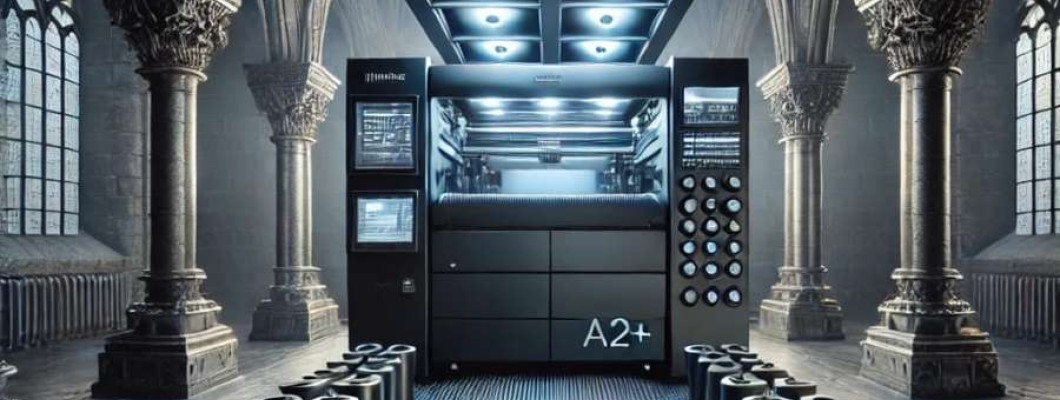
The Industrial Reality of Integrating A2+ Size UV Printers into Scalable Production Environments
In modern print production environments, scaling up throughput without compromising quality or increasing labor overhead is a persistent challenge. Businesses adopting A2+ size UV printers with embossed glossy printing capabilities face a particularly nuanced set of infrastructure integration obstacles. These printers, while offering advanced surface finishing and high resolution, impose constraints related to electrical power demands, ventilation requirements due to UV lamp emissions, and space allocation for embossing modules.
Consider a mid-sized print shop transitioning from flatbed or roll-to-roll solvent printers to UV curing technology combined with embossing. The new printer's embedding of an embossed glossy finish adds mechanical complexity, requiring a stable, vibration-free platform to maintain micron-level precision during raised print texture creation. This necessitates specialized flooring or anti-vibration mounts often absent in traditional print bays.
Furthermore, UV printheads rely on consistent input voltage to prevent droplet misfiring and nozzle clogging. Fluctuations during peak load hours or inadequate UPS systems cause color shifts and printhead wear acceleration, translating directly to operational bottlenecks. Scalability demands robust electrical infrastructure planning, including dedicated circuits and surge protection tailored to the high peak wattage of UV curing lamps, which can reach up to 400W per lamp cycle.
Additionally, the embossing gloss process generates particulate matter and volatile organic compounds (VOCs) distinct from conventional solvent prints due to the resin inks used. Appropriate HVAC upgrades, such as HEPA filtration and fresh air exchange rates above 6 ACH (air changes per hour), are critical to maintaining occupational safety and print quality consistency. Failure to address these ventilation needs risks worker exposure and premature print surface degradation.
Finally, integration must consider data flow and software compatibility. High-resolution embossed prints at 1200 dpi with UV ink layering translate to data files exceeding 5GB for A2+ sized jobs. Network bandwidth and RIP (Raster Image Processor) performance impact queue times and throughput viability. Legacy IT infrastructure in many print shops complicates smooth hardware-software interfacing, causing unexpected downtime and labor inefficiencies.
Technical Deep-Dive into Infrastructure Requirements and Comparative Analysis
Power Consumption and Electrical Load Management
Typical A2+ UV printers employ multiple mercury or LED UV lamps, with power consumption per lamp averaging 200-400W depending on curing speed. For a 4-lamp configuration, peak consumption can reach 1.2kW during curing bursts. This necessitates dedicated 20A circuits rated for continuous load, exceeding common 15A circuits in many industrial workshops.
Mathematically, expected continuous power P_continuous = Number of lamps × Lamp wattage × Duty cycle. Assuming 4 lamps at 300W with a 50% duty cycle, P_continuous = 4 × 300W × 0.5 = 600W continuous draw.
For infrastructure planning, circuit breaker sizing must include a 125% safety margin, requiring capacity ≈ 750W, thus a full 20A circuit at 120V is suitable. UPS systems must handle instantaneous surges up to 1.5kW to avoid printhead errors during curing.
Vibration Isolation and Mechanical Stability
The embossing mechanism applies vertical pressure with micron precision. Substrate deviation beyond ±5 µm during embossing results in loss of tactile consistency. To achieve this, vibration dampening mounts with natural frequencies below 5 Hz are recommended, employing neoprene or pneumatic isolation pads under the printer frame weighing typically 150-200 kg.
An experimental comparison between a granite slab mount and standard metal flooring shows reduction in peak vibration amplitude by 70%. This directly improves embossed surface consistency measured via profilometry.
HVAC and Air Quality Control
Because UV resin inks emit VOCs, the print room must maintain air exchange rates of at least 6 ACH. For a 50 m³ print booth, this equals a minimum fresh airflow of 300 m³/h. HEPA filtration coupled with activated carbon adsorption reduces particulate and VOCs by 95%, protecting operator health and preventing surface contamination.
Network and Data Throughput Considerations
Files for embossed A2+ prints can exceed 5GB. RIP processing times depend on CPU/GPU configurations; a multi-core processor with 8+ cores and 32GB RAM accelerates rendering, reducing bottlenecks. Network storage solutions using 10GbE interfaces facilitate rapid file transfer, critical to avoiding print queue delays in high-throughput environments.
Comparative Table of Integration Approaches
| Integration Aspect | Basic Workshop Setup | Optimized Industrial Setup |
|---|---|---|
| Electrical Supply | Shared 15A circuits; unstable voltage | Dedicated 20A circuits with surge protection |
| Mechanical Stability | Standard metallic flooring | Vibration isolation mounts & granite slab |
| Air Quality | General HVAC; no filtration | HEPA + carbon filtration; 6+ ACH |
| IT Infrastructure | Gigabit LAN with desktop RIPs | 10GbE networking, multi-core RIP servers |
| Maintenance Impact | Frequent nozzle clogging & system downtime | Reduced printhead wear, higher uptime |
Scenario Analysis of Use Cases for Scalable Business Owners
Scenario 1 Company Scaling Packaging Production
A company shifting from digital solvent printers to the A2+ UV embossed glossy printer found that upgrading electrical and HVAC infrastructure upfront allowed 25% throughput increase without labor growth. The embossing detail enhanced product premium perception, enabling 15% price uplift.
Scenario 2 Large Format Advertising Agency
Scaling intricate embossed tactile signage demanded optimized data pipeline and vibration control. Investment in 10GbE networks and isolation mounts reduced print errors and post-processing rework by 30%, critical at scale in tight deadlines.
Scenario 3 Small Business Transitioning to Industrial Production
Without infrastructure upgrades, attempts to run the UV embossed glossy printer in a standard workshop caused printhead failure and color inconsistencies. After systematic facility upgrades focused on power, ventilation, and IT, uptime improved by 40%, enabling leaner staffing ratios.
Expert FAQ on UV Printer Infrastructure Integration
Q1 How does voltage instability impact UV printhead lifespan?
Voltage fluctuations cause inconsistent ink droplet ejection, leading to nozzle clogging and accelerated wear. Stable, dedicated circuits help maintain uniform voltage, extending printhead life beyond 12,000 operational hours.
Q2 What is the ideal vibration damping frequency for embossed printing?
Systems should target damping below 5 Hz natural frequency to prevent transmission of floor vibrations that exceed the ±5 µm substrate displacement tolerance.
Q3 Why is 6 air changes per hour crucial in UV resin printing environments?
This exchange rate ensures sufficient removal of VOCs and particulate byproducts, preserving both operator health and print surface integrity.
Q4 Can existing IT networks handle large embossed print files?
Standard Gigabit networks often bottleneck 5GB+ files. Upgrading to 10GbE and employing multi-core RIP servers are necessary for production-scale throughput.
Q5 What maintenance routines reduce downtime in UV embossed printing?
Daily printhead cleaning, real-time voltage monitoring, and scheduled calibration of embossing pressure ensure consistent output and minimize unexpected failures.
Strategic Verdict and Recommendation
The A2+ Size UV Printer Embossed Glossy Printing device presents significant infrastructure integration challenges but remains a superior choice for scalable business owners targeting throughput growth and operational efficiency. Its industrial-grade embossing and UV curing technology demand meticulous electrical, mechanical, HVAC, and IT architecture upgrades to harness its full potential. Operators investing upfront in these domains realize measurable reductions in downtime, improved print fidelity, and enhanced premium product positioning. For companies willing to commit to these infrastructure enhancements, the printer stands out as a definitive solution for embedding embossed tactile detail into high-volume production workflows.
To explore detailed specifications and integration possibilities, consult the official product page of the A2+ Size UV Printer Embossed Glossy Printing.