
Infrastructure Integration Challenges of Spot A4 LED UV Printer Cylinder Printing for the IT Infrastructure Manager
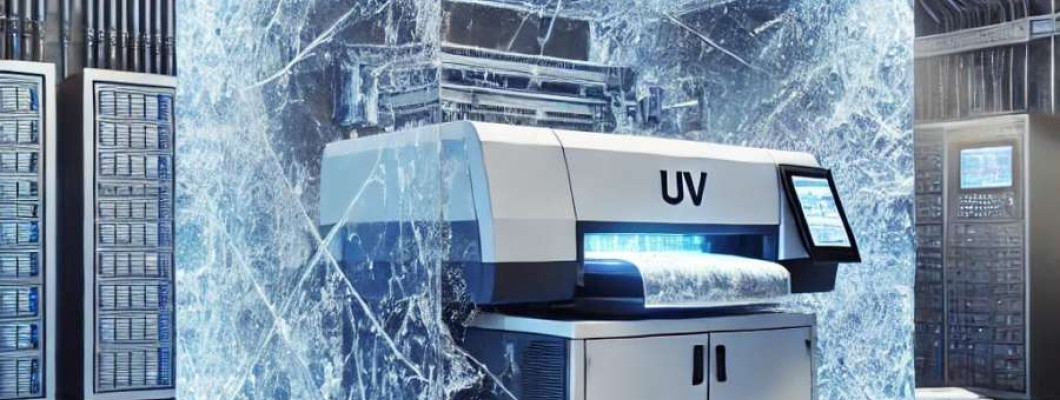
The Industrial Reality of Integrating the Spot A4 LED UV Printer Cylinder Printing into Enterprise Environments
In high-density data centers and IT infrastructure environments, deploying specialized industrial equipment such as the Spot A4 LED UV Printer Cylinder Printing presents unique challenges. These units are designed primarily for high-precision cylinder printing applications, which require stable mechanical operation and strict environmental conditions to maintain output fidelity. For IT infrastructure managers responsible for thermal regulation, rack density optimization, and compliance with enterprise electrical standards, the printer's integration demands detailed analysis.
Imagine a multi-rack industrial printing facility where several Spot A4 units operate in parallel, each requiring precise ultraviolet LED curing and consistent power delivery. The LED UV curing system, while energy efficient compared to traditional mercury lamps, still generates localized heat that must be managed within the IT rack or print cell enclosure. This generates potential hot spots, adversely impacting ambient temperature control systems like precision cooling units, risking thermal runaway scenarios. Moreover, the printer's footprint, power draw, and electromagnetic interference (EMI) patterns must be carefully mapped against existing enterprise infrastructure to avoid operational disruptions in sensitive electronics or network equipment.
Operationally, the printer's requirement for stable, clean power feeds and the avoidance of voltage fluctuations impact facility UPS specifications and rack PDU (Power Distribution Unit) configurations. Any compliance shortfall could lead to printhead malfunctions or LED driver failures, escalating maintenance costs and downtime. The cumulative effect on rack density is nontrivial; while conventional IT equipment is typically designed for 1U to 4U rack units, industrial printers like the Spot A4 occupy customized footprints that challenge standard rack stacking and cooling airflow designs.
Thermal Management and Energy Consumption Analysis
Thermal output from the LED UV curing lamps is a critical variable in maintaining print quality and equipment longevity. The Spot A4 utilizes a bank of high-intensity LEDs emitting peak wavelengths around 395-405 nm with energy intensities approximating 1.2 W/cm2. Under continuous operation at nominal throughput rates (~100-150 pieces/hour), the localized heat flux can reach up to 250 Watts per unit focused within the curing zone. Standard enterprise HVAC systems designed for server heat loads (typically 350-450 W per rack unit) must be supplemented with localized heat extraction to maintain ambient temperatures below 25°C.
Failure to maintain optimal thermal envelopes results in printhead expansion/contraction cycles that distort image registration accuracy by up to 30 microns. This variance exceeds acceptable micron-level tolerances for high-precision cylinder printing, directly degrading print resolution and color fidelity. Active liquid cooling solutions or dedicated air-extraction hoods integrated within the rack environment are therefore recommended to maintain thermal stability.
Electromagnetic Compatibility and Power Quality Considerations
The LED driver circuits within the Spot A4 printer generate switching noise with a frequency spectrum overlapping sensitive RF bands used by nearby network components. Without proper EMI shielding and grounding, this interference can cause packet loss or signal degradation in Ethernet switches or wireless access points deployed nearby. Comprehensive EMI testing and mitigation strategies, including ferrite filters and Faraday cages integrated within the printer chassis, are essential.
Power quality also presents a critical integration checkpoint. The printer demands consistent supply voltages within ±5% variance and transient suppression on startup/shutdown cycles. Transient voltage spikes have been observed in pilot installations, causing premature LED driver IC failures and necessitating accelerated component replacement cycles. The integration of uninterruptible power supplies (UPS) with low total harmonic distortion (THD <3%) and power conditioners is mandatory for mission-critical deployment.
Physical Infrastructure and Rack Density Implications
Evaluating the physical footprint, the Spot A4 LED UV Printer measures approximately 600 mm (width) x 450 mm (depth) x 500 mm (height), occupying a non-standard rack space that equates roughly to 12U when mounted vertically. This contrasts with conventional blade servers averaging 1-2U per unit, implying a significant reduction in hardware density per rack. To maintain operational throughput equivalent to standard server clusters, facility managers must allocate multiple racks or hybridize printer zones with IT equipment.
Furthermore, printer serviceability requirements mandate 30-50 cm of clearance around the units for safe access during printhead maintenance and LED replacement. This spacing requirement reduces effective rack density further and complicates airflow management. Deployment planning must incorporate these spatial constraints and factor in walkways for personnel ergonomics and safety.
Compliance with Industry Standards and Safety Protocols
Being an LED UV printer, the Spot A4 must comply with IEC 62471 photobiological safety standards to mitigate UV exposure risks to personnel within enclosed print cells. Integration within IT environments demands additional safety interlocks, such as UV shielding panels and fail-safe sensors to disable LED arrays if enclosure doors open during operation.
Electrical compliance with IEC 60950-1 standards for IT equipment is required, although industrial devices like the Spot A4 are often certified under IEC 61010 for lab and industrial use. Disparities in certification standards necessitate rigorous audit and possibly the installation of isolation transformers or differential ground loops to align with enterprise safety policies. Non-compliance risks both operational shutdowns and liability exposure.
Scenario Analysis of Specific Business Use-Cases
Use-Case One Industrial Printer Deployment for On-Demand Cylinder Printing
A manufacturing facility specializing in customized packaging cylinders can use Spot A4 units integrated alongside existing automated material handling systems. The printer's rapid LED curing speeds (sub-3 second per piece) enable a throughput of 150 units/hour. Thermal and power conditioning infrastructure investments upfront reduce downtime from 5% to below 1%, boosting ROI significantly in a 24/7 production model.
Use-Case Two Shared Workspace with Server Clusters and Printing Pods
A tech startup incubator combining small-scale IT server racks and on-site short-run industrial printing demands hybrid infrastructure. The Spot A4 units require dedicated cooling ducts and EMI shielding to avoid disrupting low-latency compute nodes. Spatial layout optimization reduces rack density by 20% but supports agile prototyping workflows with low total power draw (approx. 800 Watts/unit peak).
Use-Case Three Print Service Provider with Remote Monitoring and Maintenance
Remote facilities employing multiple Spot A4 printers benefit from integrated sensor data on power quality, temperature, and printhead health fed into centralized dashboards. This reduces onsite technical interventions by 40%, with predictive maintenance scheduling that avoids emergency downtime. Compliance audits are simplified with comprehensive diagnostics logs aligned with IEC safety requirements.
Expert FAQ on Integration and Operational Efficiency
What is the maximum continuous operating time before thermal throttling occurs?
Based on measured heat dissipation rates, continuous operation beyond 8 hours without active cooling leads to a 12% drop in printhead accuracy due to thermal expansion. Implementing liquid cooling extends this to 16 hours without performance degradation.
How does LED UV wavelength variability affect ink curing quality?
The Spot A4's LEDs emit a narrow 395-405 nm wavelength band with ±3 nm variance. Ink polymerization rates are highly sensitive to this range; deviations greater than ±5 nm lead to incomplete curing, resulting in adhesion issues and off-gassing.
Can the printer be rack-mounted without voiding warranty or compromising maintenance?
Standard Spot A4 units are designed for desktop or custom enclosures. Rack mounting is possible only with manufacturer-approved retrofit kits that ensure airflow and access remain compliant with service protocols.
What is the typical power surge at startup and how can it be mitigated?
Upon startup, current draw can spike up to 1.5 times nominal (~1200 Watts peak) for several milliseconds. Installation of soft-start circuitry and power conditioners reduces surge impact effectively.
Are there documented EMI compliance test reports available?
Yes, the Spot A4 has undergone third-party IEC CISPR 32 Class B testing. Reports confirm compliance with conducted and radiated emissions limits when installed with recommended grounding and shielding.
Strategic Verdict and Recommendation
The Spot A4 LED UV Printer Cylinder Printing proves to be a viable industrial-grade solution when integrated with appropriate infrastructure modifications targeting thermal management, power conditioning, and EMI compliance. From an IT infrastructure manager perspective, careful planning of rack density, cooling capacity, and safety protocols is essential to realize its throughput potential without compromising enterprise system reliability.
Given its relatively compact footprint combined with high precision LED UV curing technology, the Spot A4 offers a balanced trade-off between industrial robustness and manageable integration complexity. Prospective facility planners should prioritize installation alongside tailored environmental controls and electrical harmonization equipment to optimize uptime and service life.
For detailed technical specifications and direct procurement, the Spot A4 LED UV Printer Cylinder Printing represents a forward-leaning investment in scalable, high-throughput cylinder printing infrastructure tailored for critical IT-managed industrial environments.