
Infrastructure Integration Challenges of the 40*60CM Heat Press Machine for IT Managers
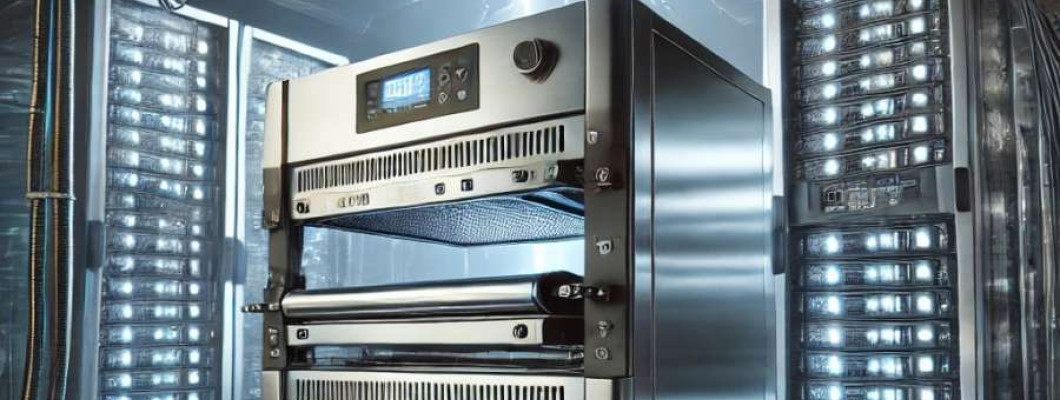
The Industrial Reality of Integrating a 40*60CM Heat Press Machine in Enterprise IT Environments
Enterprises investing in thermal printing and heat transfer technologies face a nuanced challenge when incorporating devices like the 40*60CM Heat Press Machine into existing data center and production facility infrastructures. For an IT or infrastructure manager, this scenario involves navigating constraints such as thermal management limitations, rack density optimization, power consumption budgets, and adherence to compliance standards—while maintaining operational uptime.
Consider a production floor embedded with multiple heat press units designed for substrate printing and customization. Each unit, including the 40*60CM Heat Press Machine, generates localized thermal output that if unmanaged can cascade into ambient temperature rises. Such temperature fluctuations stress HVAC systems, contribute to accelerated electronic component aging, and risk production bottlenecks. Often, these devices rely on 220V-240V single-phase power, with a thermal output exceeding 1500 Watts during operation cycles, directly impacting load balancing and energy provisioning strategies within server rooms or hybrid IT-manufacturing environments.
Additionally, the integration extends beyond mere physical placement. IT managers must evaluate electromagnetic interference (EMI) generated by heating elements and control boards, which may affect sensitive monitoring or control devices. Compliance with industrial safety regulations requires enforcing strict grounding and insulation protocols. The machine’s network integration via USB or serial interfaces further compounds the complexity, demanding that protocols align with cybersecurity policies and industrial IoT standards.
Thermal Management and Power Infrastructure
The 40*60CM Heat Press Machine employs resistive heating elements capable of reaching target temperatures in the 0-220°C range within 3-5 minutes. Thermal output peaks during press cycles lasting 10-60 seconds, depending on substrate and heat transfer media. Quantifying the heat dissipation involves applying Fourier’s law of heat conduction and monitoring ambient temperature rise (ΔT), which for continuous operation can reach upwards of 10-15°C within a confined space of 10m³.
From a power perspective, assuming a heating element rated at 1500 Watts and an average duty cycle of 15%, the mean power draw is approximately 225 Watts per unit. However, during startup peaks, instantaneous current can spike, requiring upstream circuit breakers and power distribution units (PDU) to support at least 20% overhead. To prevent thermal runaway or excessive PSU loads, IT managers must ensure robust supply lines and active cooling solutions.
Space Optimization and Rack Density Impacts
The physical footprint of the 40*60CM Heat Press Machine is approximately 600mm x 400mm x 300mm, with a weight near 20 kg, necessitating specific placement considerations in mixed-use spaces. Unlike standard server units designed for 19-inch rack mounting, these are freestanding devices demanding dedicated benchtop or floor space. Their integration usually reduces available space for IT hardware, compelling reconfiguration of racks or spatial layouts.
Conventional configurations of high-density server racks operate at 500-700 Watts per rack unit (RU). Introducing heat press machines with substantial thermal dissipation adjacent to racks increases local heat density. This requires recalculation of cooling capacity measured in BTU/hr or Watts per cubic meter. Employing Computational Fluid Dynamics (CFD) simulations helps predict airflow disruptions. Solutions include installing isolation barriers, dedicated exhausts, or increasing chilled water flow rates in nearby precision cooling units to mitigate hotspots.
Electromagnetic Interference and Compliance Considerations
The resistive heating elements and embedded microcontrollers within the heat press machine emit EMI that may interfere with low-level signal lines in critical environments. The frequency spectrum typically spans 10 kHz to 1 MHz with amplitude peaks impacting unshielded cables. For IT infrastructure, this presents challenges especially in environments running sensitive industrial control systems or measurement instrumentation.
Standards such as CISPR 11 and FCC Part 15 define emission limits which the 40*60CM Heat Press Machine should meet to ensure safe coexistence with other devices. Compliance testing, including conducted and radiated emission measurements, should be performed periodically. Implementing shielded cabling, ferrite bead filters, and proper grounding reduces EMI exposure. Ground loop mitigation is critical where power and signal grounds converge.
Network Integration and Cybersecurity Implications
Modern industrial heat press machines increasingly incorporate network interfaces supporting USB, RS232, or Ethernet connectivity for control, monitoring, and data logging. While enhancing operational capabilities, this also introduces potential cybersecurity vectors. IT managers must enforce strict network segmentation, firewall rules, and use of VPN tunnels for remote access.
Firmware updates and access management require validation to prevent injection of malicious commands or unauthorized parameter changes that could cause machine malfunction or safety hazards. Incorporating Intrusion Detection Systems (IDS) and periodic vulnerability scanning on the device network segment is strongly advised.
Comparative Table of Heat Press Integration Approaches
| Parameter | Standard Heat Press Integration | Industrial IT-Optimized Integration |
|---|---|---|
| Thermal Output | ~1500 Watts peak, minimal ambient cooling | 1500 Watts peak, active cooling and temperature sensors |
| Power Supply | Basic 220V single phase with manual circuit breakers | Dedicated circuit with surge protection and power monitoring |
| Space Requirements | Benchtop placement, no rack mounting | Dedicated isolated zone with spatial layout planning |
| EMI Control | Limited shielding, no EMI compliance check | Compliance tested, shielded cabling, and grounding |
| Network Connectivity | USB or Serial only, minimal security | Segmented network with controlled access and firmware updates |
Scenario Analysis of Use Cases for IT Managers
Scenario 1 Production Facility with Mixed IT and Manufacturing Equipment
In a medium-scale facility running high-volume heat transfer, integrating the 40*60CM Heat Press Machine necessitates balancing heat load distribution with IT rack cooling. By deploying real-time temperature monitoring and adjustable airflow systems, IT managers can maintain below 27°C ambient temperature, reducing thermal shocks to sensitive equipment.
Scenario 2 Data Center with Auxiliary Customization Lab
Here, the heat press unit services on-demand custom branding for server racks or peripherals. IT managers must segregate the heat press area with independent HVAC and power circuits to avoid compromising data center uptime and cooling efficiency. Integrating the machine with network monitoring allows predictive maintenance notifications aligned with IT asset management.
Scenario 3 Multi-Site Operations with Remote Monitoring
For distributed manufacturing sites, centralized IT teams face challenges of remotely managing firmware, security, and uptime for multiple heat press machines. Utilizing secured VPN access and automation scripts to monitor operational metrics helps maintain consistency and rapid issue resolution across sites.
Expert FAQ Addressing Deep Technical Concerns
Q1 What methods quantify the thermal footprint of the heat press in confined spaces?
Infrared thermography combined with embedded temperature sensors enables spatial and temporal mapping. Applying Fourier’s conduction equations and calorimetric data refines the thermal model.
Q2 How can EMI generated by the heat press be effectively mitigated in sensitive environments?
Using multi-layer shielding, ferrite beads on cables, and star grounding configurations reduces conducted and radiated emissions. Periodic compliance testing ensures ongoing adherence.
Q3 What power supply design best supports peak startup currents without impacting other IT loads?
Incorporating Uninterruptible Power Supplies (UPS) with high transient response and dedicated circuits with surge protectors allows isolation of high inrush currents.
Q4 How should firmware updates be managed to avoid security risks?
Employ cryptographically signed firmware verified before installation. Restrict update access to authorized personnel over segmented networks.
Q5 What metrics should IT managers monitor to preemptively detect heat press failures?
Monitor duty cycle consistency, temperature ramp rates, thermal sensor drift, and power consumption anomalies using integrated telemetry systems.
Strategic Verdict and Recommendation
From an infrastructure integration standpoint, the 40*60CM Heat Press Machine offers a robust solution capable of meeting the rigor of industrial IT environments when deployed with appropriate thermal management, power provisioning, and cybersecurity controls. Its moderate footprint alongside scalable network capabilities aligns well with mixed-use manufacturing and data center ancillary spaces. The technical maturity reflected in its heating element performance, embedded controls, and interface flexibility presents a viable long-term asset with manageable operational overhead.
Therefore, for IT managers tasked with bridging manufacturing technologies and infrastructure, this 40*60CM Heat Press Machine represents a definitive integration-ready equipment choice. Forward-looking teams should emphasize design considerations highlighted herein to optimize uptime, ensure compliance, and maintain seamless operational workflows.