
Infrastructure Integration Challenges of the 40*60CM Heat Press Machine for Scalable Business Owners
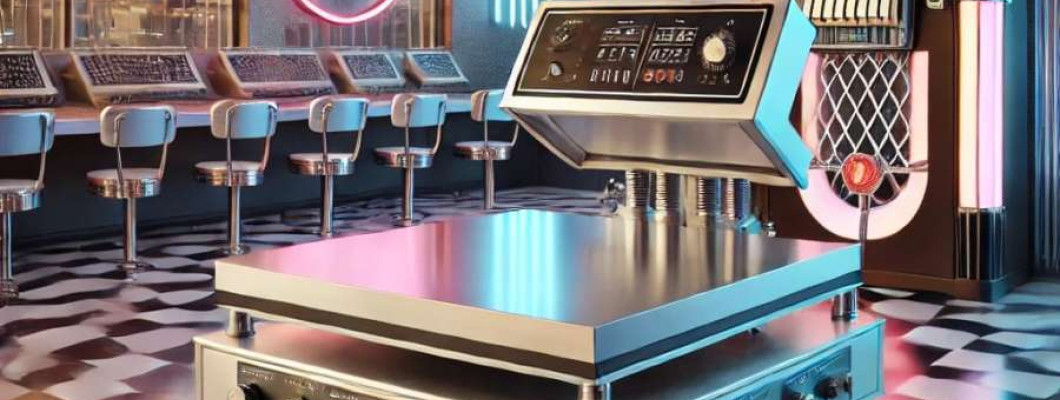
The Industrial Reality
In the evolving landscape of scalable manufacturing, integrating medium-format heat press machines such as the 40*60CM Heat Press Machine into existing production lines presents a nuanced challenge. Scalable business owners must not only consider throughput but must rigorously understand the thermal management interplay, labor ergonomics, and automation compatibility that define seamless workflow integration. Industrial heat press units with a 40 by 60 centimeters platen size serve as a bridge between small-scale artisanal production and fully industrialized mass manufacturing. However, this size class sits at a critical nexus where operational bottlenecks often surface if infrastructure compatibility is overlooked.
For example, the duty cycle of the heat press—commonly rated for continuous runs of approximately 8–10 hours per day—demands harmonization with upstream and downstream processes such as textile pre-treatment or post-press curing. Failure to align the heat press's operational cadence with conveyor speeds or robotic arms leads to throughput mismatch and labor idleness, negatively impacting the overall production line efficiency. Moreover, electrical supply limitations and heat dissipation requirements introduce additional integration complexities in facilities without dedicated thermal management architectures.
Consider a scenario where a scalable business owner aims to expand production capacity for custom sublimation printing. The 40*60CM platen size offers a sweet spot for medium-sized garment substrates but requires precision in timing and temperature control. If the heating element's power draw peaks at 1500 Watts with rapid thermal ramp-up rates to 220°C, the existing infrastructure must accommodate this without causing voltage drops or thermal overburden. Additionally, the machine’s physical footprint, approximately 70cm x 90cm x 40cm with a weight around 35kg, demands ergonomic placement within tight factory floor layouts to maintain safe and efficient operator interaction.
Integrating such equipment further requires synchronization in control systems—digital temperature and time controllers must interface, directly or indirectly, with Production Management Systems (PMS). A lack of standardized communication protocols can generate information silos, impairing real-time monitoring and preventive maintenance planning. Cumulatively, these factors illustrate the multifaceted challenge scalable business owners face when embedding a 40*60CM Heat Press Machine into their industrial infrastructure.
Technical Deep-Dive
Thermal Dynamics and Power Consumption
The 40*60CM Heat Press Machine utilizes a nichrome resistance heating element embedded in an aluminum platen, enabling rapid heat transfer. Estimating the platen's thermal mass (aluminum density = 2700 kg/m³, specific heat capacity = 900 J/kg°C), with a platen approximate volume of 0.00144 m³ (0.4m x 0.6m x 0.006m thickness), yields a mass of 3.88 kg. The energy required to raise the platen temperature from 25°C to 220°C is Q = m x c x ΔT = 3.88 kg x 900 J/kg°C x 195°C = 681,540 Joules. Assuming a nominal power input of 1500 Watts, theoretical heat-up time is Q/P = 681,540 J / 1500 W = 454 seconds (~7.6 minutes). However, insulation and design efficiency reduce actual heat-up time to approximately 4-5 minutes, indicating an effective insulation coefficient reducing heat loss.
Control System Precision and Cycle Timing
The unit features a PID (Proportional-Integral-Derivative) controller for temperature stability within ±1°C, essential for consistent transfer quality. Cycle time per press averages 30-40 seconds, including heating, dwell, and release phases. This throughput supports 90-120 presses per hour if adequately staffed or automated. However, scalability requires integrating this timing parameter with upstream loading and downstream unloading mechanisms, demanding synchronization within ±0.1 seconds to avoid bottlenecks.
Physical Footprint Vs. Floor Layout Optimization
The 0.063 m² footprint, weighted at ~35 kg, necessitates floor layout planning for optimized material flow and operator ergonomics. For continuous operation, considerations include clearance for heat dissipation (minimum 20cm around the platen), safety zones to prevent operator burn injuries, and proximity to material handling stations. An industrial environment might benefit from mounting the press on height-adjustable tables (optimal height 90 cm) to reduce repetitive strain injury risks.
Integration with Automation and Software Systems
Modern scalable operations benefit from Industry 4.0 protocols. While the 40*60CM Heat Press Machine employs a digital interface, it lacks native OPC UA or MQTT communication support. Retrofitting with PLC (Programmable Logic Controller) interfaces or IoT-enabled sensors can provide real-time status monitoring, predictive maintenance alerts, and integration with Manufacturing Execution Systems (MES). This enables uptime maximization and operational transparency critical for business scaling.
Comparative Table Between Manual and Semi-Automatic Integration Approaches
| Parameter | Manual Operation | Semi-Automatic Integration |
|---|---|---|
| Labor Intensity | High (operator dependent) | Moderate (requires operator but assisted) |
| Throughput (presses/hour) | 90-110 | 120-140 |
| Cycle Time Variance | ±5 seconds | ±0.1 seconds |
| Integration Complexity | Low | High (requires interface customization) |
| Operator Fatigue Risk | High | Low |
| Initial Capex | Lower | Higher |
Scenario Analysis
Scenario 1: Boutique Apparel Manufacturer Scaling Production
The manufacturer requires increased throughput without compromising heat press quality. The 40*60CM platen size allows printing medium garments in batches of 100+ per shift. Integration challenges include synchronizing manual feeding with a semi-automated unloading station. The thermal ramp-up and cycle timing precision ensure consistent sublimation quality, but ergonomics must be addressed to prevent operator fatigue. The investment in semi-automation reduces bottlenecks and labor dependency, enhancing production reliability.
Scenario 2: Mass Customization Facility with High Substrate Diversity
Faced with substrates ranging from cotton to polyester blends, the scalable business owner must leverage precise temperature and pressure control. The 40*60CM platen's dimensional versatility supports varying template sizes, but rapid switching between jobs requires robust control system reproducibility. Integration with MES enables job scheduling and minimizes downtime, although electrical infrastructure upgrades may be necessary to accommodate peak power draws during rapid cycling.
Scenario 3: OEM Component Manufacturer Implementing Heat Transfer Decals
This use case prioritizes cycle time and production consistency. The 40*60CM Heat Press Machine provides an industrial-grade platform, but lack of native automation interfaces demands custom PLC integration. Thermal inertia calculations support energy consumption forecasting, critical for budgeting operational costs. Heat dissipation and cooling station placement must be carefully planned within a compact production line to comply with safety regulations and maintain uptime.
Expert FAQ
- How does platen thickness impact thermal response times and uniformity?
- Thicker platens increase thermal mass, delaying the heat-up time but improving temperature uniformity across the surface. The 6mm aluminum platen balances rapid heat-up (~4-5 minutes) with consistent temperature distribution essential for uniform transfers.
- What are the implications of continuous duty cycle operation on heating elements?
- Continuous operation accelerates wear on heating elements due to thermal cycling stress. The nichrome elements in this machine are rated for 10,000+ hours but require scheduled inspections every 1,000 operational hours to prevent unexpected failures.
- Can the 40*60CM Heat Press Machine be integrated into PLC-controlled production lines?
- While the unit lacks native PLC communication, external sensors and relays can be retrofitted to achieve partial integration. This enables control of start/stop sequences and temperature monitoring but may require custom engineering solutions.
- How does the machine handle variations in ambient temperature affecting press consistency?
- The PID controller dynamically adjusts power input to maintain the set temperature despite ambient fluctuations between 15°C and 35°C. However, extreme ambient conditions may require supplementary environmental controls.
- What maintenance practices optimize uptime for scalable operations?
- Regular cleaning of platen surfaces, inspection of electrical wiring, calibration of temperature sensors, and verification of mechanical components every 500 operational hours ensure peak performance and minimize downtime.
Strategic Verdict and Recommendation
After a rigorous analysis of the 40*60CM Heat Press Machine's integration challenges within scalable industrial contexts, it emerges as a technically sound, viable solution. Its balance of platen size, thermal performance, and control system precision positions it to serve as a cornerstone asset for medium-scale production lines. Despite lacking advanced native automation interfaces, its retrofit potential and physical design enable compatibility with evolving Industry 4.0 infrastructures. Scalable business owners aiming for throughput expansion, labor cost management, and operational consistency will find this heat press reliable when integrated with tailored controls and ergonomic workflow design.
For those considering deployment, the machine’s specifications align well with the demands of diversified substrate processing and moderate automation upgrades. To acquire or evaluate this equipment further, consult the official product page: 40*60CM Heat Press Machine.