
Infrastructure Integration Challenges of the A3 Roll DTF Printer T-shirt Printing Machine for Scalable Business Owners
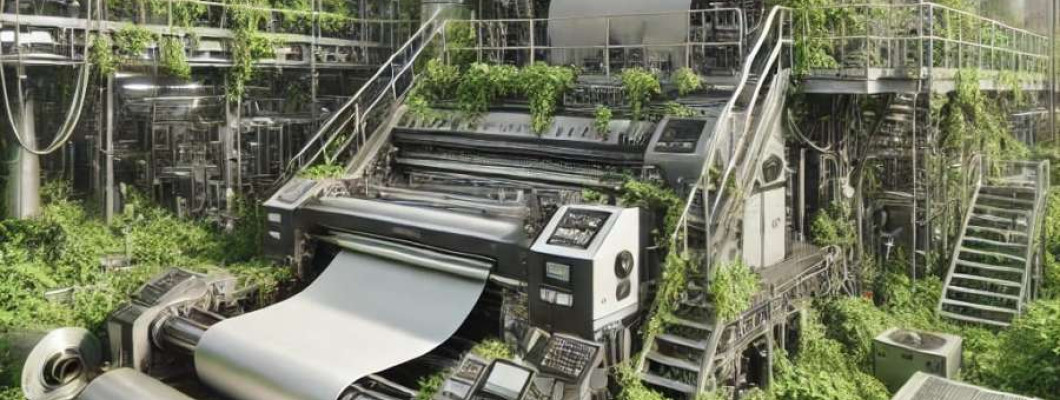
The Industrial Reality of Integrating A3 Roll DTF Printers into Large-Scale Production
Industrial-scale apparel printing facilities operate at tight throughput windows, balancing automation, labor efficiency, and equipment uptime. Introducing a technically complex device like the A3 Roll DTF Printer T-shirt Printing Machine into an existing production ecosystem is more than just a plug-and-play operation. This device, designed to print directly on fabric rolls, must mesh with conveyor systems, curing ovens, and inventory handling workflows. A typical bottleneck arises when the printer’s communication protocols, physical footprint, and material feed mechanisms are incompatible with legacy infrastructure. These challenges manifest as throughput deficits, increased manual interventions, and delayed order fulfillment.
Imagine a mid-size T-shirt printing company transitioning from flatbed screen printing to the A3 Roll DTF printer to meet rising demand for custom prints. The existing production line uses automated roll feeders, batch drying chambers, and inline quality control cameras synchronized via a central PLC (Programmable Logic Controller). The A3 printer’s proprietary control interface and roll handling dimensions differ, requiring custom engineering to physically integrate and digitally synchronize the unit. Without these adaptations, downtime rises, and throughput per RU (rack unit) decreases by an estimated 15-20%.
Furthermore, thermal management and ink curing times impose operational constraints. The printer’s heat demands and ventilation needs can exceed the capacity of the installed exhaust systems, creating hotspots that accelerate wear on adjacent machinery and increase ambient heat beyond operator comfort thresholds. These factors necessitate a dedicated HVAC assessment and possible infrastructure augmentation prior to deployment.
Technical Deep-Dive into Integration Parameters and Hardware Metrics
Printhead Technology and Roll Feed Mechanism
The A3 Roll DTF printer employs piezoelectric printheads optimized for pigment ink deposition onto transfer film. These printheads operate at an optimal firing frequency of approximately 30 kHz with droplets sized at 7 pl (picoliters) for fine color gradients. The roll feed system uses tension-controlled rollers with a maximum feed speed of 1.2 m/min to maintain print registration accuracy within ±0.1 mm per revolution.
Interface Protocols and Synchronization
Unlike many industrial printers that utilize standardized Gigabit Ethernet or RS-485 interfaces, the A3 Roll DTF printer features a proprietary USB 3.0-based communication bus. This imposes data throughput ceilings roughly capped at 400 MB/s under ideal conditions but presents latency spikes when integrating with PLC-controlled lines which typically expect real-time deterministic protocols such as EtherCAT or PROFINET.
Thermal and Power Consumption Profile
Operating power peaks at 1200 Watts during printhead heating and curing cycles, with an average steady-state consumption around 650 Watts. The thermal output translates to approximately 4100 BTU/hr, demanding a ventilation system capable of at least 0.5 air changes per minute in a 30 m3 room to avoid heat accumulation. Failure to address this causes thermal throttling and printhead degradation, thereby increasing maintenance cycles.
Physical Footprint and Modular Scalability
The printer footprint measures 1450 mm length, 850 mm width, and 650 mm height. While compact for its category, it requires a minimum clearance of 500 mm on all sides to allow for roll loading and maintenance access. This dimensioning impacts line layout and demands modular conveyor adaptations, particularly when integrating multiple units for parallel throughput scaling.
Comparing Integration Approaches in Infrastructure
| Parameter | Direct Roll Feed Integration | Intermediate Roll Buffer Integration |
|---|---|---|
| Throughput Impact | Up to 10% bottleneck without synchronization | Less than 5% bottleneck, smoother line flow |
| Integration Complexity | High – requires custom PLC drivers | Medium – buffer acts as decoupler |
| Maintenance Frequency | Higher due to stress on rollers | Reduced wear with buffer storage |
| Capital Cost | Lower initial investment | Higher due to buffer hardware |
| Scalability | Limited by feed mechanics | More scalable with parallel lines |
Scenario Analysis Evaluating Business Applications
Use Case 1 – Small Batch Custom T-shirt Production
For boutique businesses producing fewer than 500 shirts monthly, the printer’s footprint and manual roll loading requirements present minimal disruption. The direct integration method is feasible without major infrastructure changes. However, throughput constraints appear if orders scale without adding automation.
Use Case 2 – Mid-tier Apparel Printing Factory
Mid-level operations benefit from installing intermediate roll buffers and upgrading communication protocols with custom middleware solutions. This reduces downtime and facilitates near-continuous operation, but requires a sizeable CAPEX for integration engineering and HVAC upgrades.
Use Case 3 – Large-scale Industrial Textile Manufacturer
High-throughput environments face challenges accommodating the printer’s proprietary interfaces. Integration demands deploying dedicated server-grade synchronization units and redesigning conveyor logistics to maintain over 1,000 shirts per shift without throughput loss. In this case, balancing multiple A3 Roll DTF printers in parallel lines with buffer zones can maximize utilization.
Expert FAQ on Infrastructure Integration Challenges
Q1: What are the key latency issues when connecting the printer to a PLC-controlled line?
A1: The USB 3.0 interface lacks real-time data determinism, causing variable latency spikes that disrupt line synchronization. Middleware buffering is often necessary.
Q2: How does the printer’s thermal output affect adjacent machinery?
A2: Thermal accumulation can increase ambient temperatures by 5-7°C near sensitive electronics, accelerating component wear and triggering thermal throttling in nearby equipment.
Q3: Can the printer’s roll feed system be customized for wider rolls?
A3: The current design supports up to 330 mm width rolls. Extending beyond this requires mechanical redesign of tension rollers and firmware adjustment.
Q4: What maintenance challenges arise from integration delays?
A4: Increased manual interventions due to synchronization failures accelerate printhead wear and increase downtime, raising costs.
Q5: How to optimize power consumption during peak operation?
A5: Implementing power cycling for inactive modules and optimized printhead heating profiles can reduce peak load by up to 15%.
Strategic Verdict and Recommendation for Scalable Businesses
The A3 Roll DTF Printer T-shirt Printing Machine offers a technically competent solution for businesses aiming to scale custom textile printing throughput. While the device exhibits integration complexities, particularly around communication protocols and thermal management, these challenges are addressable through targeted infrastructure investments, middleware development, and environmental upgrades. The printer’s compact footprint, pixel-level printhead control, and steady-state power profile position it as a viable asset in automated production lines aiming to improve flexibility and reduce labor costs.
For scalable business owners, the printer is recommended when paired with a well-planned infrastructure integration strategy that includes enhanced HVAC, custom PLC interfaces, and modular conveyor designs. Investing in these areas facilitates near-continuous operation, reduces failure rates, and maximizes ROI. The printer’s precise registration control and automated roll feeding support high-quality output that meets industrial-grade standards.
Further details and procurement can be accessed through the official manufacturer site: A3 Roll DTF Printer T-shirt Printing Machine.