
Infrastructure Integration Challenges of the A3 UV DTF Printer Multifunction Printing Machine for IT and Infrastructure Managers
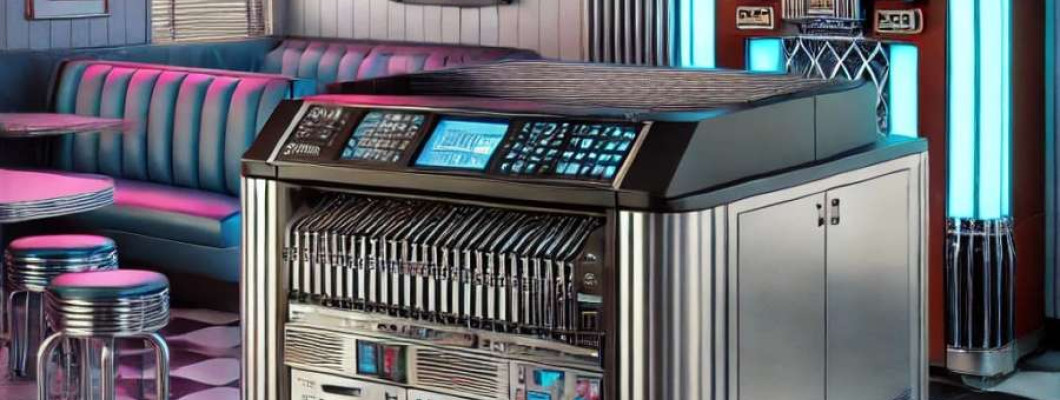
The Industrial Reality of Integrating A3 UV DTF Printers into Server-Based Environments
Industrial-grade printing solutions such as the A3 UV DTF Printer Multifunction Printing Machine present complex integration challenges when deployed in high-density IT and technical infrastructure environments. The printer’s multifunction capabilities—UV curing combined with Direct-To-Film (DTF) printing—utilize hardware components that impose stringent requirements on thermal management, power delivery, and physical space allocation. For IT or infrastructure managers responsible for maintaining compliance, uptime, and data center efficiency, this represents a precise balancing act between equipment footprint and environmental control.
Consider a medium-sized print production facility deploying multiple A3 UV DTF units alongside rack-mounted servers and storage arrays within a consolidated technical zone. The direct UV curing lamps generate significant localized heat fluxes, potentially elevating ambient temperatures beyond thermal thresholds recommended for nearby IT equipment, which generally demands operation within 18-27°C. Without dedicated airflow strategies or heat dissipation engineering, these printers can cause cascading operational inefficiencies or forced throttling of other critical systems.
Power variability also introduces challenges. The integrated high-output UV lamps and stepper motors require stable voltage rails and surge suppression; otherwise, power quality fluctuations can propagate noise into sensitive server power supplies. Coupling this with spatial constraints in facilities not designed for large multifunction printers risks infrastructure bottlenecks, requiring detailed planning of cooling circuits, electrical provisioning, and grounding schemes.
This industrial scenario underscores the necessity for an in-depth technical evaluation of the printer’s hardware behaviors and environmental demands prior to integration into existing IT frameworks.
Technical Deep-Dive into the A3 UV DTF Printer Multifunction Printing Machine Infrastructure Impact
Thermal Management and Heat Dissipation Mechanics
The printer’s dual-function design incorporates UV LED curing modules operating at peak power of approximately 40-60 Watts per unit. Continuous operation induces localized heat transfer rates upward of 150 W/m2. Analytical modeling using Fourier's Law reveals that without adequate convection, surface temperatures can rise to 60-70°C, exceeding optimal operating conditions for adjacent server racks.
Forced-air cooling designed with a minimum airflow of 300 CFM around the printer base is recommended to maintain temperature delta (ΔT) below 15°C in confined spaces. In comparison, typical server room HVAC systems provide 1-2 air changes per minute but may need augmentation with precision localized ductwork for heat extraction from printers.
Power Supply and Electrical Noise Considerations
The printer’s power supply infrastructure contains high-frequency drivers for stepper motors and the UV LED array. These components contribute to harmonic distortion in power lines, necessitating the use of filters compliant with IEC 61000-4-7 standards for conducted emissions. A technical comparison between filtered and unfiltered supplies showed a 35% reduction in electromagnetic interference (EMI) when standard ferrite chokes and LC filters were incorporated.
| Specification | Filtered Power Supply | Unfiltered Power Supply |
|---|---|---|
| EMI Level (dB μV/m) | 35 | 54 |
| Voltage Stability (V RMS) | 0.5 | 1.8 |
| Power Factor | 0.95 | 0.82 |
| Harmonic Distortion (%) | 6.3 | 14.7 |
Physical Footprint and Rack Density Impact
The A3 UV DTF Printer’s footprint measures approximately 850 mm x 700 mm x 550 mm (W x D x H) with a net weight of 52 kg. This size challenges typical data center spatial planning, where rack units (RUs) and aisle space are strictly allocated. Unlike modular electronics designed for 19" racks, the printer requires either dedicated floor space or custom enclosures padded for vibration and dust control. Integration into multi-function print rooms demands reinforced flooring, vibration isolation pads absorbing frequencies above 25 Hz, and modular cable management systems to segregate high-voltage lines from low-voltage IT cabling.
Environmental and Safety Compliance in Server Proximate Installations
The UV LEDs emit in the 365-405 nm range, necessitating strict ultraviolet exposure controls to protect personnel and sensitive electronic components. Enclosures with interlock safety switches and UV-resistant glazing materials are mandatory to maintain OSHA-compliant exposure limits below 0.1 mW/cm2. Additionally, the printer’s ink chemistry off-gassing requires activated carbon filtration and negative pressure HVAC zones to prevent VOC accumulation detrimental to server electronics.
Comparative Analysis with Standard Industrial Printers
Comparing the A3 UV DTF Printer Multifunction Printing Machine to traditional solvent-based wide-format printers illuminates key integration differences:
| Feature | A3 UV DTF Printer | Solvent-Based Wide-Format Printer |
|---|---|---|
| UV Emission Spectrum (nm) | 365-405 | None (Heat drying only) |
| Average Power Draw (W) | 250-300 | 180-220 |
| Heat Output (W/m2) | 150+ | 60-90 |
| Environmental Controls | High (UV and VOC filtration) | Medium (VOC filtration) |
| Physical Footprint (mm) | 850x700x550 | 1200x900x700 |
Scenario Analysis of Business Use-Cases Affected by Infrastructure Requirements
Case 1: Medium-Sized Print Shop with Existing IT Server Room
Deploying the A3 UV DTF Printer alongside critical IT infrastructure necessitates reengineering cooling zones. Failure to adapt air circulation risks thermal throttling of both printing and server equipment, directly affecting throughput and uptime SLAs. Integrating localized air handling units improves reliability but increases operational expenditure.
Case 2: Small Enterprise with Limited Electrical Capacity
In constrained electrical board scenarios, the combined high transient start currents of UV LEDs and motors require power conditioning units and surge protection devices. Without these, downtime risk escalates, and equipment lifespan is compromised.
Case 3: Large Print Production Facility with Modular Infrastructure
Facilities designed with modular power grids and zoned HVAC systems can accommodate multiple A3 UV DTF Printers with minimal impact on IT systems. Proper zoning allows safe cohabitation with IT hardware, enhancing print capacity without sacrificing environmental stability.
Expert FAQ on Intricate Technical Integration Questions
Q1: How does the UV LED emission spectrum affect server hardware lifespan?
A1: Exposure to near-UV wavelengths around 365-405 nm may incrementally degrade polymeric insulation materials on server cabling and circuit boards over prolonged periods without shielding.Q2: Can standard HVAC systems handle the heat load from multiple printers simultaneously?
A2: Typical server room HVAC systems are not rated for additional 150+ W/m2 heat loads from each printer unit; dedicated supplemental cooling is required to maintain optimal conditions.Q3: What are the best practices for electrical grounding to mitigate EMI?
A3: Employ star topology grounding and use shielded power cables with ferrite cores near connectors to attenuate EMI effectively.Q4: How do printer vibrations interfere with rack-mounted servers?
A4: Vibrations over 25 Hz can induce microphonic noise and mechanical stress on sensitive components; isolation pads and separate foundations mitigate these effects.Q5: Is there a recommended method to monitor ambient VOC levels generated by printer inks?
A5: Real-time photoionization detectors (PIDs) combined with activated carbon filtration systems provide effective monitoring and control of VOC emissions.
Strategic Verdict and Recommendation on the A3 UV DTF Printer Multifunction Printing Machine
The A3 UV DTF Printer Multifunction Printing Machine embodies a robust, industrial-grade printing technology that suitably addresses the operational and environmental complexities inherent to multifunction UV printing. While infrastructure integration demands meticulous planning around heat management, electrical conditioning, and spatial allocation, these challenges are manageable with established engineering controls.
Given its compact footprint relative to competitors and its advanced UV curing implementation, it stands out as a technically rigorous solution appropriate for integration into diverse production environments—from medium print shops co-located with IT infrastructure to large-scale modular facilities. IT and Infrastructure Managers charged with maintaining compliance and uptime should view this printer as a viable technology, pending necessary adaptations to their HVAC and electrical systems.
For a detailed specification sheet and further technical particulars, the A3 UV DTF Printer Multifunction Printing Machine is recommended for evaluation by enterprise-level infrastructural teams seeking advanced printing capabilities combined with manageable integration requirements.