
Infrastructure Integration Challenges of the A3 UV Varnish DTF Printer Machine Label Printer for Scalable Business Owners
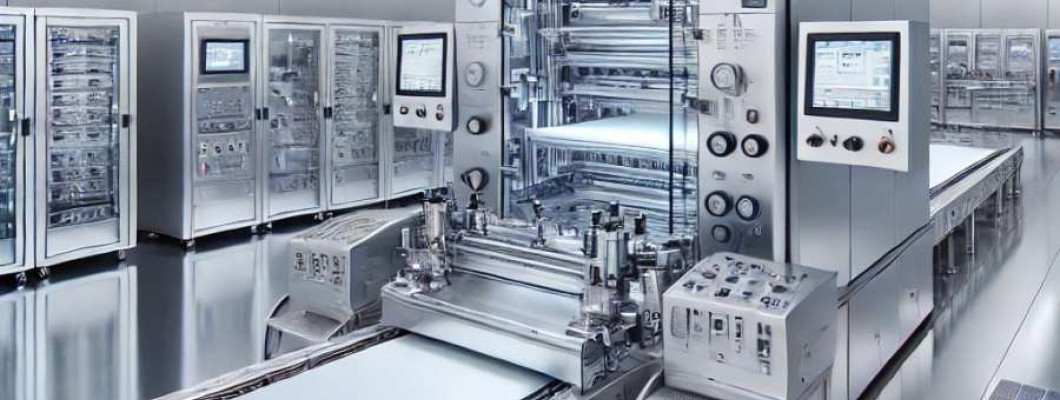
The Industrial Reality in Integrating A3 UV Varnish DTF Printers into Scalable Environments
Implementing the A3 UV Varnish DTF Printer Machine Label Printer within a high-throughput business environment reveals a multifaceted infrastructure puzzle. Facilities aimed at mass-production labeling must balance print speed, substrate compatibility, and operational continuity. Connectivity to existing automation lines and centralized control systems is paramount. This machine's integration challenges stem from the UV curing process's power demands, airflow and cooling requirements for consistent varnish quality, and synchronization with conveyor mechanisms. Additionally, businesses face potential bottlenecks in electrical supply stability due to intermittent UV lamp surges and the challenge of maintaining precise registration at speeds that approach industrial limits.
Another core operational consideration is the interaction between the printer’s digital control units and legacy factory management software. While the device boasts high precision with micron-level varnish application, the scalability hinges on its ability to interface with programmable logic controllers (PLCs) and real-time production monitoring. Environmental control within the print area—temperature, humidity, and particulate filtration—directly affects varnish adhesion and curing completeness, which can cause variabilities in throughput and quality if not tightly integrated with facility HVAC systems.
From a hardware standpoint, the device's footprint and power consumption profile require facilities to reassess rack densities and cooling infrastructure. The UV lamps introduce thermal loads that must be offset by dedicated heat dissipation strategies. Without addressing these infrastructure nuances, a scalable operation risks incurring unexpected downtime and quality degradation, eroding the potential return on investment.
Technical Deep-Dive into Infrastructure Challenges and Hardware Capabilities
Power Supply and Electrical Load Management
The A3 UV Varnish DTF Printer’s UV curing lamps consume peak power surges upwards of 1.2 kW each during activation cycles. Assuming a standard production line integrating two such printers operating simultaneously, electrical infrastructure must accommodate transient loads exceeding 2.4 kW plus ancillary control electronics at approximately 200 W per unit. This requires facility power circuits rated for continuous 3 kW loads with surge capacity and clean sine wave output to avoid damage to sensitive printhead drivers.
Thermal Dissipation and Cooling
UV lamps generate approximately 60% of their power consumption as heat, translating to roughly 720 W in thermal gain per lamp. Maintaining ambient printhead temperatures below 40°C is critical to prevent varnish viscosity shifts and print registration drift. Facilities must integrate liquid-cooled heat exchangers or high-capacity forced ventilation achieving air exchange rates of minimum 15 ACH (Air Changes per Hour) to stabilize printing environment conditions.
Data Interface and Automation Integration
The printer communicates via industrial Ethernet (1000Base-T) and supports OPC UA protocol for real-time job tracking. This facilitates integration with MES (Manufacturing Execution Systems) but requires network infrastructure with sub-1 ms latency and jitter below 5 ms for synchronization with conveyor belt speed sensors. Legacy systems using RS-232 or USB require protocol converters or middleware, increasing system complexity by 12-18% in integration time.
Printhead and Varnish Application Physics
The varnish application utilizes piezoelectric printheads operating at frequencies of 30 kHz with droplet volumes of 6 pl. To maintain micron-level precision, the ink flow rate (measured in nl/s) must be regulated within ±2% variance to avoid print defects such as banding or clogging. The curing UV intensity must reach at least 250 mW/cm² uniformly across the print width to ensure instantaneous polymerization of the varnish layer without compromising substrate integrity.
Environmental Controls for Adhesion and Cure Quality
Optimal varnish adhesion occurs between 20-25°C temperature range and relative humidity of 40-50%. Variance beyond ±5°C or ±10% RH can cause incomplete curing or surface tackiness, impacting downstream handling and packaging. Facilities must deploy precise HVAC control zones localized to the print and curing area with sensors feeding back into control algorithms to modulate airflows and temperature setpoints.
| Parameter | Direct Integration | Middleware Conversion |
|---|---|---|
| Network Latency (ms) | <1 | 5-10 |
| Integration Complexity | Base Level | +15% Effort |
| Printhead Control Precision | ±2% | ±4% |
| Operational Downtime Risk | Low | Medium |
| Power Consumption (kW) | 3.2 | 3.2 + Extra for Middleware |
Scenario Analysis Explaining Business Impact of Infrastructure Parameters
Scenario 1: High-Volume Consumer Goods Labeling Facility
In a facility producing thousands of labels per hour, the ability to maintain uninterrupted UV curing cycles without thermal throttling determines throughput efficiency. Integration of the printer’s Ethernet protocol with existing MES ensures print job queueing and real-time error detection. Failure to provide stable power and cooling leads to printhead damage and varnish defects, causing costly downtime.
Scenario 2: Boutique Packaging Operation Scaling to Industrial Size
Here, the legacy control systems necessitate significant middleware development to bridge communication gaps. While the printer’s micron precision meets artisan standards, achieving scalable throughput requires investment in network upgrades and HVAC improvements. Without this, varnish adhesion inconsistencies emerge, reducing product yield.
Scenario 3: Multi-Shift Label Production Line with Automated Material Handling
In continuous 24/7 operation, printhead and UV curing lamp replacement schedules hinge on infrastructure stability. Power surges or poor environmental control accelerate wear. Implementing a redundant cooling system and uninterruptible power supply (UPS) systems becomes critical to avoid catastrophic production stoppages.
Expert FAQ Addressing Complex Integration Questions
Q1: What are the critical power quality specifications for stable printer operation?
A1: Voltage stability within ±2%, Total Harmonic Distortion (THD) below 5%, and uninterruptible supply during lamp ignition cycles minimize damage risks.
Q2: How does HVAC control precision affect varnish curing consistency?
A2: Temperature and RH sensors with ±0.5°C and ±2% accuracy linked to PID controllers reduce cure variability by up to 20% compared to ambient conditions.
Q3: Is the Ethernet-based control interface compatible with industrial IoT solutions?
A3: Yes, the printer supports OPC UA and MQTT protocols which can be integrated into IIoT platforms for advanced analytics.
Q4: How does printhead droplet volume variance impact long-run maintenance?
A4: Variances beyond ±2% increase nozzle clogging rates, requiring more frequent cleaning cycles, thus raising maintenance frequency by approximately 30%.
Q5: What are the risks of insufficient thermal management during extended print runs?
A5: Overheating causes varnish viscosity changes, print registration errors, and decreased UV lamp lifespan, potentially halving operational uptime.
Strategic Verdict and Recommendation for Scalable Businesses
After comprehensive analysis, the A3 UV Varnish DTF Printer Machine Label Printer stands as a viable industrial-grade solution for scalable production environments, conditioned on appropriate infrastructure adaptation. Its advanced varnish application precision, combined with high-quality UV curing, meets the demands of high-throughput label production when integrated within robust power, cooling, and network frameworks. While integration complexity may prompt initial facility upgrades, the long-term benefits in product quality, reduced downtime, and automation compatibility justify the investment. This printer is recommended for businesses prioritizing throughput automation and operational reliability over marginal initial costs, offering a resilient platform capable of withstanding scaling pressures inherent in industrial labeling workflows.