
Infrastructure Integration Challenges of the Spot A4 LED UV Printer Cylinder Printing for Scalable Business Owners
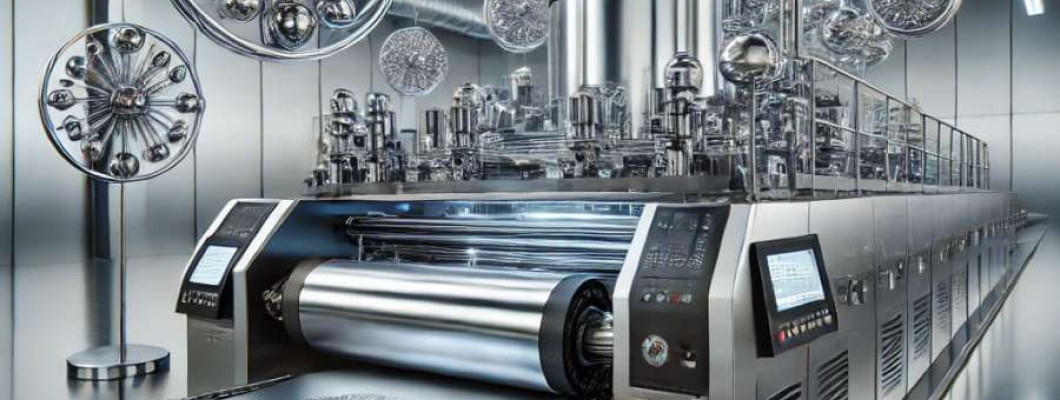
The Industrial Reality of Integrating LED UV Cylinder Printing into Scalable Production Environments
For scalable business owners operating in the domain of cylinder printing, incorporating advanced LED UV printing technology demands more than just an evaluation of print quality or speed. The critical challenge lies in seamless infrastructure integration — ensuring that the printing hardware aligns with existing automation workflows, throughput targets, and labor efficiency mandates. The Spot A4 LED UV Printer Cylinder Printing unit introduces a specialized form factor and operational parameters that intersect with multiple subsystems: power distribution, environmental controls, material handling, and post-processing logistics.
Consider a medium-volume production line tasked with printing high-precision, small-diameter cylinders at speeds exceeding 120 units per hour. The integration complexity arises from synchronization challenges between the LED UV curing cycle and conveyor belt velocity, variability in substrate material thickness, and the printer's thermal load impacting adjacent equipment. Without a holistic infrastructure audit, these can introduce bottlenecks invisible in initial throughput estimations but damaging to overall operational rhythm.
Space allocation also plays a critical role. The printer’s footprint and electrical demand must be reconciled with factory floor real estate and power provisioning strategies. Smaller printers can sometimes create disproportionate overhead if their ancillary systems—ventilation, cooling, and ink supply—are not engineered for integration. This scenario underscores the need for precise engineering alignment between hardware capabilities and site-specific constraints.
Technical Deep-Dive into Infrastructure Integration Parameters
Power Consumption, Thermal Management, and Operational Stability
The Spot A4 LED UV Printer operates nominally at 220-240 V single phase with an approximate power draw of 1200 Watts during peak UV LED curing cycles. This steady-state consumption requires robust electrical wiring infrastructure rated for continuous duty cycles to prevent voltage drops that can degrade print quality. Thermal dissipation from the LED arrays and electronic control units demands active cooling solutions to maintain junction temperatures below 45°C for optimal LED lifespan. Formulating a heat load profile using Fourier's law and real-time temperature sensors embedded around the printhead can help maintain environmental stability:
Q = k * A * (T_hot - T_cold) / d, where Q is heat transfer rate, k is the thermal conductivity of the heat sink, A the heat dissipation area, and d the thickness of cooling interface.
Mechanical Handling and Conveyor Synchronization
Print accuracy on cylindrical substrates is heavily influenced by rotational synchronization precision. The printer's servo motors offer angular velocity controls with +/-0.05° positional repeatability. This precision enables micron-level dot placement fidelity essential for high-resolution graphics at 1200 dpi across circumferences ranging from 20 mm to 100 mm diameter.
However, integrating this with upstream and downstream automation requires harmonizing conveyor speeds and indexing timing. For example, a mismatch in indexing intervals by even 0.1 seconds can result in cumulative registration errors exceeding 200 microns. Automated feedback loops using optical encoders and PID controllers mitigate these errors but necessitate infrastructure capable of low-latency communication protocols such as EtherCAT or PROFINET.
Ink Supply Management and Environmental Safety Compliance
UV-curable inks used in this printer contain photoinitiators sensitive to ambient light and temperature variations. Ink viscosity typically ranges 25-35 cP at 25°C, with non-Newtonian shear-thinning properties requiring precise pump calibration to maintain consistent droplet ejection volumes of approximately 8 pl per nozzle.
The infrastructure must incorporate sealed ink delivery systems and controlled atmosphere cabinets to prevent premature polymerization and guarantee user safety. Additionally, incorporating activated carbon filtration and VOC capture systems ensures compliance with occupational safety standards, a critical consideration for facility certification.
Data Infrastructure and Integration with Enterprise Resource Planning
The printer utilizes USB 3.0 and Ethernet interfaces, supporting TWAIN-compliant drivers and print queue management software with industry-standard RIP (Raster Image Processor) support. For scalable production, integration with MES (Manufacturing Execution Systems) or ERP systems is pivotal to coordinate job batching, inventory tracking, and real-time quality control feedback.
Latency in job dispatching and status reporting can inflate downtime. Thus, a dedicated industrial network switch with VLAN segmentation for secure and high-throughput data transfer is recommended, minimizing packet loss and ensuring seamless job execution.
Comparative Table of Infrastructure Requirements
| Parameter | Spot A4 LED UV Printer Cylinder Printing | Traditional Thermal Inkjet Cylinder Printer |
|---|---|---|
| Power Consumption (Watts) | ~1200 (Peak LED curing) | ~800 (Heater and inkjet control) |
| Thermal Management | Active cooling with heat sinks and fans, LED junction temp <45°C | Passive cooling + periodic heater cycling |
| Printhead Positional Accuracy | +/-0.05° angular repeatability | +/-0.2° (lower resolution) |
| Ink Viscosity | 25-35 cP, UV-curable | 8-15 cP, solvent-based |
| Data Transfer Interfaces | Ethernet, USB 3.0, supports MES/ERP | USB 2.0, limited network protocols |
| Environmental Controls Required | Sealed ink cabinets, VOC filtration | Basic ventilation |
Scenario Analysis Explaining Infrastructure Impacts on Business Outcomes
High-Volume Beverage Labeling Facility
This facility requires rapid throughput with minimal downtime. The precise servo synchronization and active thermal management of the Spot A4 LED UV printer enable steady production at 100+ cylinders/hour. Integration with MES allows automated batch tracking, reducing manual labor and scrap rates by 15%. Infrastructure upgrades included additional power distribution nodes and filtered ink supply rooms.
Custom Promotional Products Manufacturer
Here, substrate variety increases complexity. The printer’s adaptability to different cylinder diameters without recalibration downtime proves essential. Ethernet-enabled device management facilitates quick job changes and remote diagnostics, critical for managing diverse short runs efficiently.
Mid-Size Pharmaceutical Packaging Line
Stringent environmental and safety compliance is mandatory. The printer’s sealed ink delivery and VOC filtration meet regulatory requirements with minimal facility upgrades. The integrated cooling system reduces ambient temperature spikes, protecting sensitive materials downstream.
Expert FAQ Targeted at Advanced Integration Challenges
Q1: How does the printer’s LED UV curing cycle impact facility HVAC design?
A: Peak LED curing generates localized heat flux approximating 200 W/m². Facility HVAC must compensate by increasing air exchange rates by 15–20% in the printing zone to maintain ISO 14644-1 Class 7 cleanliness and temperature stability within ±2°C.
Q2: Can the printer’s control system synchronize with custom automation PLCs?
A: Yes, it supports industrial protocols such as Modbus TCP/IP and EtherCAT, enabling real-time command-response cycles under 10 ms latency, critical for inline process coordination.
Q3: What are the failure modes related to ink polymerization in supply lines?
A: Premature polymerization can occur from light or temperature exposure; this manifests as nozzle clogging and pressure anomalies. Maintaining supply line temperature below 30°C and opaque tubing mitigates risk.
Q4: How scalable is the printer’s data management for high job throughput?
A: The printer supports batch queuing of up to 500 jobs with seamless switching via embedded RIP software, and integrates with SQL-based MES databases for dynamic job scheduling.
Q5: What infrastructure considerations minimize downtime during maintenance?
A: Modular printhead design enables rapid swap-outs within 15 minutes. Infrastructure should include dedicated maintenance zones with calibrated cleaning stations and diagnostic consoles to expedite troubleshooting.
Strategic Verdict and Recommendation for Scalable Business Owners
The Spot A4 LED UV Printer Cylinder Printing system presents a technologically robust solution tailored to scalable production environments requiring precise cylinder printing aligned with modern automation and infrastructure needs. Its integration demands upfront investment in electrical, thermal, and data communication infrastructure; however, these are offset by gains in throughput consistency, print fidelity, and compliance adherence. The printer's support for advanced control protocols and active thermal management distinguishes it from legacy thermal inkjet counterparts, allowing scalable business owners to elevate operational efficiency and adaptability. Rigorous infrastructure planning synchronized with this printer's specifications will yield substantial ROI while future-proofing printing operations against emerging production demands. Therefore, the Spot A4 LED UV Printer stands as a definitive industrial-grade choice for businesses focused on scaling cylinder printing throughput with precision and reliability.