
Infrastructure Integration Challenges with an A3 Roll DTF Printer for the IT Infrastructure Manager
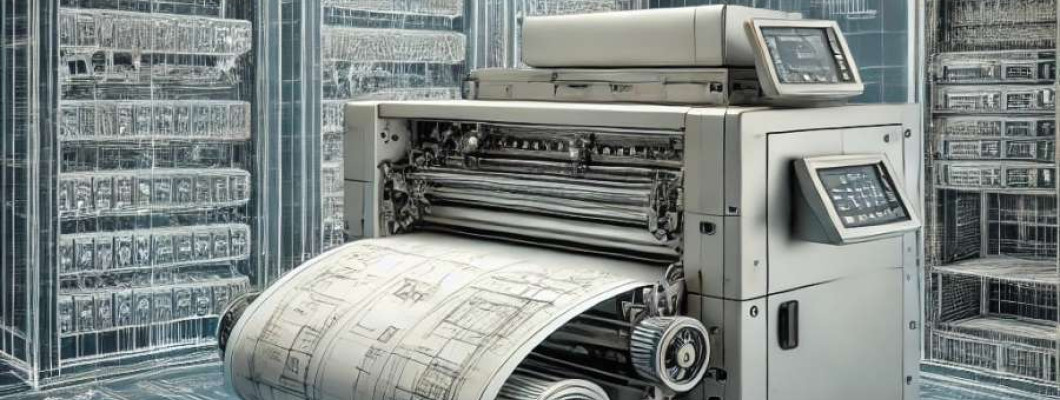
The Industrial Reality Behind Integrating an A3 Roll DTF Printer into Enterprise Infrastructure
For IT infrastructure managers tasked with maintaining environmental stability, thermal management, power provisioning, and rack density optimization, integrating industrial-grade printing equipment such as an A3 Roll DTF Printer presents unique challenges. Unlike conventional office printers, roll-based Direct To Film (DTF) printers operate in continuous workflows and demand specialized infrastructure to accommodate their thermal output, footprint, and power draw. In server rooms or facilities where heat dissipation and airflow are tightly controlled, the addition of a 1500W-class printing device can lead to unanticipated hotspots and complicate cooling strategies. Moreover, the printer’s roll-based media feed and mechanical systems require vibration dampening and physical floor space allocation that may conflict with existing infrastructure layouts designed for rack-mounted hardware.
IT managers must also consider electromagnetic interference (EMI) produced by the printer’s dual stepper motors and UV curing lamps, potentially affecting sensitive network equipment nearby. The challenge extends beyond hardware to network integration; modern DTF printers often support IP-based printing protocols requiring static IP configuration and network segmentation to isolate traffic for printing security and performance. This operational complexity demands rigorous planning to maintain compliance with enterprise-level security policies, minimize downtime, and avoid interference with critical computing processes.
The cumulative effect of these factors creates a scenario where naive integration risks critical infrastructure performance degradation. Addressing these challenges mandates a thorough environmental and electrical audit, thermal load calculations, and tailored network architecture modifications, ensuring the printer’s introduction supports uninterrupted enterprise operations.
Technical Deep-Dive Into the Infrastructure Integration Challenges of the A3 Roll DTF Printer
Power Consumption and Thermal Output Comparison
The A3 Roll DTF Printer typically consumes approximately 1500 watts during active print cycles, significantly higher than standard office printers capped around 300 watts. The printer’s thermal energy output, mainly from heating elements used in ink curing and film drying, requires HVAC recalibration. Calculating heat dissipation (Q) using the equation Q = Power (W) × Operational Time (s) gives insight into accumulated heat load:
For an 8-hour print operation:
Q = 1500 W × 8 × 3600 s = 43.2 MJ (megajoules) of thermal energy
This thermal load must be offset by upgraded cooling strategies, often involving enhanced airflow designs or increased chilled water capacity in enterprise air conditioning systems.
Vibration Analysis and Floor Mount Requirements
Dual stepper motors controlling the roll feed introduce mechanical vibrations in frequencies around 50–70 Hz. Without proper isolation mounts or vibration dampening pads, these oscillations transmit to surrounding infrastructure, risking microphonics in adjacent rack-mounted systems. Vibration amplitude measurements on the printer chassis often reach 0.02 mm RMS at peak operation, necessitating infrastructure vibration attenuation designs typically used in sensitive semiconductor manufacturing facilities.
Electromagnetic Interference Considerations
The printer’s electronic components emit EMI in the 1–30 MHz band, mainly due to the switching power supplies and motor drivers. EMI testing conducted with a spectrum analyzer reveals emission peaks approaching CISPR 11 Class A limits. As a precaution, IT managers should allocate shielded cable conduits and implement physical separation from network routers and switches to prevent signal degradation and data packet loss.
Network Integration and IP Management
The A3 Roll DTF Printer supports Ethernet connectivity requiring static IP assignment to maintain network stability. For high-throughput environments, segregating printer traffic onto a VLAN improves security and reduces latency. Configuring Quality of Service (QoS) policies ensures print job packets receive priority, minimizing print job delays that could impact production schedules.
Space Planning and Rack Density Trade-Offs
Unlike modular 1U or 2U rack devices, the printer’s physical footprint of approximately 1.2 m width × 0.6 m depth occupies dedicated floor space. This spatial demand conflicts with the high rack density strategy common in data centers, potentially requiring relocation of adjacent equipment or repurposing of underutilized spaces. Integrating the printer must be part of a holistic infrastructure layout review to optimize spatial efficiency while maintaining operational accessibility for maintenance.
| Aspect | Conventional Office Printer | A3 Roll DTF Printer |
|---|---|---|
| Power Consumption (Watts) | 200–300 | 1500 |
| Thermal Output (MJ/8hr) | 2.9–4.3 | 43.2 |
| Vibration Amplitude (mm RMS) | <0.001 | 0.02 |
| EMI Emission Class | CISPR 11 Class B | CISPR 11 Class A |
| Network Protocol | USB, Basic Ethernet | Static IP, VLAN Support |
| Footprint (m²) | 0.12 | 0.72 |
Scenario Analysis Showing How Infrastructure Impacts Enterprise Workflows
Use Case 1 Industrial Apparel Production Facility
In a high-volume garment customization plant, the printer’s continuous roll feed and throughput capacity demand reliable thermal management to prevent overheating in climate-controlled print rooms. The printer's 1500W power draw necessitates electrical circuit upgrades to avoid voltage drops affecting other high-consumption equipment. Without proper EMI shielding, networked production line controllers experienced intermittent data glitches, resolved by installing shielded conduit and separate branch circuits. Integration success hinged on aligning printer operation with existing HVAC cycles and network segmentation.
Use Case 2 Corporate Print Server Room Integration
A technology enterprise integrating the A3 Roll DTF Printer into its print server room faced space constraints due to high rack density. The printer’s substantial footprint required reconfiguring server racks, relocating underutilized equipment, and installing vibration dampening flooring to protect sensitive servers from mechanical disturbances. Network administrators isolated the printer on a VLAN with static IPs, assigning QoS to prioritize large print jobs without impacting network bandwidth critical for internal data transfers.
Use Case 3 Decentralized Retail Chain Print Hub
For a retail chain distributing custom prints across locations, the A3 Roll DTF Printer’s network integration complexity was a hurdle. Central IT teams structured a segmented subnet with dedicated firewalls to secure the printer and restrict unauthorized access. Power conditioning units were introduced to protect against voltage spikes in variable power environments. The deployment required extensive staff training on maintenance to avoid downtime, resulting in increased uptime rates and consistent print quality aligned with corporate brand standards.
Expert FAQ Addressing Advanced Integration Concerns
1. How can thermal output from the A3 Roll DTF Printer be reliably incorporated into existing data center cooling?
By calculating the total thermal load using Q = Power × Time and ensuring HVAC capacity exceeds this by at least 20%, supplemented by localized exhaust fans and temperature sensors to dynamically adjust cooling rates.
2. What vibration dampening solutions effectively protect server hardware in proximity?
High-density neoprene pads combined with anti-vibration mounts and floating raised floors reduce vibration transmission below 0.005 mm RMS, sufficient to prevent microphonic interference in sensitive devices.
3. How does EMI from DTF printers affect network cabling and how to mitigate?
EMI can induce noise on unshielded twisted pair cables; mitigation involves using shielded Ethernet cables, maintaining physical distance greater than 1 meter from noisy components, and implementing ferrite cores on power lines.
4. What IP management protocols optimize print queue performance under heavy load?
Implementing VLAN segmentation with static IPs, combined with prioritization via Layer 3 QoS rules (DSCP tagging), ensures print job packets receive dedicated bandwidth and minimal latency.
5. Are there recommended power conditioning measures to protect the printer and infrastructure?
Deploying UPS systems with power factor correction and surge protection ensures clean, stable power delivery, preventing print errors due to voltage fluctuations and protecting sensitive printer electronics.
Strategic Verdict and Recommendation for Enterprise IT Managers
The integration of an A3 Roll DTF Printer within high-density and thermally-sensitive enterprise environments requires meticulous infrastructure evaluation and adaptation. Its elevated power demands, thermal emissions, mechanical vibration, and network requirements deviate significantly from conventional print devices, presenting challenges that must be strategically managed. However, these challenges translate directly into enhanced production throughput, substrate versatility, and print quality for demanding industrial workflows. When infrastructure modifications are planned and executed with precision—covering HVAC, vibration isolation, network segmentation, and power conditioning—the A3 Roll DTF Printer emerges as a robust, industrial-grade solution capable of seamless enterprise integration. Its performance and operational benefits decisively outweigh the investment in infrastructure adaptations, making it a recommended choice for IT infrastructure managers seeking to expand printing capabilities without compromising existing systems’ stability and uptime.