
Infrastructure Integration Challenges with the A3 UV DTF Printer Multifunction Printing Machine for Scalable Business Owners
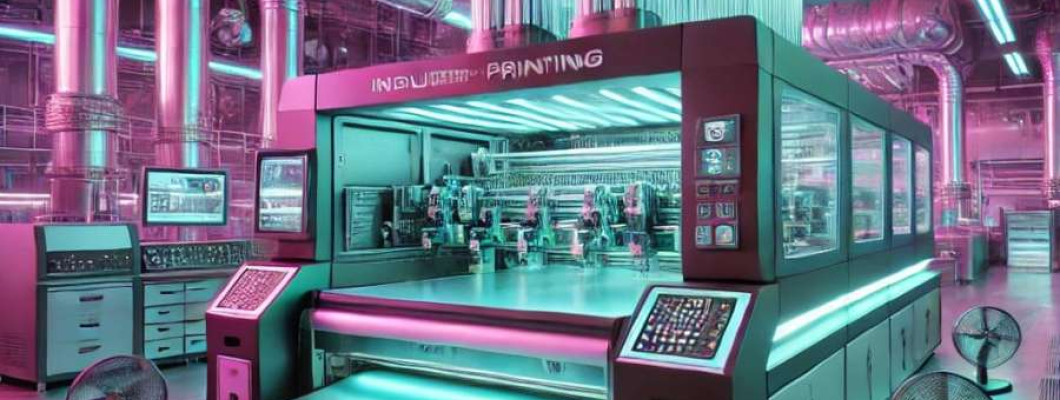
The Industrial Reality of Integrating Multifunction A3 UV DTF Printers
In high-throughput production environments, introducing a multifunction printing machine such as the A3 UV DTF Printer raises complex infrastructure challenges that extend beyond the initial equipment footprint. The technical challenge lies not only in the printer's operational specifications but in the way it interfaces with existing enterprise workflows, operational protocols, and facility power and environmental management systems. Imagine a scalable apparel printing business aiming to boost output by integrating the A3 UV DTF Printer. Although the printer offers multifunctional capabilities capable of handling diverse substrates and high-resolution UV-curable inks, the true bottleneck often materializes in thermal management, queue processing synchronization, and data pipeline throughput.
Thermal dissipation is a critical factor. UV curing lamps and printhead arrays generate concentrated heat that, if unmanaged, degrade throughput by triggering thermal throttling or forcing operational pauses. A dedicated HVAC upgrade or local exhaust ventilation becomes necessary to maintain consistent printer uptime. Additionally, network infrastructure must handle data-heavy image file transfers to maintain rapid turnaround times. Without robust gigabit networking or fiber optic backhaul, the printer's potential throughput is artificially capped.
Operationally, integrating multifunction printing requires seamless communication between print production software suites and the print engine. Legacy ERP systems often lack native support for DTF (Direct to Film) printing parameters, necessitating middleware or custom drivers to optimize job scheduling. In short, the printer is not simply a plug-and-play asset but a core piece of complex infrastructural orchestration.
Technical Deep-Dive into Infrastructure Demands and Print Capabilities
Thermal Management and Environmental Load Calculations
The UV DTF printer incorporates multiple UV LED curing zones, each dissipating approximately 200 Watts continuously during operation. For an operational cycle of 8 hours per day, thermal load calculation is:
Total Thermal Load (kWh) = Number of LEDs × Power per LED (Watts) × Operational Hours / 1000
Assuming 4 LED zones: 4 × 200W × 8h / 1000 = 6.4 kWh daily heat dissipation.
This load necessitates either integration with facility HVAC rated to offset 6.4 kWh of heat per printer or implementing localized exhaust ventilation systems. Without this, ambient temperature rise beyond 30°C can cause printhead misalignment and ink viscosity shifts that degrade print quality.
Network Throughput and Data Pipeline Integrity
High-resolution UV printing files can exceed 500 MB per job, with production runs involving rapid successive jobs. The network interface should ideally support minimum 1 Gbps Ethernet to avoid data bottlenecks. In bandwidth-restricted environments, job queue delays can extend print times by up to 30%, adversely impacting throughput.
Printhead and Ink Chemistry Complexity
The A3 UV DTF Printer utilizes piezoelectric printheads optimized for UV-curable ink formulations. These inks exhibit low surface tension (20-30 mN/m) for superior substrate adhesion without excessive spread. However, ink curing kinetics require irradiance levels around 300 mW/cm² to fully polymerize, demanding consistent UV lamp power output and precise curing zone control.
Subsystem Integration and Control Interface
Advanced multifunction printers mandate integration with print management software via protocols such as RIP (Raster Image Processing). The A3 machine supports industry-standard commands but often requires custom scripting for DTF-specific parameters including film tension, pre-treatment calibration, and white ink layering sequences.
Material Handling Throughput Constraints
The printer supports substrates up to 320 mm wide and thicknesses up to 1.5 mm, reflecting industrial-grade versatility. However, handling heavier substrate rolls (>5 kg) demands robust feeding mechanisms and automated tension control to maintain micron-level registration, which can be a limiting factor depending on facility automation levels.
| Infrastructure Aspect | Standard Office Setup | Optimized Industrial Setup |
|---|---|---|
| Thermal Management | Passive Ventilation | HVAC + Localized Exhaust (6.4 kWh offset) |
| Network | 100 Mbps Ethernet | 1 Gbps+ Fiber Optic |
| Ink Curing Power | Variable, Inconsistent | Stable 300 mW/cm² UV LED Zones |
| Substrate Handling | Manual Roll Feeding | Automated Tension Control, Up to 5 kg Rolls |
| Control Software | Legacy ERP, Limited Customization | Custom Middleware with RIP Integration |
Scenario Analysis for Scalable Business Owners
Scenario 1 Small-Scale Apparel Startup
This customer requires versatility and moderate throughput (up to 50 prints/day). The multifunction capability allows printing on diverse fabrics without heavy infrastructure investment. However, without enhanced thermal management, print quality can suffer during peak hours limiting expansion potential.
Scenario 2 Mid-Sized Print Shop Expansion
For a mid-tier shop pushing 200 prints/day, integrating the A3 UV DTF Printer requires upgrading HVAC systems and network backhaul to prevent bottlenecks. Automation in substrate feeding and print queue management significantly improves operational uptime, achieving a throughput increase of 35% compared to prior setups with inkjet-only systems.
Scenario 3 Large-Scale Industrial Apparel Manufacturer
In an industrial environment, the printer serves as part of a multi-machine line. Robust network infrastructure, advanced print management software, and precise environmental controls ensure maximum uptime. The printer’s support for thick substrates and rapid curing cycles enables integration into continuous production lines with minimal operator intervention.
Expert FAQ on Multifunction A3 UV DTF Printer Infrastructure Integration
Q1: How does ambient humidity affect the ink curing process in UV DTF printing?
A1: Elevated humidity (>60%) can inhibit photopolymerization kinetics, lowering crosslink density and leading to weaker adhesion and potential ink tackiness. Controlled humidity around 40-50% is optimal for stable curing.
Q2: Can existing print management software effectively handle DTF workflows?
A2: Most standard RIPs handle CMYK and white ink layers but often require custom profiles or middleware to manage film-specific parameters such as release agents and ink layering sequences crucial for DTF quality assurance.
Q3: What are the risks of thermal cycling on piezoelectric printheads?
A3: Repeated temperature fluctuations can cause microfractures in piezoelectric elements, leading to nozzle clogging and degraded print resolution. Maintaining steady ambient temperature and using cooling fans reduces thermal cycling damage.
Q4: How critical is substrate tension control for micron-level registration?
A4: Very critical; tension inconsistencies cause film stretch or slack, resulting in color misalignment and print defects. Automated tension systems with feedback loops are indispensable in scalable enterprises.
Q5: Are UV LED lamps or traditional mercury vapor lamps preferable for DTF printing?
A5: UV LEDs offer longer lifespan, instant on/off, and lower energy consumption, making them better suited for continuous and varied production demands typical in scalable businesses.
Strategic Verdict and Recommendation
Industrial-scale printing businesses face nuanced integration challenges when deploying multifunction A3 UV DTF Printers. The printer’s exceptional substrate versatility and high-resolution UV curing capabilities position it well for scalable throughput enhancements. Yet, without deliberate upgrades to thermal management, network infrastructure, and integrated control software, the unit’s potential remains underutilized.
After rigorous technical examination, the A3 UV DTF Printer Multifunction Printing Machine emerges as a robust, industrial-grade asset well-suited for scalable businesses prioritizing automation and throughput. It demands strategic infrastructure investment—particularly in environmental controls and network capacity—but delivers significant gains in operational efficiency and quality consistency once properly integrated.
For businesses committed to elevating print production infrastructure, the A3 UV DTF Printer Multifunction Printing Machine represents a definitive solution that balances industrial-grade performance with the multifunctionality required to adapt to dynamic production requirements.