
Infrastructure Integration Challenges with the A4 Roll DTF Printer for Scalable Business Owners
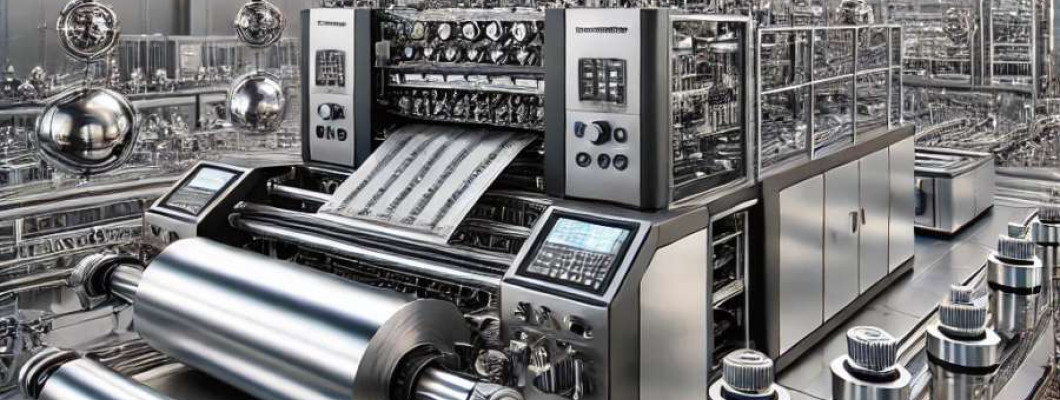
The Industrial Reality of Integrating A4 Roll DTF Printers into Production Lines
In an industrial-scale printing environment, scaling throughput while maintaining consistent quality demands seamless integration of hardware and infrastructure. The A4 Roll DTF Printer, designed to provide direct-to-film digital textile printing on a compact A4 media size, presents a compelling case for businesses prioritizing niche short-run and customization workflows. However, integrating this device into existing production ecosystems brings forth technical challenges around thermal management, data throughput, and physical footprint that can bottleneck operations if overlooked.
Consider a mid-sized apparel manufacturing facility transitioning from manual heat transfer methods to automated digital film printing. The A4 Roll DTF Printer must fit into the continuous web-fed roll-to-roll printing line, interfacing with pre-treatment stations, curing ovens, and downstream cutting or pressing equipment. Premature assumptions about compatibility can result in underutilization, necessitating costly retrofit or workflow redesign.
Additionally, the printer’s compact footprint might mislead operators into underestimating environmental controls needed in proximity, such as ventilation for solvent-based inks or thermal dissipation from high-frequency printhead operation. The interplay between device power consumption and overall plant electrical architecture may also require dedicated circuits or regulated power supplies to prevent fluctuations impacting print quality consistency.
From a network standpoint, the need for robust data transfer protocols to manage high-resolution raster files at 600 dpi or higher demands integration with enterprise-grade workflow software, potentially creating latency points if legacy infrastructure is retained. These practical considerations highlight the importance of mapping infrastructure capabilities prior to procurement and installation.
Hardware Architecture and Data Throughput Evaluation
The A4 Roll DTF Printer employs precision piezoelectric printheads calibrated to deposit ink droplets typically in the range of 5–15 picoliters (pl), ensuring detailed image reproduction at variable speeds. Hypothetically, with a print resolution of 600 dpi on a 210 mm wide roll and maximum permissible speed of 2 m/min, the effective data rate can be estimated.
Calculation of required data throughput involves pixel count per line: at 600 dpi horizontally, 210 mm (8.27 inches) translates to 4962 dots. Vertically, at 2 m/min (33.3 mm/s) and 600 dpi (23.62 dots/mm), the device prints approximately 787 dots per second vertically. Multiplying horizontal and vertical counts yields roughly 3.9 million dots per second. Assuming 8-bit color depth per dot and 4 color channels (CMYK or equivalent), the data rate approaches approximately 125 Mbps, excluding overhead for printer control commands and error correction.
This sets a lower bound on required network infrastructure bandwidth, suggesting that connection via Ethernet or USB 3.0 interfaces is suitable, but legacy USB 2.0 or slow Wi-Fi networks could introduce unacceptable delays.
Thermal Management and Power Draw Considerations
Piezoelectric heads inherently generate heat during prolonged operation owing to rapid actuation cycles. Typical power consumption for similar DTF printers is in the range of 250–350 Watts continuous. This translates to approximately 1,125–1,575 kJ of thermal energy dissipated per hour of active printing.
Without proper ventilation or heat sinks in the immediate vicinity, the ambient temperature rise near the printer can exceed 5°C above room temperature, affecting ink viscosity and drying times. Industrial facilities with tight temperature control must incorporate dedicated ventilation or localized cooling solutions to stabilize print consistency.
Physical and Network Integration Challenges
Comparative analysis of two integration approaches is summarized below:
| Parameter | Direct Roll-to-Roll Inline Integration | Standalone Batch Processing Setup |
|---|---|---|
| Physical Footprint | Compact; integrates inline but requires precise alignment and feed synchronization | Requires separate staging area; higher floor space utilization but flexible scheduling |
| Network Requirements | Real-time data streaming with minimal latency; demands enterprise-grade Ethernet | Batch file upload; tolerant to intermittent connectivity, USB 3.0 suffices |
| Thermal Control | Continuous operation necessitates cooling systems; heat dissipation equipment integrated | Intermittent runs reduce heat accumulation; standard HVAC adequate |
| Workflow Complexity | High; requires synchronized process management software and quality control | Moderate; manual intervention possible, easier error isolation |
| Scalability | High; can support continuous production at scale | Lower; suited to prototyping or short-run orders |
Ink Chemistry and Material Compatibility Impact on Infrastructure
The A4 Roll DTF Printer typically utilizes aqueous pigment inks formulated for flexibility and wash durability. This solvent-free composition reduces volatile organic compound (VOC) emissions, easing environmental compliance burdens. However, building HVAC systems must still account for humidity and particulate control since film substrates can generate dust or static during handling.
Ink drying usually requires downstream curing stations operating at 90–110°C for 60–90 seconds. Integrating appropriate conveyor ovens or infrared drying modules must consider plant floor load ratings and power capacity. Cumulative power draw at these stages can exceed the printer’s own consumption by a factor of 2–3, further influencing electrical infrastructure planning.
Scenario Analysis of Practical Business Use Cases
1. Mid-Scale Apparel Manufacturing Facility
Prioritizes inline integration to maintain continuous fabric roll throughput. The key metric is synchronization of the A4 Roll DTF Printer with upstream pre-treatment and downstream heat press modules. Success depends on ensuring thermal management within the production cell and upgrading network infrastructure to support 125+ Mbps data streams.
2. Customized Short-Run Print Shop
Operates the printer in a batch mode for on-demand orders. Benefits include reduced complexity in physical layout and flexible scheduling. Thermal loads are manageable with existing HVAC, but throughput is limited by batch data transfers and manual media handling.
3. Multi-Site Franchise Network
Focuses on replicable infrastructure templates across locations. Emphasizes standardizing power supply specs and network configurations for uniform integration of the A4 Roll DTF Printer. Environmental controls must be calibrated for diverse locations, ensuring consistent print quality despite regional climatic variations.
Expert FAQ
Q1 How critical is power quality for consistent printhead performance?
High. Voltage fluctuations cause piezo head misfires or inconsistent droplet sizes, leading to banding or color shifts. Dedicated, regulated power supplies with surge protection are recommended.
Q2 What network protocols optimize data transfer for raster images to the printer?
TCP/IP over Ethernet with support for UDP bursts or proprietary high-speed print server protocols reduces latency. USB 3.0 is suitable for local direct connections but limits remote operations.
Q3 How does ambient humidity affect ink adhesion and curing?
High humidity can cause ink spread or slower drying; low humidity raises static issues on film substrates. Maintaining 40–60% relative humidity stabilizes print fidelity.
Q4 What is the anticipated printhead lifespan under continuous operation?
Typically 2000–3000 print hours before significant degradation, assuming proper maintenance and quality ink usage.
Q5 Can the A4 Roll DTF Printer handle specialty films with different thicknesses or coatings?
Yes, but substrate thickness beyond 200 microns or non-standard coatings may require calibration of platen pressure and height to avoid head strikes or print artifacts.
Strategic Verdict and Recommendation
The A4 Roll DTF Printer provides a versatile and compact solution for businesses seeking precise direct-to-film printing capabilities with manageable integration complexity. Its piezoelectric printhead architecture and moderate power consumption align well with scalable industrial setups when supported by appropriate thermal management and network infrastructure upgrades.
This printer's footprint and data throughput profile make it particularly suitable for mid-scale apparel manufacturers and customized short-run providers aiming to streamline workflows without extensive facility overhaul. The environmental compliance benefits of aqueous inks further alleviate operational constraints.
Considering these factors, we explicitly recommend integrating the A4 Roll DTF Printer as a core printing component for scalable business owners focused on throughput optimization and automation readiness. Proper infrastructure planning ensures long-term uptime, print consistency, and measurable ROI in industrial-grade production environments.