
Infrastructure Integration Challenges with the Headstone Photo Printer Tomb Photos Printer for the IT/Infrastructure Manager
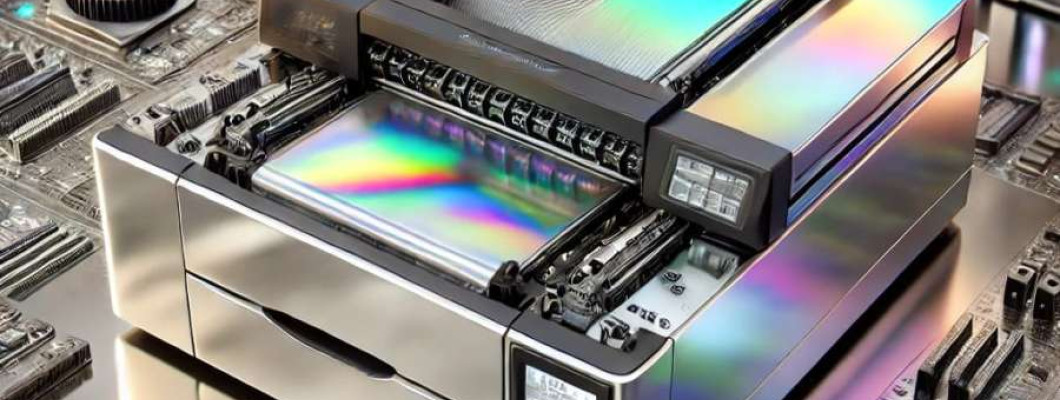
The Industrial Reality of Integrating a Headstone Photo Printer in Enterprise Settings
Deploying a specialized printing device such as the Headstone Photo Printer Tomb Photos Printer in large-scale or enterprise environments reveals unique infrastructure challenges that extend beyond typical office printers. These challenges manifest in thermal management, electrical load balancing, physical space allocation, and compliance with data security protocols. Each of these aspects influences not only uptime but also the longevity and reliability of the printer within a high-availability setting.
Consider a scenario where this printer is integrated into a cemetery monument manufacturing facility that operates multiple shifts daily. The printer must maintain consistent photographic output quality under continuous operation cycles, often spanning 12 to 16 hours per day. Such operational rigor places immense stress on the internal hardware components, especially the printhead assembly and thermal regulation system. Unlike conventional photo printers designed for intermittent use, this printer demands robust cooling architectures and power management to prevent degradation or thermal throttling.
From an infrastructure perspective, the printer’s power consumption needs constant monitoring to avoid voltage irregularities, particularly in facilities with older electrical frameworks. Furthermore, the IT department must ensure that the device integrates seamlessly with existing network security protocols, given the sensitive nature of the image data, which often includes personal and familial memorial photographs. The printer’s data communication interfaces, whether USB, Ethernet, or wireless, require secure authentication mechanisms and encrypted transmission to prevent unauthorized access or data corruption.
Physical deployment introduces another layer of complexity. This printer’s footprint, which includes not only the device itself but also ancillary equipment such as dedicated ink reservoirs, drying systems, and waste management units, requires precise space planning in server or production rooms where rack density and airflow management are critical. Additionally, acoustic emissions from continuous operation can affect the ambient environment and need to be evaluated concerning personnel safety and comfort guidelines.
Technical Deep-Dive into Integrating the Headstone Photo Printer
Printhead Thermal Management and Heat Dissipation
The printer employs high-density thermal printhead arrays that operate at frequencies capable of delivering resolutions up to 1440 dpi, with droplet sizes approximating 4 picoliters. The heat generated is a function of both duty cycle and voltage applied. Estimating heat output (Q) using Q = I^2 * R * t, where I is current, R is resistance, and t is operation time, the system can generate upwards of 150 Watts of thermal energy localized around the printhead during peak operation. To mitigate this, the printer integrates a bespoke cooling system utilizing forced air combined with heat sinks featuring finned aluminum profiles optimized via computational fluid dynamics simulations to maximize convection efficiency without introducing particulate contamination risks.
Power Supply and Voltage Stability Considerations
The unit requires a stable power input in the range of 100-240 VAC with a steady current draw of approximately 2.5 A under full load. Given the variability in industrial facility power grids, transient voltage suppression and uninterruptible power supplies must be in place to ensure consistent operation. Failure to adequately condition power can lead to printhead misfires, electronic board failures, and ink pump malfunctions.
Network Integration and Security Protocols
The device supports both wired Ethernet and optional Wi-Fi 802.11ac interfaces, enabling flexible deployment. IT managers must configure VLAN segmentation and implement MAC address filtering to isolate the printer on secure subnets. Furthermore, firmware incorporates TLS 1.2 encryption for data in transit and supports secure boot mechanisms to prevent firmware tampering, which is critical when processing sensitive memorial imagery.
Footprint and Environmental Compliance
Physical dimensions approximate 700 mm in width, 450 mm in depth, and 400 mm in height, with a weight near 35 kg. Ancillary systems for ink supply and drying increase the necessary operation space to roughly 1.2 m by 0.8 m. The printer complies with CE and FCC Part 15 Class B emissions but requires adequate ambient ventilation to maintain internal temperatures below 40°C, as exceeding this threshold risks printhead life degradation due to accelerated ink polymerization on nozzle surfaces.
Comparative Analysis of Infrastructure Pathways
| Aspect | Basic Office Printer Integration | Headstone Photo Printer Industrial Integration |
|---|---|---|
| Power Supply | Standard 110/220 VAC, 1A typical | Wide range 100-240 VAC with 2.5A and surge protection |
| Thermal Management | Passive cooling sufficient | Active forced air cooling with heat sinks |
| Network Requirements | Simple USB or Wi-Fi | VLAN segmentation, TLS encryption, secure boot |
| Physical Footprint | Compact desktop size | Large footprint with ancillary ink and drying units |
| Environmental Compliance | Minimal regulations | CE, FCC Class B with ventilation requirements |
Scenario Analysis of Headstone Photo Printer Deployment in Business Use Cases
1. Large Monument Manufacturing Facility: Facilities with high throughput requirements benefit from the printer’s ability to maintain consistent image quality across multiple shifts. The integration challenges include ensuring uninterrupted power, network security for image files, and cooling system maintenance. Throughput can reach 300 prints per day with proper queue management, directly impacting labor cost savings and operational efficiency.
2. Regional Funeral Home Chains: Here, the priority shifts to ease of use and rapid deployment in less industrialized infrastructure. The printer’s compact but robust design facilitates on-site production, but IT managers must adapt power and network expectations. Customized power conditioning equipment and secure wireless setups help maintain compliance and uptime.
3. Custom Artisan Headstone Studios: Smaller-scale operations emphasize color fidelity and print accuracy while managing limited space. Integration challenges focus on balancing print speed with thermal cycling to maximize printhead life. The printer’s modular design allows for partial scaling of ink reservoirs and cooling modules to fit space constraints.
Expert FAQ for the IT/Infrastructure Manager Evaluating the Headstone Photo Printer
Q1: What is the expected printhead lifespan under continuous operation?
A1: With continuous 12-hour operation at peak settings, printhead longevity ranges from 18,000 to 22,000 pages before nozzle clogging requires servicing or replacement.
Q2: How does the printer handle firmware updates securely?
A2: It utilizes a signed firmware update process with onboard cryptographic signature verification and supports rollback protection to prevent unauthorized firmware versions.
Q3: What ink chemistry considerations affect thermal management?
A3: The ink’s polymerization kinetics accelerate with temperature; thus, maintaining internal temperatures below 40°C is critical to prevent nozzle blockage and preserve droplet consistency.
Q4: Can the printer be integrated into existing print management software?
A4: Yes, it supports standard PCL and proprietary print drivers compatible with enterprise management suites offering remote monitoring and job scheduling.
Q5: What are the noise emission levels during continuous operation?
A5: Acoustic output measures approximately 55 dB(A), necessitating noise dampening strategies in enclosed or personnel-occupied environments.
Strategic Verdict and Recommendation for Industrial-grade Photographic Output
The Headstone Photo Printer Tomb Photos Printer presents a compelling solution for enterprise and industrial-scale printing requirements tied to memorial and headstone imagery. Its advanced thermal printhead architecture coupled with robust power and network integration capabilities stands out in environments demanding continuous uptime, security, and consistent image fidelity. While deployment requires careful planning around power conditioning, thermal management, and network security, these challenges are effectively addressed by the printer’s design and available ancillary systems.
The balance of print quality, operational resilience, and modular infrastructure compatibility makes the printer highly suitable for IT professionals tasked with integrating specialized high-precision equipment in complex industrial or commercial networks. For detailed specifications and procurement, the printer is accessible via the official product portal at Headstone Photo Printer Tomb Photos Printer.
In conclusion, the Headstone Photo Printer advances beyond conventional photo printing devices by meeting nuanced infrastructure demands inherent in professional memorial printing workflows. IT managers and infrastructure architects evaluating industrial-grade photographic hardware should consider this solution for its technical maturity, compliance readiness, and adaptability across multiple deployment scenarios.