
Lifecycle Costs and Infrastructure Challenges of the 40x60CM Heat Press Machine for Scalable Businesses
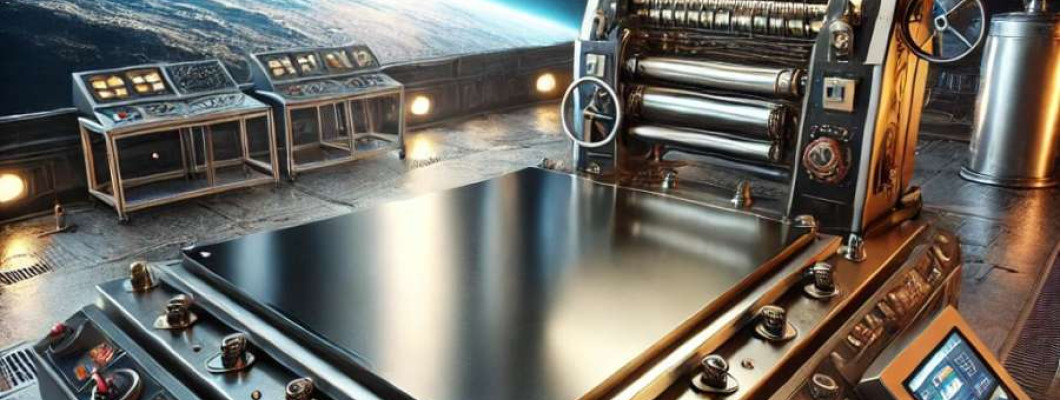
The Industrial Reality of Integrating the 40x60CM Heat Press Machine into Production Lines
For businesses scaling from prototype to mass production, the integration of a heat press machine such as the 40x60CM Heat Press Machine introduces complex technical and operational considerations. The machine’s core function—precise thermal transfer over a 40 cm by 60 cm platen—must align with throughput requirements, labor optimization, and thermal safety standards inherent in industrial environments. The challenge lies not merely in the nominal platen size but in sustained thermal uniformity, cycle time efficiency, and long-term durability under heavy usage.
Consider a mid-sized apparel manufacturing facility seeking to transition from manual screen printing to heat transfer methodologies. The 40x60CM Heat Press Machine's platen dimensions provide a balance between workspace efficiency and product versatility. However, integration into an assembly line demands rigorous assessment of thermal ramp-up times, platen temperature stability (±1°C deviation tolerance), and mechanical alignment. Industrial throughput targets of 50+ print cycles per hour impose wear stress on heating elements, pressure actuators, and control circuitry, elevating maintenance demands and potential downtime. Without precise planning, bottlenecks emerge in workflow, undermining ROI and asset longevity.
Furthermore, environmental and safety compliance are paramount when operating heat press systems continuously. Effective heat dissipation reduces operator exposure to surface temperatures exceeding 180°C and mitigates fire hazards through proper electrical infrastructure support. The 40x60CM Heat Press Machine's design must consider these factors to avoid costly operational interruptions and regulatory penalties. Thus, the industrial reality is a balancing act of thermal management, throughput scalability, and safety engineering within existing factory infrastructures.
Technical Deep-Dive into the 40x60CM Heat Press Machine’s Operational Capabilities
Thermal Performance and Plate Uniformity
The heat press machine’s platen requires uniform distribution of heat to avoid print defects. The 40x60CM platen area of 2400 cm2 demands a precise internal heating element layout—usually a segmented nichrome wire array embedded within high-grade aluminum. Thermal conductivity, defined by Fourier’s law, dictates heat flux: q = -kA(dT/dx), where k is thermal conductivity, A the cross-sectional area, and dT/dx the temperature gradient. Optimal k values for the platen material exceed 200 W/m·K to maintain ±1°C variance across the platen surface.
Cycle Time and Throughput Analysis
Cycle time (Tc) comprises heating (Th), pressing (Tp), and cooldown phases (Tc = Th + Tp + Td). Typical industrial standards require Th ≤ 60 seconds, Tp within 15–30 seconds, and cooldown managed externally to avoid bottlenecks. The 40x60CM Heat Press Machine’s heating elements consume approximately 1200 Watts, balancing rapid thermal recovery with power efficiency. Under continuous operation, the machine can sustain around 40–50 cycles per hour depending on substrate and transfer medium.
Mechanical Pressure Uniformity and Control
Pressure application influences transfer adhesion quality. The 40x60CM Machine typically achieves 0-6 bar adjustable pressure via pneumatic or manual lever systems. Pressure uniformity is critical to prevent substrate deformation and print inconsistency. Mechanical tolerances should not exceed ±0.2 bar variance across the platen, verified via pressure sensor arrays during calibration.
Maintenance Load and Lifecycle Cost Modeling
Heat element replacement intervals average 1200-1500 hours, depending on operational intensity and voltage stability. Lubrication of moving parts is recommended every 500 hours to sustain actuator performance. An operational cost matrix reveals that consumables and maintenance constitute approximately 20% of total cost of ownership over a 5-year period.
Safety and Environmental Compliance Metrics
The machine includes thermal cutoffs, emergency stops, and insulated surfaces complying with IEC 60335-2-44 standards. Electrical components require grounding and surge protection to prevent shorts that could induce downtime. Heat dissipation via integrated fans or external HVAC systems is necessary to prevent localized temperature spikes above 40°C in operator zones.
| Specification | 40x60CM Heat Press Machine | Industrial Large Format Heat Press (70x90CM) |
|---|---|---|
| Platen Dimension (cm) | 40x60 | 70x90 |
| Max Power Consumption (W) | 1200 | 2000 |
| Cycle Time (s) | ~90 (heat + press) | ~120 |
| Pressure Range (bar) | 0-6 | 0-8 |
| Weight (kg) | ~35 | ~60 |
| Maintenance Interval (hours) | 1200-1500 | 1000-1200 |
Scenario Analysis of Business Use-Cases Leveraging the 40x60CM Heat Press Machine
Use-Case 1: Small to Mid-Sized Apparel Manufacturer Expanding Heat Transfer Capabilities
This company requires reliable heat transfer on cotton and polyester blends. The 40x60CM platen enables production of mid-sized patches and graphic prints. The machine’s moderate power rating preserves energy costs, while the cycle time meets throughput requirements. Pressure uniformity safeguards against substrate damage, offering consistent quality. Maintenance intervals align well with operational schedules, minimizing unexpected downtime.
Use-Case 2: Custom Promotional Goods Producer with Mixed Substrate Types
Versatility is critical when working with plastics, wood, and metal sheets for promotional applications. The 40x60CM Heat Press Machine’s platen size accommodates a broad range of items. Adjustable pressure and temperature control provide substrate-specific customization. Although cooldown time requires workflow adjustments, the unit’s size and weight facilitate repositioning within a flexible workspace.
Use-Case 3: On-Demand Print Shops Focused on Short-Run Orders
Print shops prioritizing agility face fluctuating demands. The 40x60CM Heat Press Machine’s rapid heat-up time and ease of use reduce setup duration. Its footprint occupies minimal floor space, optimizing limited real estate. Operators benefit from straightforward controls and safety features, enhancing daily uptime. Although throughput caps at approximately 50 cycles per hour, this suits short-run production rather than full-scale industrial operations.
Expert FAQ on the 40x60CM Heat Press Machine for Scalable Business Operations
Q1: How does platen temperature stability impact print consistency?
Even minor deviations in platen surface temperature (±1°C) can cause inconsistent ink adhesion, resulting in color shifts or incomplete transfers. The machine’s embedded sensors and PID control loops maintain this stability critical for quality assurance.
Q2: What are the mechanical wear points most prone to failure?
Pressure actuators and hinge mechanisms endure cyclic fatigue and require periodic lubrication. Heating element wires may degrade due to thermal cycling, necessitating scheduled replacements.
Q3: Can the machine integrate with automated conveyor systems?
While primarily designed as a standalone unit, auxiliary modifications including pneumatic presses and sensor triggers enable integration but may require custom controls and power management.
Q4: What is the estimated electrical load on factory infrastructure?
Given 1200 Watts max consumption, individual units place moderate demand on 220-240V circuits. However, multiple machines in parallel require load balancing to avoid breaker trips.
Q5: How do maintenance cycles influence operational uptime?
Adhering to recommended maintenance intervals reduces unplanned downtime. Preventative actions on heating elements and mechanical components extend machine life and ensure consistent quality output.
Strategic Verdict and Recommendation for the 40x60CM Heat Press Machine
The 40x60CM Heat Press Machine presents a technically sound, industrial-grade option for scaling businesses requiring precise thermal transfer capabilities without the infrastructural burdens of larger-format machinery. Its balanced platen size aligns well with common mid-production needs, enabling throughput up to 50 cycles per hour while delivering ±1°C thermal uniformity and adjustable pressure control essential for diverse substrates.
Operational analysis underscores manageable maintenance demands with costs predictable within a 5-year lifecycle. The machine's electrical and safety features comply with stringent industrial standards, reducing risk and enhancing operator safety. Its moderate power consumption positions it favorably within modern electrical infrastructures without necessitating substantial upgrades.
For businesses expanding heat transfer processes from artisanal to scalable production, the 40x60CM Heat Press Machine is recommended as a definitive solution offering a practical balance between performance, reliability, and cost-effectiveness. Its adaptability makes it an indispensable asset in integrated manufacturing environments pursuing consistent output quality and sustainable asset longevity.