
Lifecycle Costs and Operational Realities of the A3 Spot UV Printing Machine UV Coating Printer for the Financial Controller
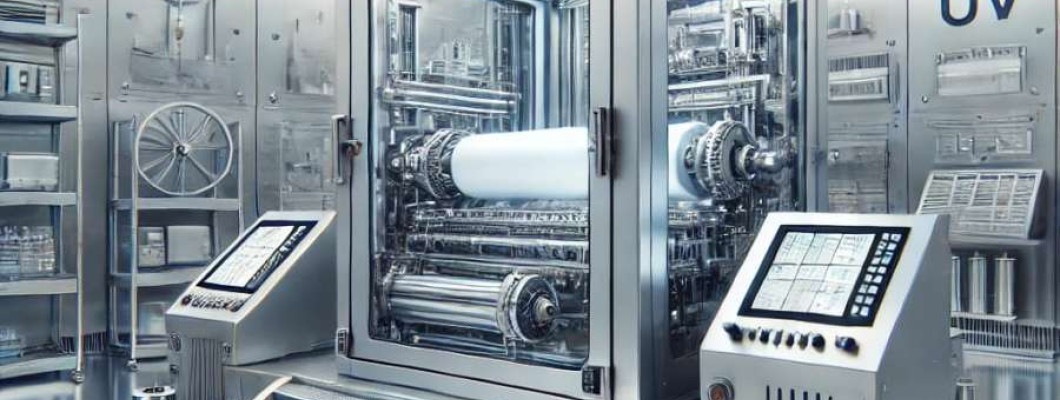
The Industrial Reality of Managing ROI and Asset Depreciation for UV Printing Equipment
For financial controllers overseeing capital-intensive print production assets, the A3 Spot UV Printing Machine UV Coating Printer represents a significant investment where understanding lifecycle costs, depreciation, and associated operational expenditures is critical. In a typical mid-sized print facility scaling high-margin packaging or promotional materials, this machine's upfront cost is only the initial factor.
Operational expenses such as UV coating material consumption, maintenance intervals, consumable replacement, and machine downtime directly influence the total cost of ownership (TCO). Given specialized UV ink chemistry and the precision mechanics involved in spot UV application, unplanned outages and gradual throughput degradation can exponentially impact profitability. Depreciation schedules must reflect not only hardware wear but also technological obsolescence, especially as faster or higher-resolution models emerge.
Financial controllers must navigate the balance between asset longevity and competitive throughput, factoring in not just the machine’s initial capital expense but the hidden costs from parts replacement cycles, energy consumption, and the labor overhead of skilled maintenance teams. The challenge intensifies when scaling print jobs with strict deadlines and complex substrate requirements, where device reliability directly correlates with cash flow stability.
Technical Deep-Dive on ROI and Asset Depreciation for the A3 Spot UV Printer
Capital Expense and Depreciation Models
Assuming a purchase price of approximately $45,000 USD, most financial controllers apply a straight-line depreciation over 5 years, yielding an annual depreciation of $9,000. However, accelerated depreciation or component-based amortization may be more realistic given UV lamp lifespans and printhead wear rates.
Energy Consumption and Operational Cost Analysis
The A3 Spot UV Printing Machine utilizes UV lamps rated at roughly 300 Watts each for coating curing, typically operating for 8 hours per day. Daily energy consumption equates to approximately 2.4 kWh. Using an average industrial electricity rate of $0.12 per kWh, the daily energy cost is roughly $0.29, translating to an annual energy expenditure of $72 under continuous operation.
Material Consumption and Cost Metrics
UV coating materials are measured in milliliters per square meter of substrate. For average usage, the machine applies 1.5 ml/m2. A 1-liter bottle of UV coating at $120 covers roughly 666 m2. Assuming a monthly throughput of 1000 m2, monthly UV coating costs are approximately $180, contributing significantly to consumable expenses.
Maintenance Schedules and Parts Lifecycle
Key wear components include UV lamps, printheads, rollers, and control electronics. UV lamps typically require replacement after 2,000 hours, equating to every 8 months under 8-hour daily operation. Lamp replacements cost around $400. Printheads have a lifecycle of approximately 10,000 hours but require regular calibration to maintain micron-level spot UV precision.
Comparison Table of Depreciation and Operating Costs Over 5 Years
| Cost Category | Straight-Line Depreciation | Accelerated Depreciation |
|---|---|---|
| Capital Expense | $45,000 | $45,000 |
| Annual Depreciation | $9,000 | $14,000 (Years 1-3), $3,000 (Years 4-5) |
| Annual Energy Cost | $72 | $72 |
| Annual UV Coating Material Cost | $2,160 | $2,160 |
| Annual Maintenance & Consumables | $3,600 | $3,600 |
| Total 5-Year Cost | $57,600 + variable labor | $59,160 + variable labor |
Scenario Analysis of Business Use-Cases Impacted by Financial Considerations
1. Small Packaging Producer Scaling to Moderate Volumes
The financial controller must evaluate if the $45,000 investment is justified by revenue gains. With an expected average throughput of 500 m2/month, monthly UV coating costs and lamp replacement cycles will push operational costs higher relative to output. ROI is achievable if contract pricing exceeds $5 per m2 for coated products, factoring in depreciation and running costs.
2. Commercial Print Shop Leveraging Advanced Spot UV Finishing
Here, throughput requirement jumps to 1500 m2/month. High utilization accelerates depreciation of lamps and printheads but achieves economies of scale in materials and labor. Financial controllers must schedule proactive maintenance to prevent costly machine downtime affecting client deadlines.
3. High-End Branding Firm Prioritizing Precision over Volume
Lower monthly volumes (~300 m2) make fixed asset depreciation a larger share of unit costs. However, premium pricing models for exquisite spot UV finishes help balance economics. The financial controller’s focus shifts toward minimizing operational downtime and optimizing consumables to sustain profitability.
Expert FAQ on Managing Costs and Asset Longevity with the A3 Spot UV Printer
Q1 What is the optimal replacement interval for UV lamps to prevent output degradation?
Replacement after approximately 2,000 operational hours is recommended. Operating beyond this risks diminished curing intensity, leading to inconsistent coating hardness and potential adhesion failures.
Q2 How does accelerated depreciation impact tax outcomes for this asset?
Accelerated depreciation front-loads expense recognition, improving short-term cash flow but reducing deductions in later years. This aligns with the asset’s rapid component wear and potential early obsolescence.
Q3 Are there hidden operational costs beyond consumables and energy?
Yes, labor costs for calibration, unplanned downtime, and quality control inspections contribute significantly. These indirect costs can add 10-15% overhead to the total operating budget.
Q4 How does substrate variability influence lifecycle costs?
Uneven or abrasive substrates cause accelerated wear on rollers and printheads, increasing maintenance frequency and component replacement costs.
Q5 Can leasing this equipment be financially advantageous versus outright purchase?
Leasing can shift maintenance responsibility and reduce upfront CAPEX, but typically results in higher total cost over the asset's lifecycle. The decision depends on cash flow priorities and tax strategy.
Strategic Verdict and Recommendation for Financial Controllers
The A3 Spot UV Printing Machine UV Coating Printer stands as a financially viable and robust industrial-grade solution for mid to high-volume specialized printing environments where spot UV finishing drives product differentiation and profitability. While the asset requires diligent lifecycle management including precise maintenance schedules and consumable budgeting, its predictable depreciation profiles and energy-efficient operation support sound capital allocation decisions.
Financial controllers should incorporate detailed TCO modeling that addresses accelerated component wear and variable labor costs. The ability to forecast operational bottlenecks and perform timely maintenance can significantly boost asset uptime and extend effective service life.
Given this detailed analysis and the machine’s industrial specifications, investing in the A3 Spot UV Printing Machine UV Coating Printer is recommended as a definitive choice for enterprises seeking precision, reliability, and fiscal control over UV coating workflows.