
Lifecycle Maintenance and Operational Realities of the A3 Spot UV Printing Machine UV Coating Printer for High-End Artisan Production
The Industrial Reality of Integrating an A3 Spot UV Printing Machine into Artisan Environments
High-precision surface finishing using spot UV coating demands a device that balances micron-level accuracy with consistent throughput and substrate versatility. The A3 Spot UV Printing Machine UV Coating Printer represents a nexus of these requirements, yet presents challenges associated with lifecycle maintenance and operational continuity often underestimated by artisan users transitioning from smaller, manual UV coating solutions. Artisans frequently encounter substrate warping under heat exposure, nozzle clogging from viscous UV inks, and alignment drift during extended runs—all of which can degrade print quality and increase downtime. Ensuring the printer sustains sub-10 micron positional accuracy across repetitive cycles demands a robust thermal management design and advanced flow control within its printhead system. Furthermore, the machine’s mechanical carriage and sensor arrays are subject to wear from continuous UV lamp exposure and particulate contamination inherent to artisan workshop environments. The complexity of maintaining uptime while preserving the integrity of delicate substrates like textured paper or coated plastics necessitates a precise maintenance regimen and technical understanding beyond typical DIY equipment. These operational realities define the boundary between artisanal and industrial-grade UV coating performance.
Technical Deep-Dive into the Engineering and Performance Specifications
Printhead Dynamics and Ink Rheology
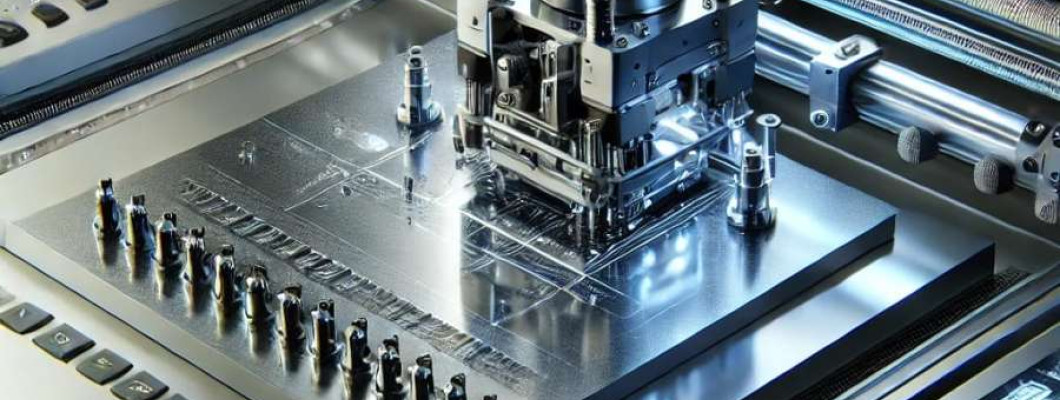
The A3 Spot UV Printing Machine employs a piezoelectric drop-on-demand printhead optimized for UV-curable inks with viscosities ranging from 15 to 25 centipoise at 25°C. The nozzle diameter of approximately 35 microns allows droplet sizes to be finely controlled around 10 picoliters, critical for high-resolution spot UV effects. The piezoelectric activation frequency maxes out at 30 kHz, enabling a theoretical throughput of 18 m2/hour at 600 dpi spot density.
Mechanical and Thermal Stability
To maintain registration accuracy within 8 microns over a 420 mm carriage travel, the system incorporates a linear encoder with sub-micron resolution, coupled with a dynamic feedback loop controlling stepper motor phases. Thermal gradients from the UV LED bank (peak wavelength 395 nm, 150 W total power) induce localized expansion up to 0.02 mm over one hour of continuous operation. To mitigate this, a closed-loop liquid cooling subsystem maintains printhead assembly temperature within ±0.5°C, significantly reducing thermal drift and enhancing long-term print consistency.
Substrate Handling and Compatibility
The vacuum platen supports substrates up to 3 mm thickness with positional repeatability of ±0.1 mm. The surface hardness of the platen, rated at 65 Shore A, balances grip without surface deformation. Compatible substrates extend from coated paper (weight 150–450 gsm) to polycarbonate plastics and stamped labels, with UV absorption characteristics favoring surface cure depths of 30–50 microns within a 5-second LED exposure.
Maintenance and Consumables Lifespan
Printhead nozzle clogging is mitigated through an automated capping and cleaning station employing solvent vapor priming and wiper blades, extending nozzle operational uptime from typical 40 hours to 120 hours per cycle before mandatory manual cleaning. UV LED modules are rated for 20,000 operational hours, while vacuum pump filters require replacement every 300 operational hours to prevent particulate ingress affecting print stability.
Comparative Assessment with Alternative Technologies
| Specification | A3 Spot UV Printing Machine | Generic Desktop UV Printer |
|---|---|---|
| Max Print Area | 320 x 450 mm | 210 x 297 mm (A4) |
| Positional Accuracy | < 8 microns | ~25 microns |
| Printhead Type | Piezoelectric Drop-on-Demand | Thermal Inkjet |
| UV LED Power | 150 W | 60 W |
| Cooling System | Closed-Loop Liquid Cooling | Passive Air Cooling |
| Substrate Thickness | Up to 3 mm | Up to 1 mm |
| Maintenance Interval | 120 hours (auto-clean), 300 hours (filters) | 40 hours (manual clean) |
Scenario Analysis of Artisan-Centric Production Environments
Use-case 1: Boutique Packaging Production
Fine packaging requires uniform UV spot gloss effects on 300 gsm coated paperboard. The machine’s sub-10 micron registration ensures alignment of spot UV patterns with preprinted graphics. Automated maintenance cycles reduce downtime risks during batch runs exceeding 500 units, optimizing labor efficiency while preserving tactile finish quality.
Use-case 2: Custom Label Manufacturing
Printing spot UV on flexible polycarbonate labels involves substrate thickness variability and curvature. The vacuum platen’s adjustable hold and micron-level positional repeatability accommodate label warpage, enabling precise UV coating that resists scratching and exposure to solvents.
Use-case 3: Experimental Artistic Prints
An artisan experimenting with mixed media benefits from the device’s ability to cure UV coatings on textured paper up to 3 mm thickness. The temperature-controlled printhead reduces thermal distortion that could affect micron-scale pattern fidelity, critical for high-dpi decorative effects.
Expert FAQ on Technical Nuances
Q1: How does the piezoelectric frequency influence print quality and throughput?
A1: Increasing the activation frequency enhances throughput but risks droplet misplacement due to mechanical resonance; 30 kHz strikes a balance maximizing speed while maintaining positional accuracy.Q2: What are the consequences of UV LED power fluctuations?
A2: Variability in LED output affects cure depth leading to gloss inconsistencies and potential adhesion failure; the integrated power regulation circuit maintains ±2% output stability.Q3: How critical is platen vacuum strength for substrate flatness?
A3: Vacuum levels below 50 kPa compromise substrate hold, causing micro-shifts during printing that degrade edge sharpness of UV patterns; the system maintains 70 kPa nominal vacuum pressure with real-time monitoring.Q4: What solvent composition is optimal for automated printhead cleaning?
A4: A blend of isopropanol and proprietary surfactants effectively dissolves UV ink residues while minimizing piezo ceramic degradation over extended cycles.Q5: How does the closed-loop cooling system impact overall system energy consumption?
A5: The liquid cooling subsystem adds approximately 40 W continuous load but extends printhead lifespan by preventing thermal stress failures, resulting in a net positive operational cost balance.
Strategic Verdict and Recommendation on the A3 Spot UV Printing Machine UV Coating Printer
For the high-end artisan demanding precision surface finishing with operational reliability, the A3 Spot UV Printing Machine UV Coating Printer provides an industrial-grade solution bridging the gap between small-scale craft and scalable professional output. Its advanced piezoelectric printhead technology, robust thermal management, and adaptable substrate handling distinguish it from conventional desktop UV printers. While requiring a disciplined maintenance schedule, the built-in automation and engineering design significantly reduce downtime and operational risk. This combination assures lifecycle value and print quality that justify the capital investment for artisan workshops and small production studios seeking scalable UV coating capabilities. Interested professionals are encouraged to review detailed specifications and procurement options at the A3 Spot UV Printing Machine UV Coating Printer official product page to assess fit for their production needs.